
Digital Diet
Proven effective in research studies
App Summary
App Screenshots
Detailed Description
Functionality & Mechanism
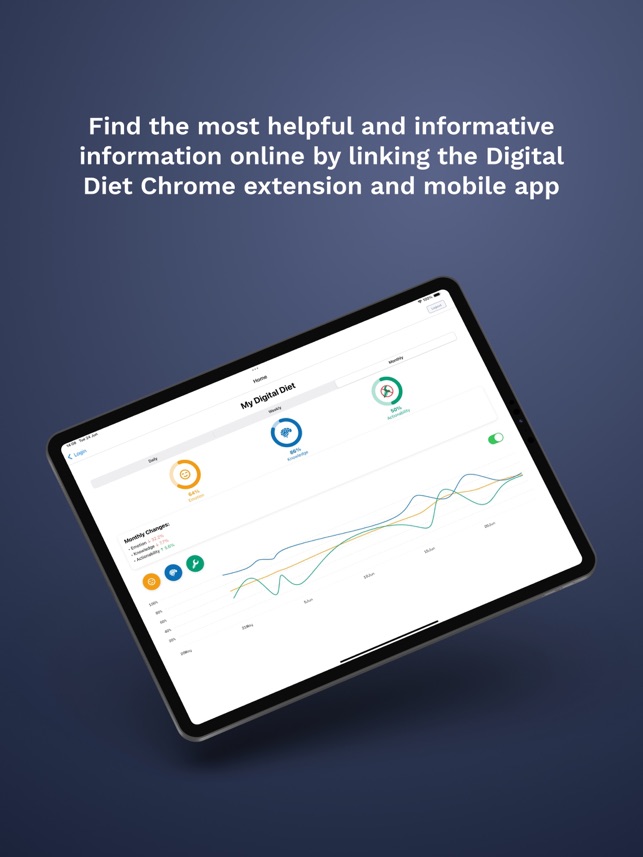
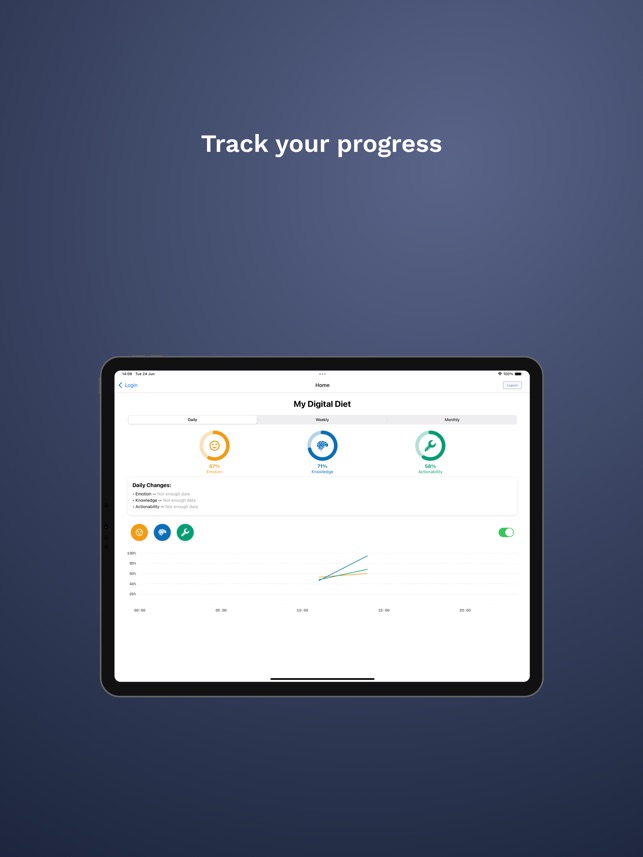
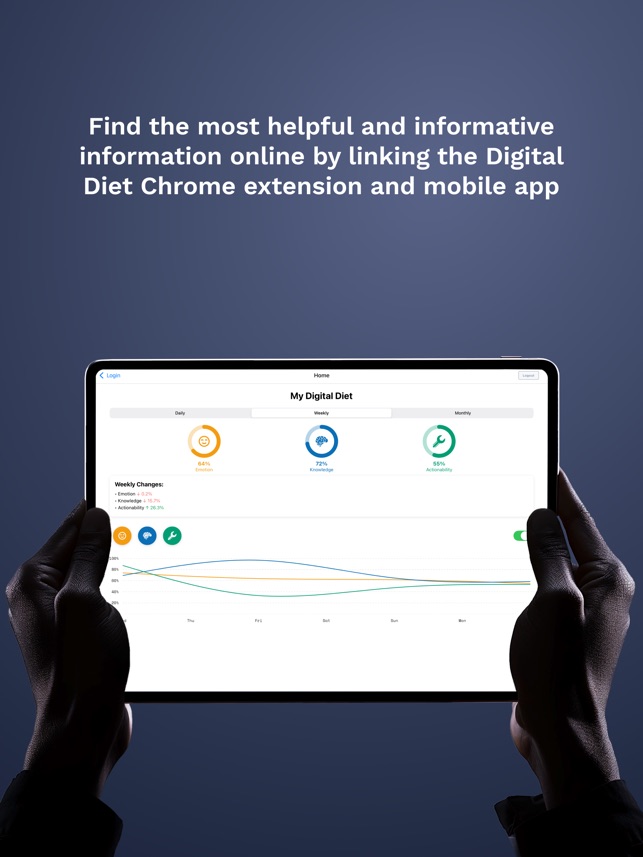
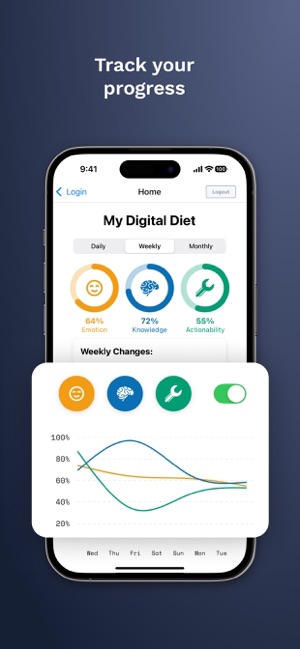
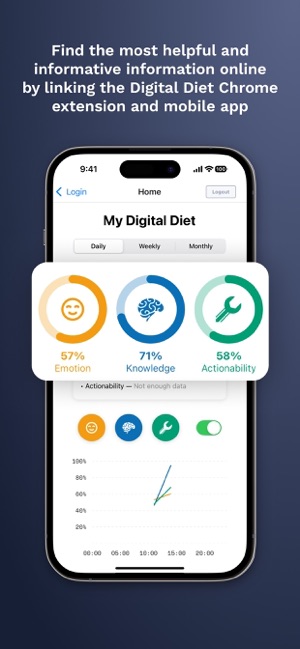
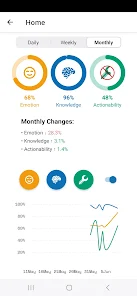
Digital Diet operates as a Google Chrome extension linked to a companion application. The system leverages natural language processing and machine learning to analyze webpages surfaced in Google search results. It then overlays quantitative "content labels" that predict a page's Actionability (potential to guide action), Knowledge (capacity to enhance understanding), and emotional Valence. The interface aggregates this data, presenting a dashboard that quantifies information consumption patterns to facilitate more intentional browsing habits and promote digital well-being.
Evidence & Research Context
- The tool's design is grounded in research identifying three primary motives for information-seeking: its utility for action, its predicted emotional impact, and its conceptual relevance.
- Foundational research across four studies (N=1,145 total) established a causal, bidirectional relationship between browsing negative online information and decrements in mood and mental health.
- A related intervention study demonstrated that altering web-browsing patterns by highlighting content's emotional impact effectively reduced negative information consumption and improved participant mood.
- The system's classification models were trained on data from human participants to ensure the content labels accurately reflect user perceptions of webpage properties.
Intended Use & Scope
This tool is intended for the general public as a behavioral awareness system to support digital self-regulation. Its primary utility is providing quantitative feedback on web-browsing habits to help individuals align online activity with personal goals. The system does not provide clinical diagnoses or replace professional mental health treatment. Users concerned about their mental health should consult a qualified clinician for assessment and guidance.
Studies & Publications
Peer-reviewed research associated with this app.
Web-browsing patterns reflect and shape mood and mental health
Kelly et al. (2024) · Nature Human Behaviour
Intervention successfully changed web-browsing patterns toward more positive content and improved participants' mood.
A Tool to Facilitate Web-Browsing
Kelly et al. (2024) · arXiv
Describes the research-driven development of this appIn the Media
Study: Browsing negative content online makes mental health struggles worse
MIT researchers Tali Sharot and Christopher A. Kelly developed a web plug-in tool to help people protect their mental health by making informed decisions about online content they view. Their study of over 1,000 participants found "a causal, bidirectional relationship between health and what you do online" where people with mental health symptoms browse more negative content, which then worsens their symptoms in "a feedback loop." The findings were published November 21 in the journal Nature Human Behavior.
Poor mental health linked to browsing negative content online
UCL researchers developed Digital Diet to break the cycle of negative online browsing that worsens mental health, using content labels similar to nutrition labels on food that emphasize emotional impact alongside practicality and informativeness. Professor Tali Sharot explained, "Our results show that browsing negatively valenced content not only mirrors a person's mood but can also actively worsen it. This creates a feedback loop that can perpetuate mental health challenges over time." The Wellcome-funded study analyzed over 1,000 participants' browsing habits and was published in Nature Human Behaviour.
App Information
Category
Evidence Profile
Proven effective in research studies
Platforms
Updated
Aug 2025
© 2025 Massachusetts Institute of Technology