
AppsFromResearch
Earthtunes icon

Earthtunes

Evidence Tier:DOCUMENTED

Published in academic literature

For:Researchers & AcademicsGeneral Public & Enthusiasts

App Summary

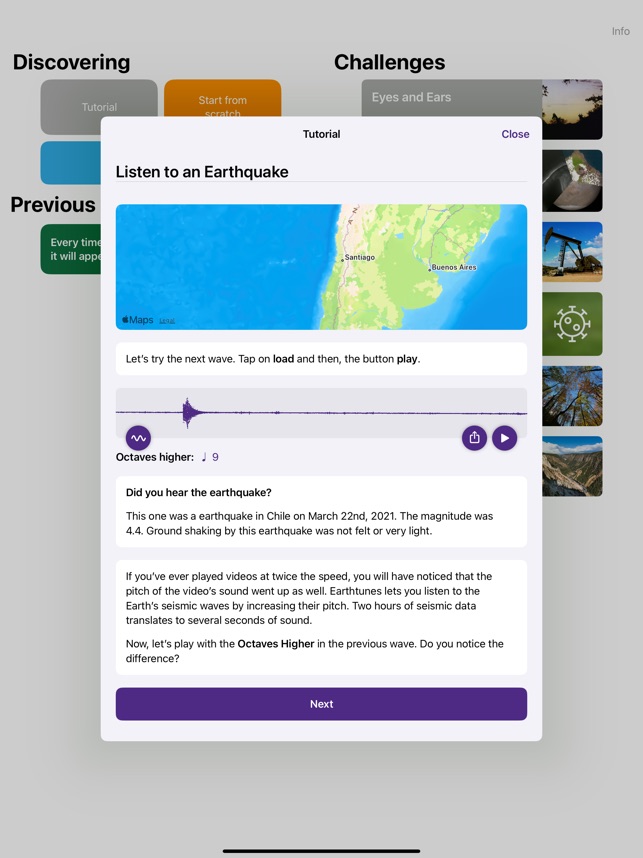
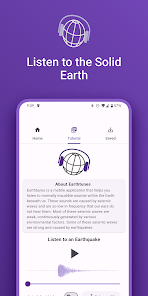
Earthtunes is an educational app for the general public, students, and researchers that sonifies authentic seismic data, making inaudible low-frequency waves from earthquakes and environmental sources audible. The associated research describes the app's design, which translates real-time, research-quality seismic data into sound to offer a novel auditory representation of the Earth's dynamics. The authors conclude that this approach can serve as a novel tool for STEAM education and public engagement, allowing users to explore and develop a more holistic understanding of seismology and Earth science.

App Screenshots

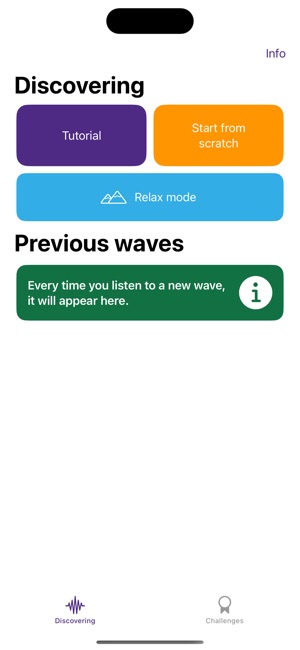
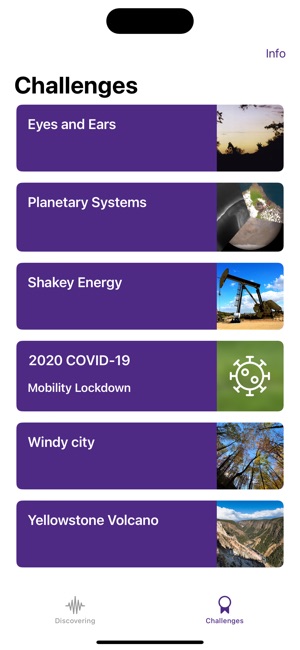
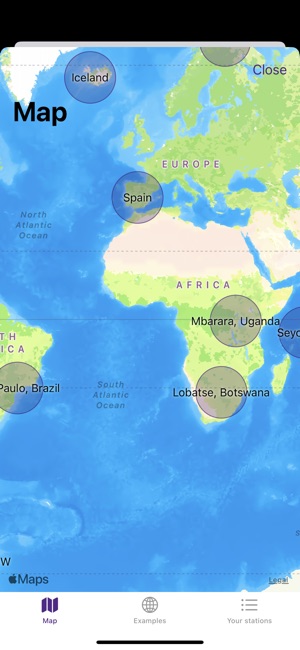
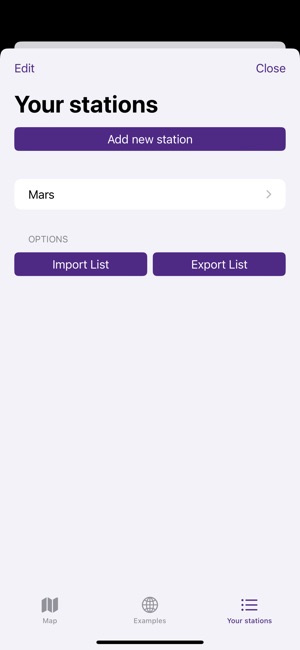
Earthtunes screenshot 1 of 20Earthtunes screenshot 2 of 20Earthtunes screenshot 3 of 20Earthtunes screenshot 4 of 20Earthtunes screenshot 5 of 20Earthtunes screenshot 6 of 20Earthtunes screenshot 7 of 20Earthtunes screenshot 8 of 20Earthtunes screenshot 9 of 20Earthtunes screenshot 10 of 20Earthtunes screenshot 11 of 20Earthtunes screenshot 12 of 20Earthtunes screenshot 13 of 20Earthtunes screenshot 14 of 20Earthtunes screenshot 15 of 20Earthtunes screenshot 16 of 20Earthtunes screenshot 17 of 20Earthtunes screenshot 18 of 20Earthtunes screenshot 19 of 20Earthtunes screenshot 20 of 20

Detailed Description

Functionality & Mechanism

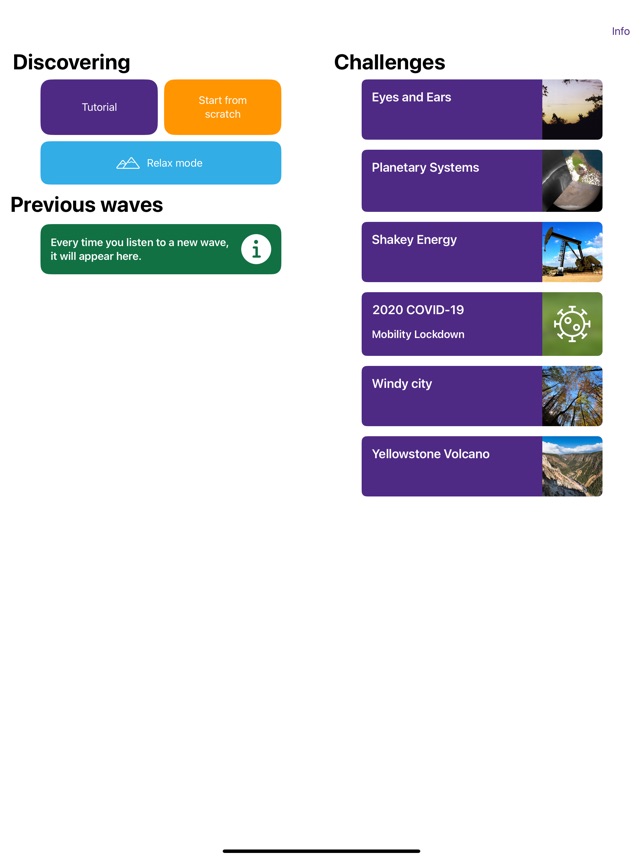
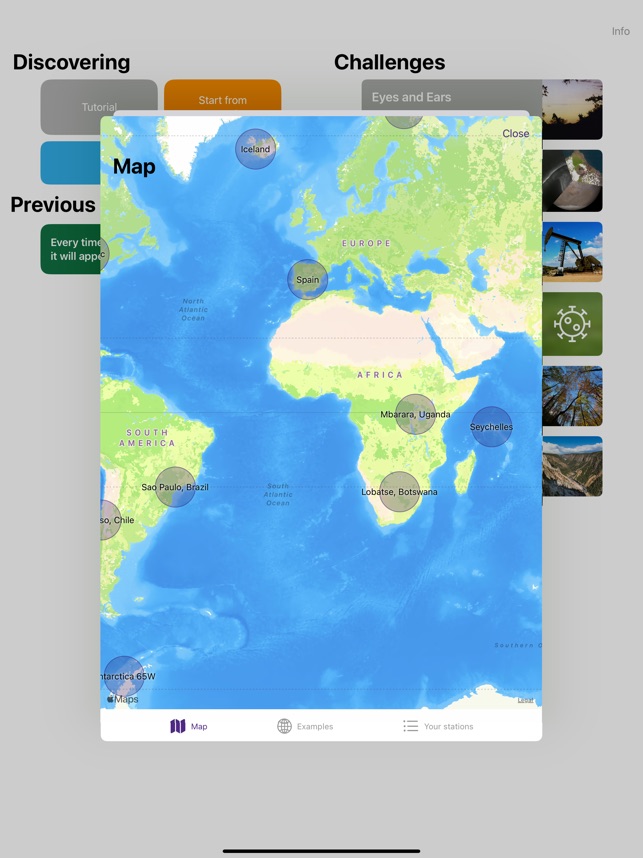
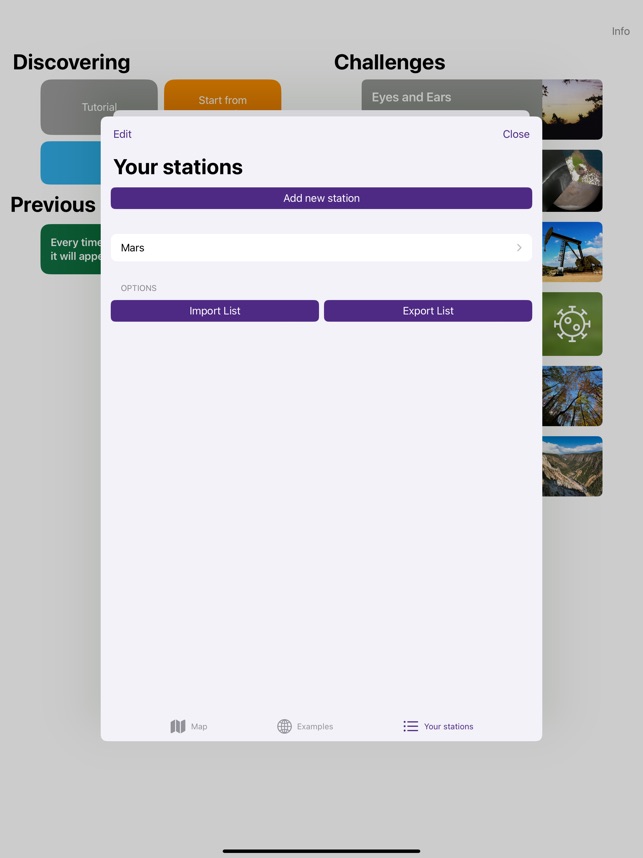
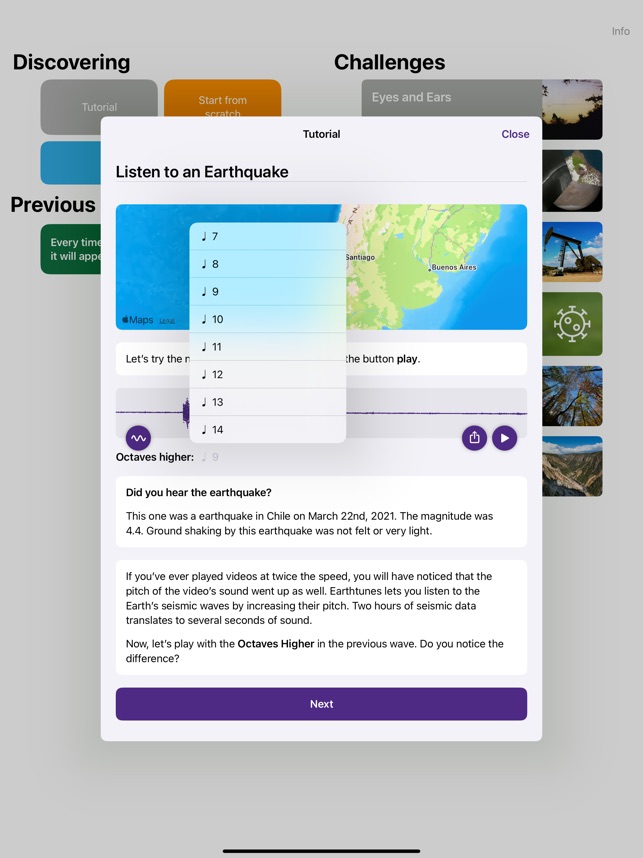
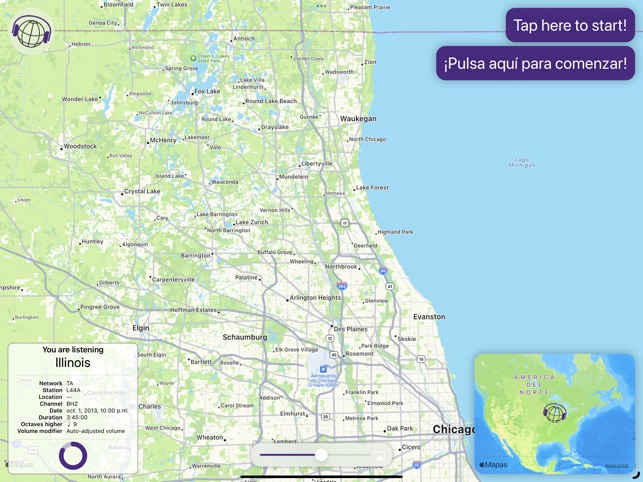
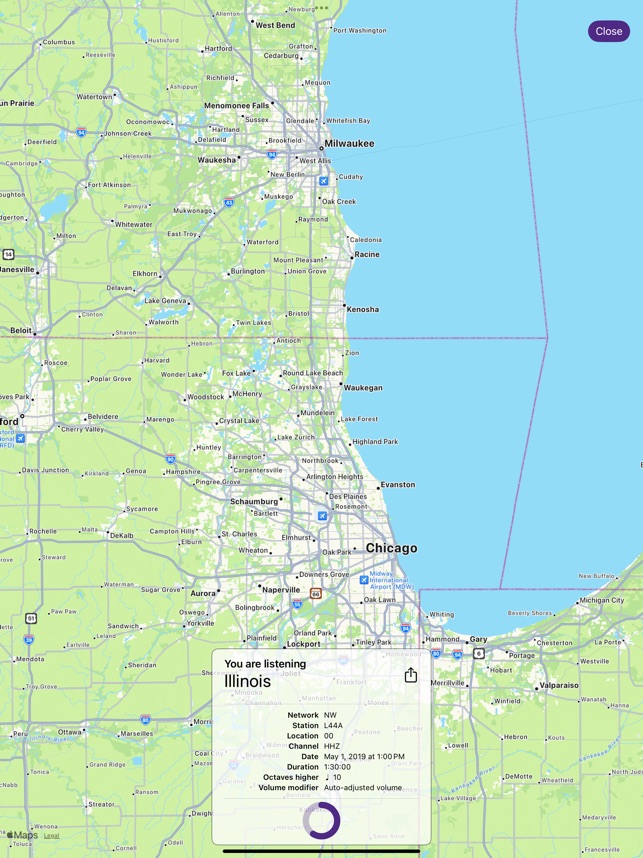
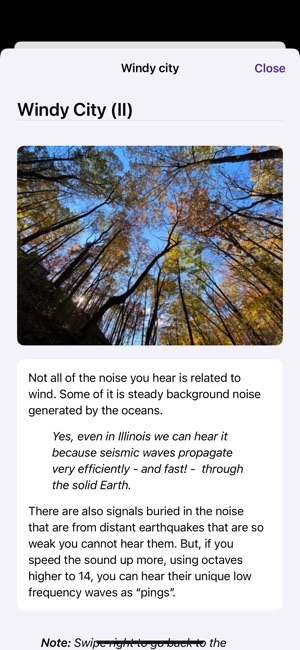
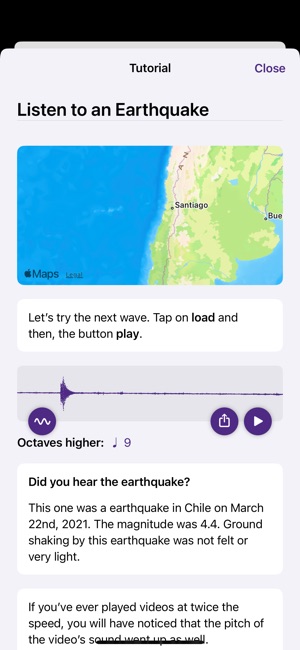
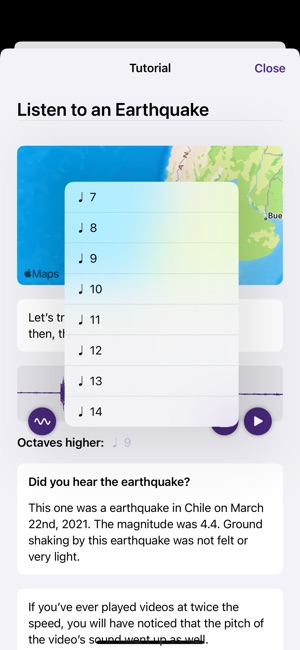
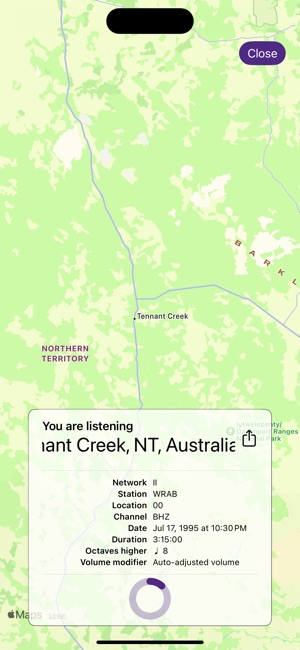
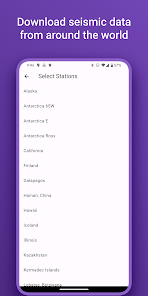
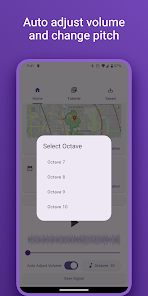
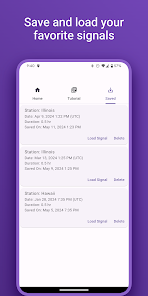
The Earthtunes mobile application sonifies authentic, research-quality seismic data from a global network. The interface facilitates selection of a listening location from a map and a timeframe, including near-real-time data streams. The system processes inaudible, low-frequency seismic waves by accelerating their playback, which increases their pitch into the human audible range. Generated audio is presented alongside a corresponding visual seismogram, and the system includes an export function to create shareable video files.

Evidence & Research Context

  • The app's sonification method is based on techniques used by seismologists to explore research-quality data and identify weak signals from small events otherwise buried in seismic noise.
  • It leverages continuously recorded seismic data from the global network managed by the IRIS Data Management Center, an NSF-funded SAGE facility.
  • The associated research positions the tool for public engagement and STEAM (Science, Technology, Engineering, Arts, and Mathematics) education, particularly for K-12 students and auditory learners.
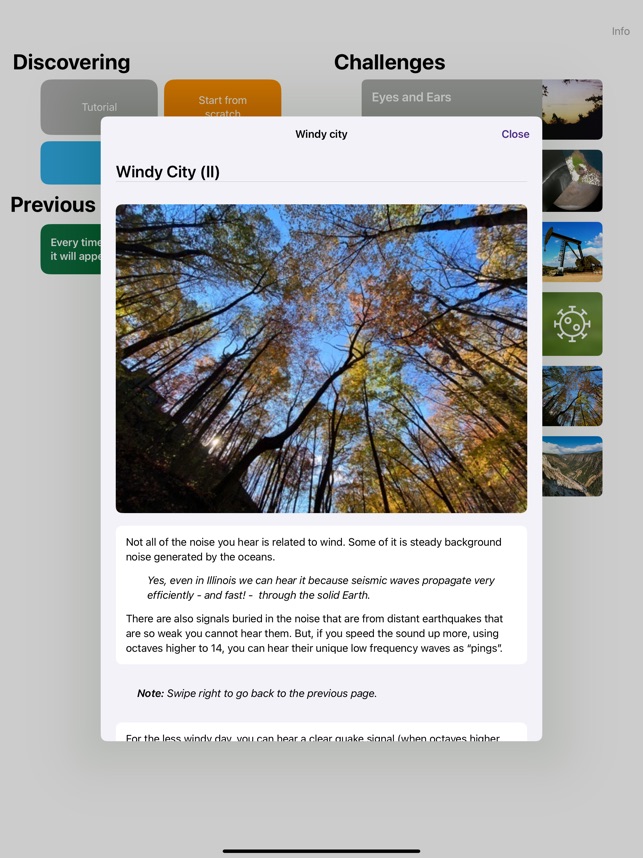
  • The application includes curated educational challenges designed to demonstrate audibly distinct seismic signatures from earthquakes, volcanism, weather patterns, and anthropogenic activity.

Intended Use & Scope

This application is intended for public engagement, STEAM education, and preliminary data exploration by researchers and students. Its primary utility is to provide an intuitive, auditory representation of complex geophysical data to foster scientific curiosity. The tool is not designed for formal seismic analysis, hazard assessment, or earthquake prediction. Users seeking definitive data interpretation should consult professional seismological resources.

Studies & Publications

2 publications

Peer-reviewed research associated with this app.

Development/Design Paper

Listening to the solid Earth: Authentic seismic data sonification in a mobile App: Earthtunes

Van et al. (2021) · AGU Fall Meeting

Describes the research-driven development of this app
Earthtunes is a mobile App, revamped in 2021 and available for iOS devices in the App Store. Earthtunes sonifies authentic research-quality seismic data from around the world in near real time, to engage users with Earth science in general and seismology in particular. The seismic data are continuously recorded and transmitted, and are then archived and re-distributed to researchers and the public by the IRIS Data Management Center, which is part of the NSF-funded SAGE facility. The majority of this data does not contain significant earthquake signals. However, the background and non-stationary noise signals are fascinating in and of themselves, especially in current times, during which the seismic noise field is widely cross-correlated in interferometric applications aiming to map subsurface compliance, rigidity, and density. In addition, more and more applications of modern automation tools, including machine learning, aim to detect signals from specific categories of small events with weak signals that are buried in noisy time series. Listening to these signals is of interest to researchers who are exploring data and works well at engaging, inspiring, and educating a segment of the population that values auditory information, including blind and seeing people. Version 1.2 of Earthtunes is a significant upgrade from earlier versions of the App: It is robust, comes with a tutorial, provides the option to select a listening location from a map, allows loading near-real time or data from the past, provides options for different speed up factors and for either normalizing the data to a maximum volume or keeping sounds from different places and times all on the same volume setting, and comes with educational challenges of societal interest designed to inspire discussion and related to earthquakes, volcanism, induced and triggered seismicity, weather, noise before and during COVID-19 related lockdowns, and differences in background noise between Pacific islands, Antarctica, and Mars. The user can export sounds and accompanying seismograms of interest as a video, which can be shared out via the devices social services.
... Read More
Development/Design Paper

Sonifying Seismic Data with a new web application, "Earthtunes": A novel tool for the general public and STEAM education projects

Ilseman et al. (2019) · AGU Fall Meeting

Describes the research-driven development of this app
Earthtunes is a new web application utilizing art to engage the public with the dynamics of the solid Earth. Our project, "Earthtunes", brings art and abstraction to raw, actual Earth data by visualizing and sonifying it in creative ways that remain true to the original data and thus replicable. By doing this, users will be able to imagine earthquakes as well as the Earth's ambient dynamics, not only through the visual seismogram representation, but through auditory representation, bringing a richer spectrum to the ear than what the eye can see. We aim to reach K-12 students by integrating Earthtunes as a novel tool in STEAM learning projects, people with hearing disabilities as a way to conceptualize seismic waves, and the general public through our kiosk interface at seismic stations, parks, and museums. Earthtunes is developed in Javascript as a Progressive Web Application, giving users "app-like-interactions" from a web browser. Data will be retrieved from an open source database from the IRIS Data Management Center, and will be queried by location, date and time using web services. Once the parameters are chosen, the user will submit the parameters and will be navigated to a second page displaying the seismic data and audio playback. The user will have options to replay the sound one or more octaves higher or lower, depending on the side of the spectrum they wish to hear more clearly. This is important given that the accelerated/stretched seismic spectrum is broader than the audible spectrum, mapping into the ultrasonic or infrasonic, or both. Education's constant push for interdisciplinary, project based-learning encourages educators to think outside of the box and provide authentic, creative, and novel experiences in the classroom. Abundant evidence has been emerging about the benefits of bringing the arts and abstraction in to STEM outreach and engagement. Adding the "A" to STEM to create "STEAM" allows students the opportunity for a holistic understanding of the world around them. The Earthtunes application allows files to be downloaded for use in personal projects, allowing it to be a tool with implications only limited by the student's imagination.
... Read More

Earthtunes

Free