
AppsFromResearch
Emory AWAKE icon

Emory AWAKE

Evidence Tier:CLINICAL GRADE

Studied in clinical trials · Mixed evidence

For:Patients & Caregivers

App Summary

Emory AWAKE is a positive psychology program that uses educational videos, coaching, and goal-oriented exercises to improve quality of life for young adult cancer survivors. A preliminary randomized controlled trial (N=56) found the app-based program was feasible and highly acceptable, with many participants showing positive trends in hope and quality of life compared to a control group. The authors conclude that these initial findings warrant a larger trial to confirm the intervention's efficacy and scalability.

App Screenshots

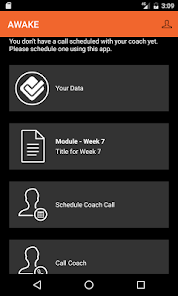
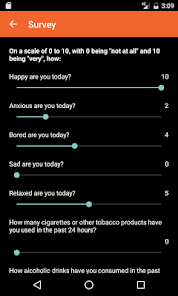
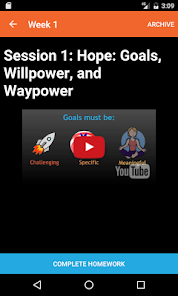
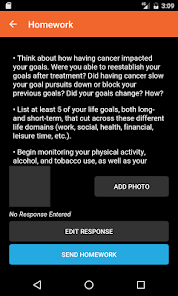
Emory AWAKE screenshot 1 of 4Emory AWAKE screenshot 2 of 4Emory AWAKE screenshot 3 of 4Emory AWAKE screenshot 4 of 4

Detailed Description

Functionality & Mechanism

Developed at Emory University, Emory AWAKE is an eight-week, app-based positive psychology program. It delivers educational video content focused on hope and goal-oriented thinking for young adult cancer survivors. The system integrates mood and activity tracking functionalities to supplement the core curriculum. This digital intervention is structured to be used in conjunction with telephone-based coaching, facilitating a supported reorientation to personal and professional goal pursuits following cancer treatment.

Evidence & Research Context

  • A pilot randomized controlled trial (N=56) evaluated the feasibility, acceptability, and potential efficacy of the program among young adult cancer survivors (18-40 years old).
  • The eight-week intervention demonstrated high rates of retention, engagement, and user satisfaction when compared to an attention control condition.
  • Participants utilizing Emory AWAKE rated the video content as significantly more relevant (p=.007) and were more likely to report positive program feedback.
  • Efficacy outcomes, including hope and quality of life, showed positive trends for the intervention group, warranting larger trials to confirm clinical efficacy.

Intended Use & Scope

Emory AWAKE is designed as a supportive, adjunct program for young adult cancer survivors navigating post-treatment life transitions. Its primary utility is to promote goal-directed thinking and enhance quality of life through a structured curriculum. The system is not a substitute for formal psychiatric or psychological care for conditions such as clinical depression and should be used as a complementary tool.

Studies & Publications

1 publication

Peer-reviewed research associated with this app.

RCT

A Hope-based Intervention to Address Disrupted Goal Pursuits and Quality of Life Among Young Adult Cancer Survivors

Berg et al. (2020) · Journal of Cancer Education

High engagement achieved but improvements in hope and quality of life were not statistically significant.

Over 70,000 US young adults are diagnosed with cancer annually, disrupting important life transitions and goal pursuits. Hope is a positive psychology construct associated with better quality of life (QOL) that focuses on goal-oriented thinking. We developed and tested Achieving Wellness After Kancer in Early life (AWAKE), a scalable eight-week app-based program consisting of educational videos, mood/activity tracking, and telephone-based coaching to promote hope and QOL in young adult cancer survivors (YACS, 18–40 years old). A two-arm RCT was used to examine the feasibility, acceptability, and potential efficacy of AWAKE (n=38) versus attention control (AC; n=18) among YACS within two years of completing treatment and recruited from two NCI-designated cancer centers. Outcomes including hope (Trait Hope Scale), QOL (36-Item Short Form Health Survey; Functional Assessment of Cancer Therapy-General), depressive symptoms (Patient Health Questionnaire-9), and substance use were assessed at baseline, 8 weeks, and 6 months. Participants were an average of 32.55 (SD=5.45) years old; 75.0% were female, and 80.4% White. The most common cancers were breast (28.6%), melanoma (16.1%), and leukemia/lymphoma (12.5%). High retention, engagement, and satisfaction rates were documented in both conditions; AWAKE versus AC participants rated video content as more relevant (p=.007) and reported greater likelihood of talking positively about the program (p=.005). Many efficacy change scores showed positive trends in AWAKE versus AC. Reorienting to one's goal pursuits after cancer diagnosis and treatment is critical and may be supported through hope-based interventions. Findings suggest that the AWAKE warrants subsequent research testing its efficacy, effectiveness, and scalability.
... Read More

Emory AWAKE

Free