
AppsFromResearch
ETUDESBritePath icon

ETUDESBritePath

Evidence Tier:CLINICAL GRADE

Studied in clinical trials · Mixed evidence

For:General Public & EnthusiastsPatients & Caregivers

App Summary

ETUDESBritePath is a safety planning app for adolescents recently hospitalized for suicidal thoughts or behaviors, designed to help them manage emotional distress and access coping strategies after discharge. A randomized controlled trial (N=240) found that among youth hospitalized for a suicide attempt, those assigned to use the app had a significantly lower rate of subsequent attempts (OR = 0.16) and a greater time to the next attempt (HR = 0.20) over a 6-month follow-up. The associated research concludes that the app had promising outcomes for reducing the risk of future attempts among this high-risk group.

App Screenshots

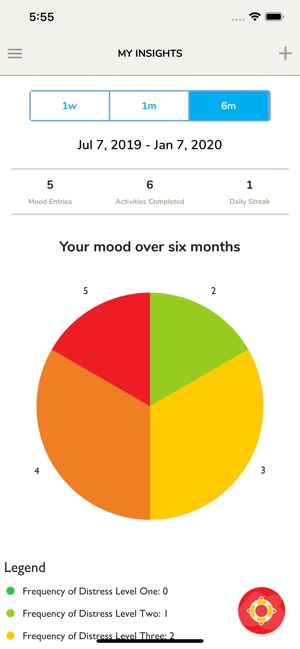
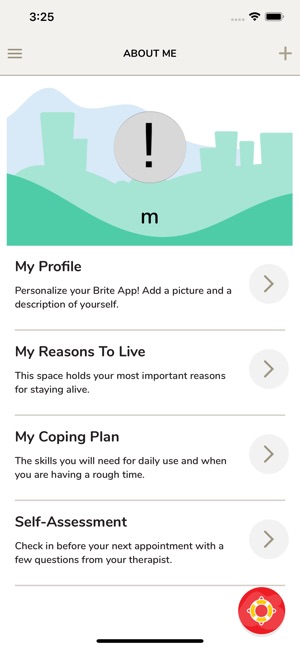
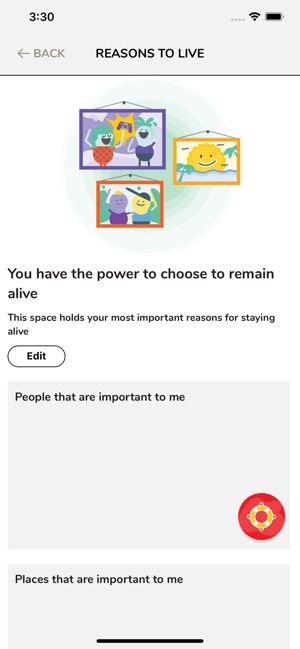
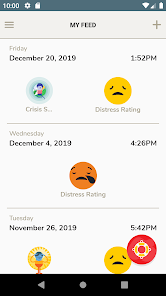
ETUDESBritePath screenshot 1 of 6ETUDESBritePath screenshot 2 of 6ETUDESBritePath screenshot 3 of 6ETUDESBritePath screenshot 4 of 6ETUDESBritePath screenshot 5 of 6ETUDESBritePath screenshot 6 of 6

Detailed Description

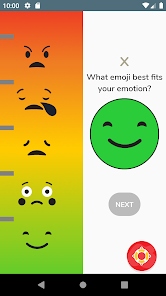
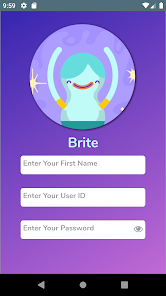
Functionality & Mechanism ETUDESBritePath is a digital safety planning and emotion regulation tool designed for adolescents post-hospitalization. The system prompts users for daily distress ratings and delivers personalized coping strategies and safety plan components. Core modules facilitate access to support contacts, reminders of personal values, and activities for managing distress. The interface is designed for flexible use, allowing content to be tailored by both the adolescent user and their clinical provider to align with individual therapeutic goals.

Evidence & Research Context

  • A randomized controlled trial (N=240) of hospitalized suicidal adolescents found that among youth with a prior suicide attempt, app use was associated with a significantly lower rate of subsequent attempts (OR=0.16).
  • Across two randomized trials (N=306 total), the app did not demonstrate a statistically significant effect on reducing future suicide attempts or suicidal ideation for the overall population of at-risk adolescents studied.
  • A preliminary pilot study (N=66) documented high user engagement and satisfaction, with 70% of participants using the app post-discharge.
  • In a qualitative study (N=17), clinical providers identified the app's integrated safety plan as a potentially beneficial adjunct to therapy but noted challenges with clinical workflow integration.

Intended Use & Scope This system is intended for use by adolescents at high risk for suicide, as an adjunct to clinical care following psychiatric hospitalization. Its primary scope is to reinforce safety planning and emotion regulation skills during the high-risk post-discharge period. It is not a standalone intervention, a crisis response service, or a replacement for professional psychotherapy.

Studies & Publications

3 publications

Peer-reviewed research associated with this app.

Qualitative Study

Provider Perspectives on the Use of Mental Health Apps, and the BritePath App in Particular, With Adolescents at Risk for Suicidal Behavior: Qualitative Study

Lynch et al. (2024) · JMIR Human Factors

Providers expressed positive views about using mental health apps with high-risk youth to enhance communication and care.
Background: Many youth with significant mental health concerns face limited access to mental health services. Digital programs, such as mobile apps designed to address mental health issues, have the potential to expand access to strategies for managing these conditions. However, few mental health apps are specifically designed for youth experiencing severe concerns, such as suicidal ideation. BritePath is a new app developed to enhance communication and interaction between providers and youth at risk for suicidal behavior. Objective: This study aims to explore health care providers' opinions and concerns regarding the use of mental health apps for youth at significant risk of suicidal behavior. Methods: We conducted individual semistructured interviews with 17 providers across 7 states. Interviews were conducted via video, recorded, and transcribed. Codes were developed using a team-based approach, with discrepancies resolved through team discussions. Results: Most providers were aware of mental health apps in general and expressed interest in trying the BritePath app with patients experiencing depression, suicidality, or both. Analyses identified 4 key themes related to mental health apps: (1) almost all providers viewed mental health apps as an adjunct to, rather than a replacement for, psychotherapy visits; (2) most providers were concerned about the cost of apps and youth access to them; (3) providers noted the challenge of maintaining patient engagement with apps over time; and (4) providers were concerned about patient privacy, in terms of both data shared with app developers and data privacy within families. Analyses of providers' opinions specifically about the BritePath app identified 4 additional themes: (1) providers believed that access to safety plans within BritePath could be beneficial for youth at risk for suicidal behavior; (2) providers reported that BritePath's interactive features could enhance communication between providers and youth; (3) providers appreciated BritePath's flexibility and the ability for both youth and providers to tailor its content to individual needs; and (4) providers expressed concerns about integrating BritePath into clinical workflows within health systems. Conclusions: The use of mental health apps is expanding, yet there is limited understanding of how to effectively integrate these tools into mental health treatment. Providers are increasingly referring patients to mental health apps, and most expressed interest in trying the BritePath app for patients with depression, suicidality, or both. However, providers also identified several concerns, particularly regarding privacy and safety.
... Read More
RCT

Bridging Gaps in Care Following Hospitalization for Suicidal Adolescents: As Safe As Possible (ASAP) and BRITE App

Goldstein et al. (2024) · Journal of the American Academy of Child and Adolescent Psychiatry

Reduced re-hospitalizations overall and attempts in one subgroup, but most outcomes showed no difference.

Objective We present results from a 2-site, randomized clinical trial to assess the efficacy of a brief intervention (As Safe As Possible [ASAP]), a safety plan phone application (BRITE), and their combination on suicide attempts, suicidal ideation, non-suicidal self-injury, re-hospitalizations. and suicidal events among adolescents. Method Adolescents (n= 240; 12-17 years of age) who were hospitalized for suicidal ideation with plan and/or intent, and/or suicide attempt, were assigned to 1 of 4 treatment conditions in a 2 by 2 design: ASAP+BRITE app+treatment as usual (TAU); (2) BRITE+TAU; (3) ASAP+TAU; and (4) TAU alone. Independent evaluators assessed suicidal ideation and behavior at 4, 12, and 24 weeks using the Columbia–Suicide Severity Rating Scale (C-SSRS) and re-hospitalization using the Child and Adolescent Services Assessment (CASA). Results No group differences were found on primary outcomes, except that ASAP participants were less likely to be re-hospitalized over 6 months (15.6%, vs 26.5%, p = .046). Participants hospitalized for an attempt and assigned to BRITE had a lower rate of subsequent attempts (odds ratio [OR] = 0.16, p = .01) and a greater time to attempt (hazard ratio [HR] = 0.20, p = .02). ASAP+BRITE, albeit not statistically significant, was most consistently associated with a reduction (60% reduction) in suicide attempts. Conclusion ASAP, BRITE, and their combination are equally effective at decreasing risk for suicidal events 6 months post hospital discharge among suicidal adolescents; the ASAP intervention (with or without BRITE) was associated with lower rates of re-hospitalization. The BRITE app in youth hospitalized for suicide attempt had promising outcomes in regard to future attempts. Plain language summary This randomized clinical trial examined the efficacy of brief intervention and/or a safety plan phone application for suicide prevention after discharge. A total of 240 youth aged 12 to 17 years of age who were hospitalized at 2 inpatient psychiatric facilities for suicidal thoughts or behaviors were randomly assigned to 1 of 4 treatment conditions: a brief intervention (As Safe As Possible, ASAP), a safety planning phone app (BRITE), their combination, or treatment as usual and followed over 6 months post-hospitalization. Findings indicate ASAP, BRITE, and their combination are equally effective at decreasing risk for suicidal events over 6 months posthospital discharge. Lower rehospitalization rates were associated with ASAP, whereas BRITE was associated with lower risk of suicide attempt over follow-up among those hospitalized for attempt.
... Read More

In the Media

David Brent, MD, Honored by the Association for Child and Adolescent Mental Health

University of Pittsburgh's David Brent, MD developed ETUDESBritePath as a suicide prevention app that guides non-specialist clinicians in developing safety plans, building on his research into adolescent suicidal behavior and depression. According to the Association for Child and Adolescent Mental Health, Brent "invented a computerized adaptive screening for suicidal risk, to be deployed in emergency departments; a machine learning algorithm based on health care records, to predict future suicidal behavior; and a suicide prevention app that guides non-specialist clinicians in the development of a safety plan." Brent received the Eric Taylor Translational Research into Practice Award for his sustained contribution to translating research into clinical practice.

BitRead article

David Brent, MD, Honored by the American Foundation for Suicide Prevention with Lifetime Achievement Research Award

Dr. David Brent from the University of Pittsburgh developed ETUDESBritePath as a mobile safety planning app that provides teens with instant access to coping strategies, using innovative technology to help determine when youth are at high suicidal risk. Brent, who recently received the Lifetime Achievement Research Award from the American Foundation for Suicide Prevention, created this app as part of his latest work combining mobile sensing technology with suicide prevention strategies. The app represents a technological advancement in his decades-long research framework for evidence-based care of at-risk youth.

PittRead article

Brent and Colleagues Test New Smartphone-based Intervention to Reduce Suicide Attempts by Teens Following Hospital Discharge

University of Pittsburgh researchers led by Dr. David Brent developed the BRITE smartphone app to support suicidal adolescents during the high-risk transition from inpatient to outpatient care, prompting daily emotional distress ratings and providing personalized emotion regulation strategies. In a randomized study of 66 hospitalized adolescents, participants using BRITE with the ASAP intervention showed half the rate of suicide attempts compared to usual care. The majority of participants (70%) actively engaged with the app to modify content and rate their distress levels.

PittRead article

ETUDESBritePath

Free