

HEAL ABC
Initial evidence from research studies
App Summary
App Screenshots
Detailed Description
Functionality & Mechanism
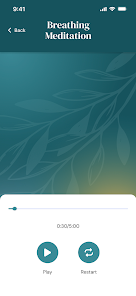
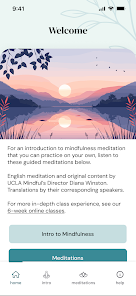
HEAL ABC delivers a library of guided mindfulness meditation audio sessions designed for independent practice. Developed with content from UCLA Mindful, the system facilitates brief, structured sessions of approximately 12 minutes. The interface provides audio-based exercises intended to mitigate psychological distress and promote mental well-being. The core mechanism involves guided practice in mindfulness techniques, with content available in English and multiple translated versions to support accessibility across diverse user populations.
Evidence & Research Context
- A preliminary pilot study (N=20) evaluated the app's use as part of a brief mindfulness intervention for hospitalized patients with advanced heart failure.
- The intervention was associated with statistically significant reductions in perceived stress and anxiety from baseline to 4 weeks (P=.001).
- A significant increase in psychological resilience was also documented over the same period (P=.001).
- This single-group, pretest-posttest study indicated the intervention was feasible and acceptable within this acute care setting; larger trials are needed to confirm efficacy.
Intended Use & Scope
This tool is designed for the general public and for potential integration into clinical care plans under professional guidance. It functions as an adjunctive intervention to mitigate symptoms of stress and anxiety and to build resilience. The app is not a standalone treatment for psychiatric disorders and does not replace professional mental healthcare. Users experiencing severe symptoms should consult a qualified clinician.
Studies & Publications
Peer-reviewed research associated with this app.
App-Based Mindfulness Intervention to Improve Psychological Outcomes in Pretransplant Patients With Heart Failure
Vandenbogaart et al. (2023) · Critical Care Nurse
Significantly reduced stress and anxiety while increasing resilience in hospitalized heart failure patients.
In the Media
UCLA Mindful App - UCLA Mindful
UCLA Health developed the UCLA Mindful app to help users practice mindfulness meditation anywhere with guided instruction, using research-backed techniques to manage stress and improve well-being. The app teaches users to develop "moment-to-moment awareness of our thoughts, feelings, body sensations and environment" while promoting "an attitude of openness, curiosity, and a willingness to be with our experience." Scientific research shows the app's mindfulness approach can help manage stress-related physical conditions, reduce anxiety and depression, and improve overall physical health.
Her path to sharing mindfulness at UCLA began with meeting the Dalai Lama
UCLA's Diana Winston developed mindfulness practices to serve as "an act of service and a way of cultivating a more peaceful world," using secular meditation techniques informed by her Buddhist training. Winston, who was ordained as a Buddhist nun in Myanmar where she meditated 16-to-18 hours daily, has shared mindfulness at UCLA since 2006 after the Dalai Lama characterized her approach as connecting meditation with social justice. Her path began when she heard a teaching in India that made her realize "This explains my life," leading her to dive deeply into meditation practice.
App Information
Category
Evidence Profile
Initial evidence from research studies
Platforms
Updated
Jan 2026
© 2025 University of California, Los Angeles
Tags
Developer Links
Privacy Policy


HEAL ABC
Free