
Help Kids Cope
Published in academic literature
App Summary
App Screenshots
Detailed Description
Functionality & Mechanism
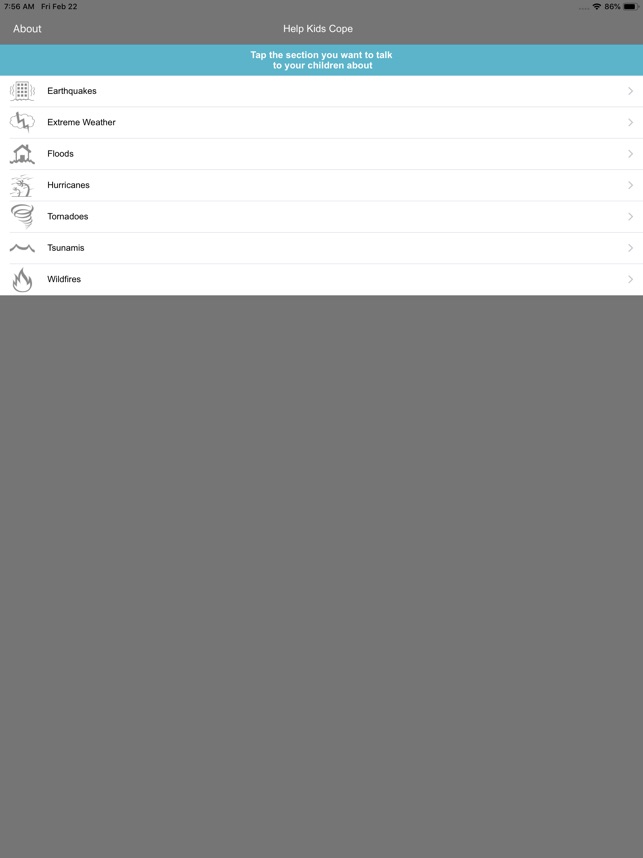
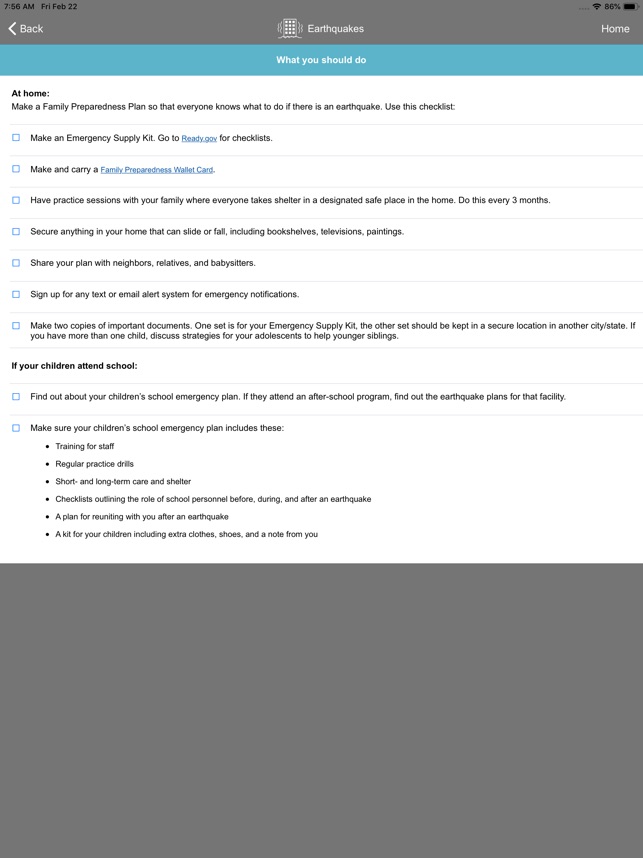
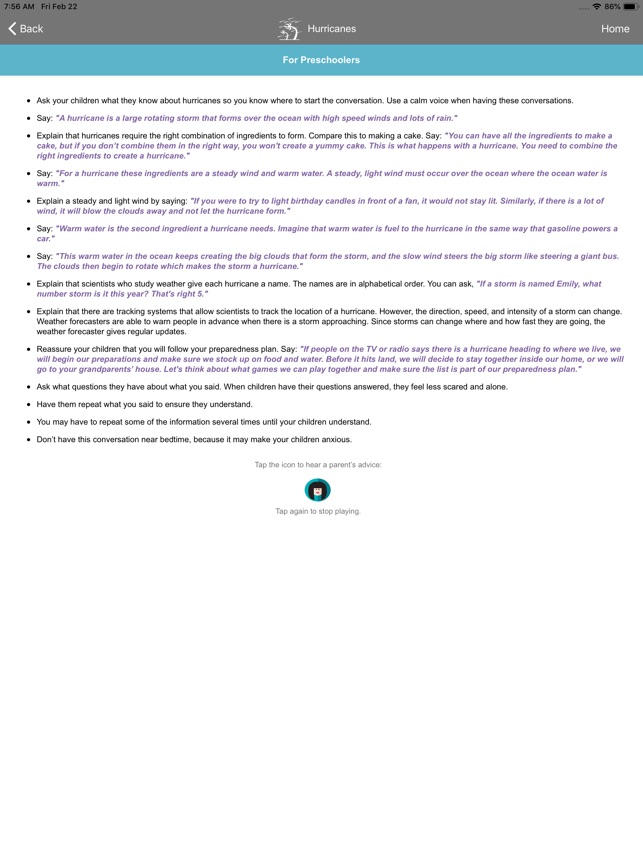
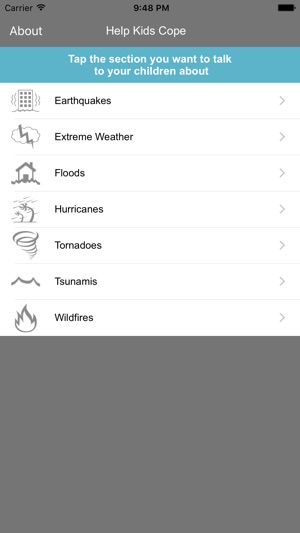
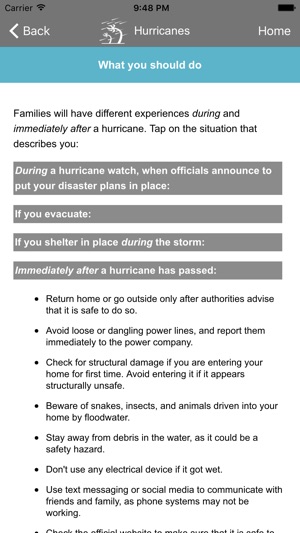
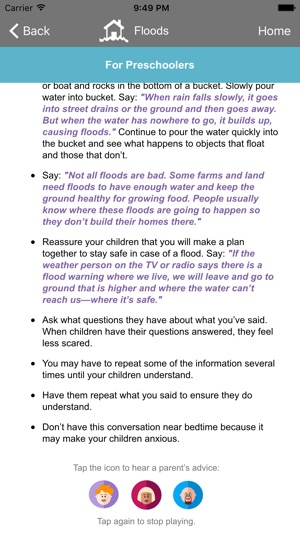
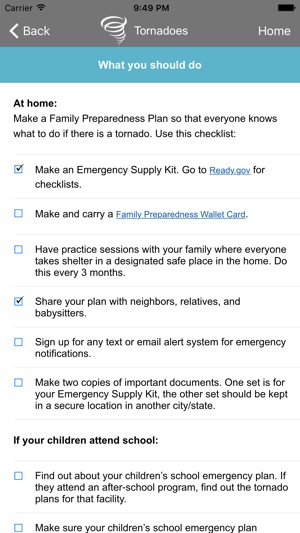
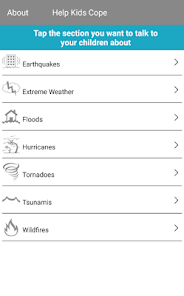
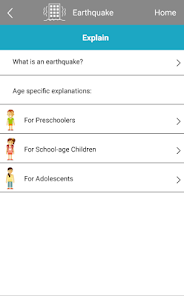
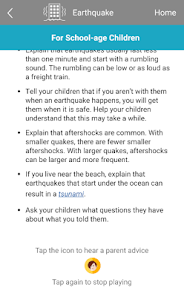
Developed by the National Child Traumatic Stress Network and Ozark Center, the Help Kids Cope application delivers structured guidance to parents and caregivers for discussing disasters with children. The system organizes content across 10 disaster types, with modules dedicated to explaining, preparing for, responding to, and healing from traumatic events. The interface provides age-specific scripts and coping strategies for preschool, school-age, and adolescent children. Integrated audio vignettes supplement the pedagogical content with parent perspectives.
Evidence & Research Context
- The application's content is grounded in principles of trauma-informed care and child development, leveraging expertise from the National Child Traumatic Stress Network (NCTSN).
- An evidence-informed toolkit for juvenile justice agencies, developed by Child Trends and the NCTSN, cites the app as a recommended resource for caregivers.
- The toolkit highlights the app's utility for facilitating conversations with children about disasters and managing their emotional responses to promote healing and resilience.
Intended Use & Scope
The application is intended for parents, caregivers, and professionals seeking guidance on communicating with children about disasters. Its primary utility is as a psychoeducational support tool to facilitate constructive conversations and promote adaptive coping. The tool does not constitute a clinical intervention or replace professional mental health services; consultation with a qualified provider is necessary for persistent traumatic stress.
Studies & Publications
Peer-reviewed research associated with this app.
A toolkit for juvenile justice agencies to help young people heal and thrive during and after natural disasters
Bartlett et al. (2021) · Child Trends
Referenced in academic literature; no direct evaluation of the appApp Information
Category
Evidence Profile
Published in academic literature
Platforms
Updated
Feb 2019
© 2025 University of California, Los Angeles