
iaya
Preliminary research — inconclusive findings
App Summary
App Screenshots




Detailed Description
Functionality & Mechanism
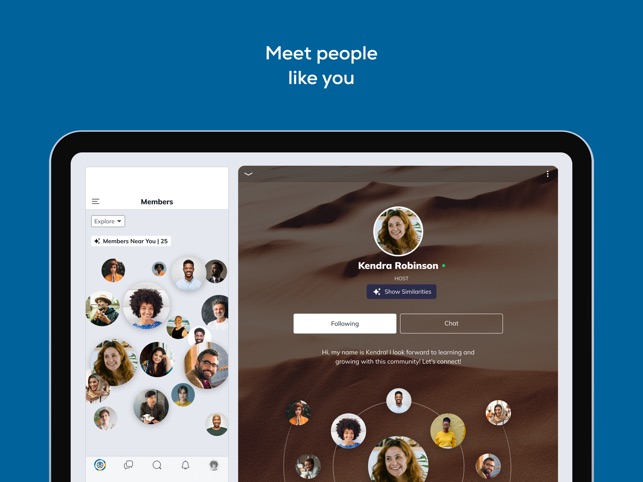
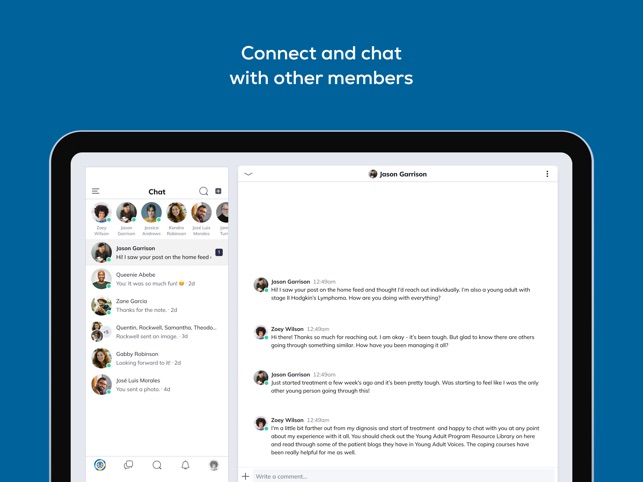
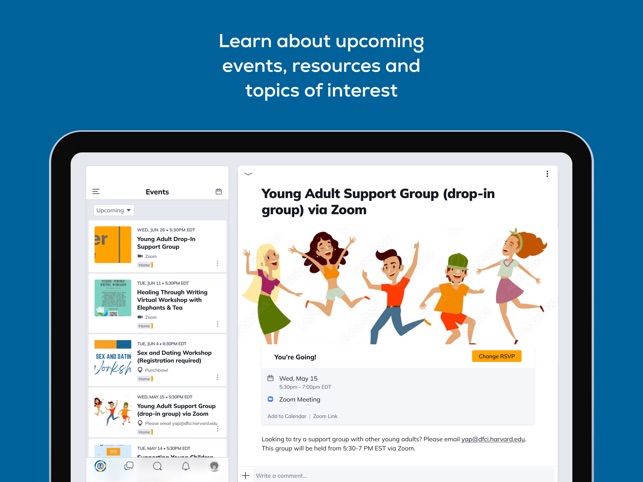
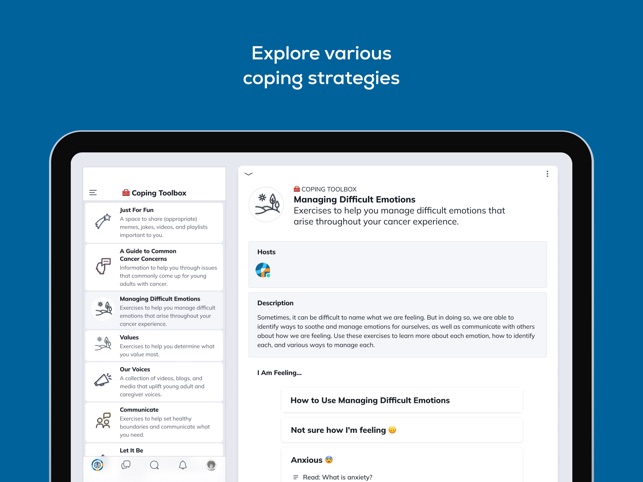
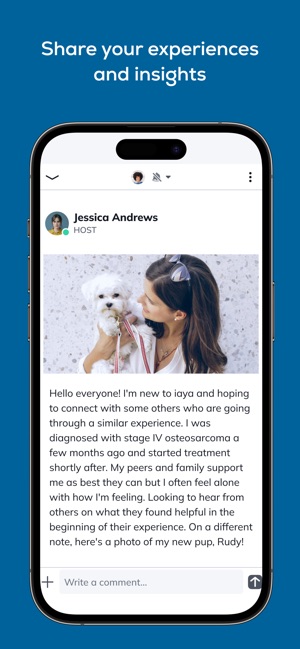
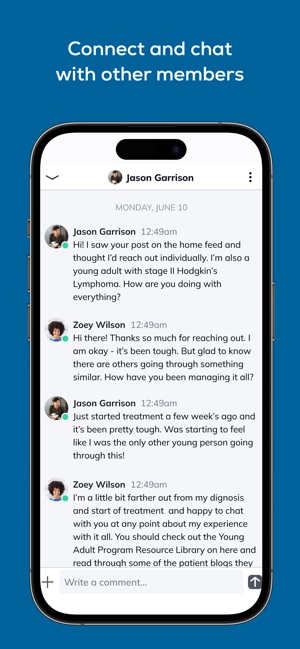
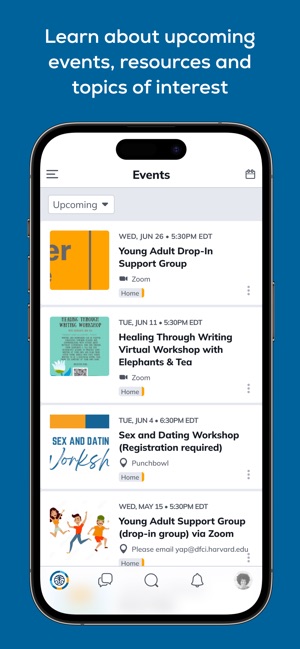
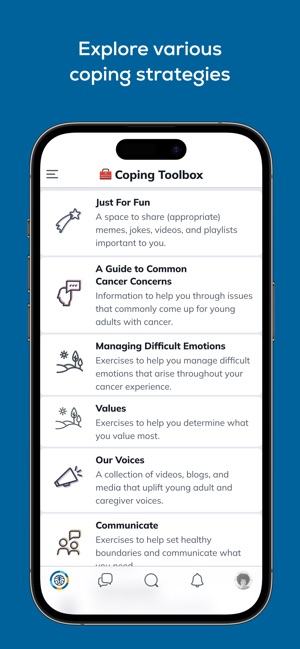
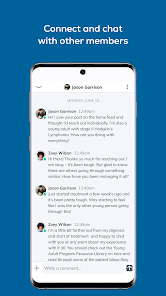
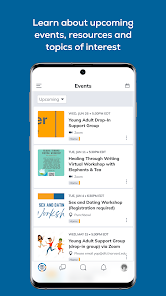
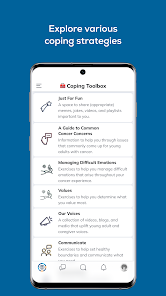
Developed by the Dana-Farber Cancer Institute, iaya is a web-based psychosocial support platform for young adults with cancer. The system delivers coping strategy courses and facilitates peer-to-peer connection through community forums, private messaging, and a geolocation feature. Its interface also integrates an event calendar for institutional Young Adult Programs and a curated directory of cancer-specific resources. The platform is structured to provide both psychoeducational content and a virtual support community to address users' emotional needs.
Evidence & Research Context
- A single-group pilot study (N=25) evaluated the feasibility and acceptability of the app among young adults (ages 18-39) undergoing active cancer treatment.
- The intervention demonstrated acceptability, achieving a mean usability score of 73.7%, which surpassed the study's predefined threshold of 70%.
- As a stand-alone intervention, the app did not meet a priori feasibility criteria, with only 9% of participants reaching target engagement levels over 12 weeks.
- The authors concluded that future implementation should consider integrating the app within a broader program of psychosocial care rather than as a stand-alone tool.
Intended Use & Scope
This platform is intended for young adults with cancer seeking peer support and supplemental coping resources. Its primary utility is as an adjunct tool to facilitate community connection and provide psychoeducational content. The app is not a substitute for clinical psychosocial care or professional mental health services, and its efficacy in improving patient-reported outcomes has not been established.
Studies & Publications
Peer-reviewed research associated with this app.
Feasibility and Acceptability of a Smart Phone Application Intervention to Enhance Coping for Young Adults with Cancer
Poort et al. (2020) · Journal of Medical Internet Research
Feasibility concerns identified: only 9% of users met engagement thresholds despite acceptable usability.
In the Media
Dana-Farber's Pioneering AYA Programs Focus on the Whole Patient with World-Class Care
Dana-Farber Cancer Institute developed pioneering AYA (adolescent and young adult) programs to address the underrepresented cancer patient population aged 15-39, who often fall in "limbo" between pediatric and adult care settings. The institute recognizes that AYAs represent only 4% of all new cancer diagnoses annually, with an estimated 84,100 cases diagnosed each year in the United States according to the National Cancer Institute. Dana-Farber's focused approach provides a template for other organizations supporting this demographic that faces unique treatment and psychosocial challenges.
New App Developed for Young Adults Coping with Cancer
Brigham and Women's Hospital psychologist Karen Fasciano, PsyD, developed iaya to address the emotional needs of young adults coping with cancer, working with the Brigham Digital Innovation Hub over two years to create the smartphone app with patient input. "Many young patients find their lives on hold," said Fasciano, explaining that "overwhelming changes related to cancer bring unfamiliar and intense emotions." The app was set to launch in late summer and be made available to young adults at the Dana-Farber/Brigham and Women's Cancer Center.
App Information
Developer
Dana-Farber Cancer InstituteCategory
Evidence Profile
Preliminary research — inconclusive findings
Platforms
Updated
Sep 2026
© 2025 Dana-Farber Cancer Institute