AppsFromResearch
Infant-Toddler IGDI icon

Infant-Toddler IGDI

Evidence Tier:CLINICAL GRADE

Validated in clinical trials · Supported by multiple studies

For:Researchers & AcademicsClinicians & Healthcare ProfessionalsEducators & Teachers

App Summary

Infant-Toddler IGDI is a progress monitoring tool for early intervention professionals to conduct quick, play-based assessments of developmental skills in young children. An evaluation study (N=50 practitioners) found that professionals could be trained relatively quickly to reliably administer and score the assessments, with associated research also establishing the equivalence of scores between in-person and remote administration. The authors conclude that these indicators can effectively support data-informed decision-making, helping to monitor developmental growth and identify children at-risk for delays.

App Screenshots

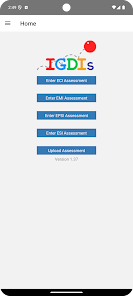
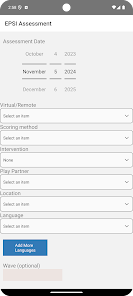
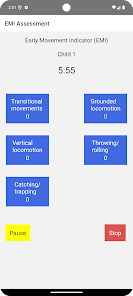
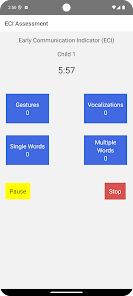
Infant-Toddler IGDI screenshot 1 of 4Infant-Toddler IGDI screenshot 2 of 4Infant-Toddler IGDI screenshot 3 of 4Infant-Toddler IGDI screenshot 4 of 4

Detailed Description

Functionality & Mechanism

The Infant-Toddler Individual Growth and Development Indicators (IGDI) system facilitates longitudinal progress monitoring for children from birth to three years. The platform leverages a series of brief, play-based assessments, each requiring approximately six minutes to administer. These assessments are designed for frequent use to track incremental developmental changes. Core domains measured encompass communication, motor skills, social engagement, and cognitive problem-solving. A web-based application supports data entry, scoring, and visualization, with established protocols for remote administration via videoconferencing.

Evidence & Research Context

  • An evaluation study of 50 Early Intervention practitioners demonstrated that professionals can be certified to reliably administer and score I/T IGDIs after a few training sessions.
  • Associated research details the successful development of remote administration protocols, reporting score equivalence between in-person and remotely conducted assessments facilitated via videoconferencing.
  • Implementation research in community-based agencies found that systemic factors, such as high staff turnover and high staff-to-child ratios, were associated with lower rates of adoption.
  • In field-based studies, the communication indicator has been the most frequently utilized IGDI domain, indicating its perceived utility among practitioners for tracking language development.

Intended Use & Scope

This system is designed for early intervention practitioners, educators, and researchers for frequent progress monitoring and developmental screening. Its primary utility is to generate data that informs intervention and instructional decision-making. The IGDI is not a diagnostic tool; results indicating risk of delay necessitate a comprehensive developmental evaluation by a qualified professional.

Studies & Publications

3 publications

Peer-reviewed research associated with this app.

Evaluation Study

Technology to Facilitate Progress Monitoring of Infant'Toddler Growth and Development: Measuring Implementation in Community-Based Agencies

Buzhardt et al. (2022) · Journal of Special Education Technology

Showed promise in some agencies but staff turnover and high child-to-staff ratios limited consistent use.

Despite evidence that frequent progress monitoring to identify children at-risk of delays and inform early intervention services improves child outcomes, this practice is rare in infant–toddler settings where children could benefit the most from early intervention. Using a descriptive research design within an Implementation Science framework, we evaluated how 10 community-based infant–toddler agencies implemented a standardized progress monitoring assessment using a web application to monitor children's growth and identify children at-risk for delay. An Implementation Index was developed to quantify implementation progress for each agency, which included their percent of tasks completed, and rate of task implementation over time. Staff turnover and high staff:child ratios were associated with low implementation of progress monitoring. The Implementation Index differentiated between agencies that otherwise demonstrated similar implementation rates. Implications for supporting progress monitoring and other evidence-based practices in community-based infant–toddler childcare settings are discussed.
... Read More
Validation Study

Remote Use of Individual Growth and Development Indicators (IGDIs) for Infants and Toddlers

Greenwood et al. (2021) · Journal of Early Intervention

Remote assessment protocols produced scores equivalent to in-person administration and were preferred by families and staff.

Universal screening and progress monitoring are evidence-based practices in early intervention/early childhood special education (EI/ECSE). Individual Growth and Development Indicators (IGDIs) for infants/toddlers are measures that programs can use for universal screening, progress monitoring, intervention decision-making, and accountability. Prior to the COVID-19 pandemic, IGDIs were administered and scored exclusively in person by certified early educators. Because of COVID-19, EI/ECSE practitioners could no longer conduct in-person assessments. We report how two early intervention programs implemented IGDIs using remote protocols that included (a) preparation of parents for IGDI administration at home, (b) session observation by program staff using videoconferencing, and (c) remote coding of the child's performance by program staff when interacting with a parent/caregiver play partner using the standard toy set. The remote protocols are described, and uptake by the programs is compared before and during the pandemic. Equivalence of children's scores from in-person versus remote protocols is reported, as well as caregivers' and program staff's preferences. Implications for remote early childhood services are discussed.
... Read More

Infant-Toddler IGDI

Free