
AppsFromResearch
MOVE! Coach icon

MOVE! Coach

Evidence Tier:CLINICAL GRADE

Studied in clinical trials · Mixed evidence

For:General Public & EnthusiastsPatients & Caregivers

App Summary

MOVE! Coach is a 16-week weight management app designed to help Veterans and service members lose weight through guided education, goal setting, and progress tracking. An effectiveness study (N=377) of the underlying MOVE! program found that participants lost an average of 2.2 kg one year after enrollment, and a separate evaluation noted that more intensive participation was associated with greater weight loss. The associated research concludes that structured, long-term programs can help patients achieve and maintain weight loss to reduce the risk of associated chronic diseases.

App Screenshots

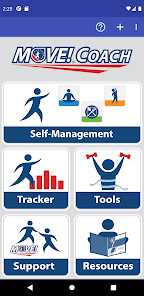
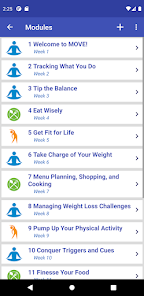
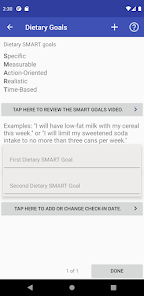
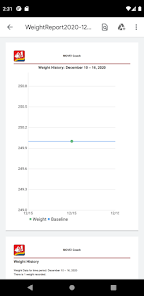
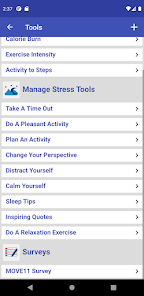
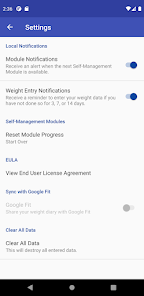
MOVE! Coach screenshot 1 of 16MOVE! Coach screenshot 2 of 16MOVE! Coach screenshot 3 of 16MOVE! Coach screenshot 4 of 16MOVE! Coach screenshot 5 of 16MOVE! Coach screenshot 6 of 16MOVE! Coach screenshot 7 of 16MOVE! Coach screenshot 8 of 16MOVE! Coach screenshot 9 of 16MOVE! Coach screenshot 10 of 16MOVE! Coach screenshot 11 of 16MOVE! Coach screenshot 12 of 16MOVE! Coach screenshot 13 of 16MOVE! Coach screenshot 14 of 16MOVE! Coach screenshot 15 of 16MOVE! Coach screenshot 16 of 16

Detailed Description

Functionality & Mechanism

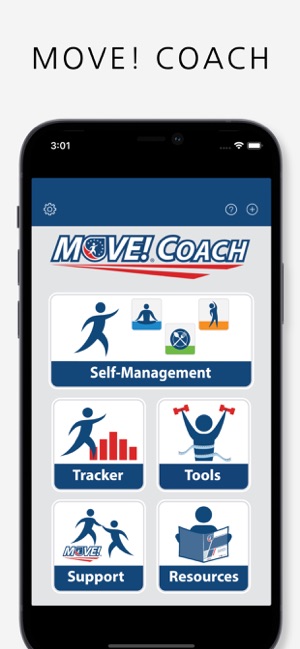
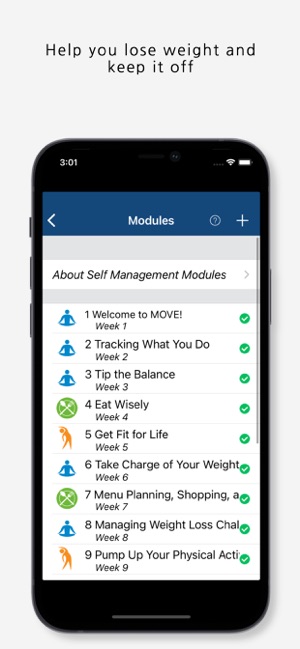
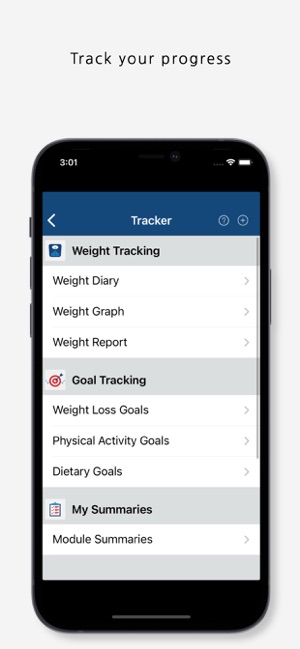
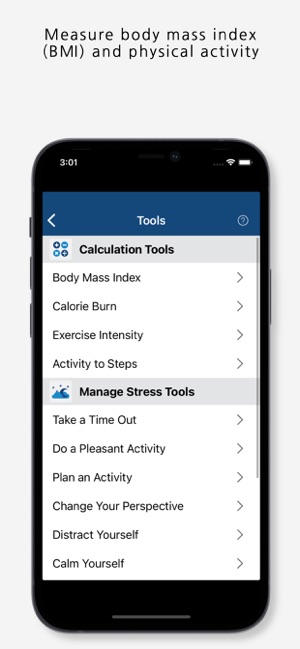
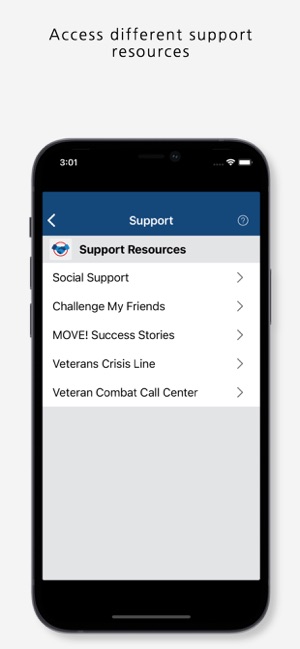
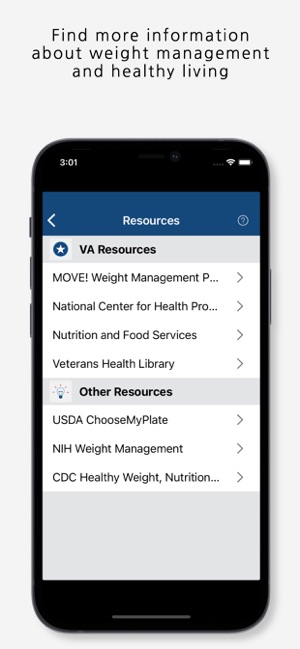
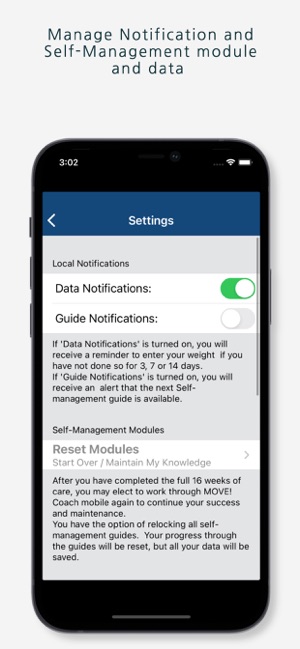
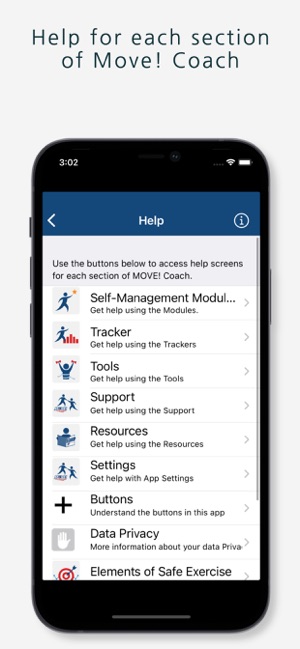
Developed by the VHA's National Center for Health Promotion and Disease Prevention, MOVE! Coach delivers a structured 16-week weight management program. The system provides users with sequentially unlocked weekly modules containing pedagogical content via videos, worksheets, and interactive tools. Core functionality includes self-management modules, goal-setting interfaces, and progress trackers for weight, diet, and exercise. The app can be used as a standalone intervention or in conjunction with clinical care and integrates with Apple HealthKit for data synchronization.

Evidence & Research Context

The following evidence pertains to the multicomponent MOVE! program, which provides the clinical framework for the app:

  • An effectiveness study (N=377) found that veteran participants achieved an average weight loss of 2.2 kg at one year post-enrollment, reversing a pre-enrollment trend of weight gain.
  • Program evaluation data indicates a dose-response relationship, where more intensive participation (≥6 encounters) was associated with significantly greater weight loss (−3.7 lbs) at 12-month follow-up compared to nonparticipants.
  • A preliminary pilot study (N=14) of veterans with severe obesity and depression found program participation was associated with significant reductions in depression severity, which correlated with weight loss.
  • A randomized trial (N=109) of a modified program for veterans with serious mental illness did not demonstrate a significant effect on weight loss, indicating variable outcomes across specific clinical populations.

Intended Use & Scope

This app is intended for use by veterans, service members, and the general public as a self-guided weight management tool. Its primary utility is to deliver a structured behavioral intervention and facilitate progress monitoring. The app does not replace professional medical advice or treatment for obesity-related comorbidities and should be used in consultation with a healthcare provider, particularly for individuals with complex medical histories.

Studies & Publications

5 publications

Peer-reviewed research associated with this app.

Survey/Cross-sectional

National Veterans Health Administration MOVE! Weight Management Program Participation During the COVID-19 Pandemic

Gray et al. (2022) · Preventing Chronic Disease

The weight management program successfully transitioned to virtual care during COVID-19 with sustained participation levels.
Introduction In response to COVID-19, the Veterans Health Administration (VHA) converted appropriate outpatient visits to virtual care, including MOVE! Weight Management Program for Veterans (MOVE!) visits. Before the pandemic, most veterans participated in MOVE! in person, with several telehealth modalities available. We sought to describe national trends in MOVE! participation during the pandemic (March 2020–January 2021) overall and by modality and to compare participation to prepandemic levels. Methods We conducted a national retrospective cohort study of veterans who participated in MOVE! from January 2018 through January 2021. We examined MOVE! participation across VHA aggregated at the national level by month, including the number of visits, participants, and new participants in person and via telehealth, including telephone, clinic-to-clinic synchronous video, anywhere-to-anywhere (eg, provider home to patient home) synchronous video, and remote education and monitoring. We also determined the percentage of all MOVE! visits attributable to each modality and the monthly percentage change in participation during the pandemic compared with monthly averages in prior years. Results Before March 2020, 20% to 30% of MOVE! was delivered via telehealth, which increased to 90% by April 2020. Early in the pandemic, telephone-delivered MOVE! was the most common modality, but anywhere-to-anywhere synchronous video participation increased over time. Compared with the same months in prior years, total monthly MOVE! participation remained 20% to 40% lower at the end of 2020 and into January 2021. Conclusion The VHA MOVE! program rapidly shifted to telehealth delivery of weight management services in response to the pandemic. However, a gap remained in the number of veterans receiving these services compared with prior years, suggesting potential unmet needs for weight management.
... Read More
Pilot/Feasibility Study

Antidepressant Effect of the VA Weight Management Program (MOVE) Among Veterans With Severe Obesity

Shiroma et al. (2020) · Military Medicine

Showed trends toward depression improvement but lacked statistical significance and a comparison group.

Abstract Introduction Obesity is prevalent among users of Veteran's Health Administration services, where it is comorbid with depression, post-traumatic stress disorder, type 2 diabetes, cardiovascular disease, colon, and breast cancer. Among obese subjects, severe obesity represents a subpopulation with the highest risk of depression. We investigate the antidepressant effect of a local VA weight management program (Managing Overweight Veterans Everywhere – MOVE) among depressed veterans with severe obesity. Material and Methods In a 10-week prospective pilot study, 14 clinically depressed veterans with severe obesity were recruited from: (1) the 2-week residential based intense MOVE program (IMP) (N = 7) and (2) the 10-week educational module of self-management MOVE program (SMP) (N = 7). Subjects had a Beck Depression Inventory, 2nd edition (BDI-II) score > 12 and BMI > 40 or BMI > 35 with associated to comorbid conditions. Concurrent treatment for depression such as medications or psychotherapy was excluded. The primary efficacy endpoint was the change in BDI-II score form baseline to week 10. Analysis consisted of linear mixed model with baseline BDI-II score as a covariate, and level of MOVE intervention (IMP vs. SMP), time, and time by treatment interaction as fixed effects, and random patient effect. Pearson's correlation examined the relationships between clinical and demographic variables and change in severity of depression by BDI-II scores. Secondary outcomes include weight loss and energy expenditure. Results The sample was composed by 14 subjects (IMP = 7; SMP = 7) mostly unemployed (N = 9), married (N = 10), mid-aged (mean = 58.2, SD = 8.4), Caucasian (N = 13), male (N = 12), with recurrent depression (N = 11), and a mean overall duration of current depressive episode of 13.5 months (SD = 10.2). Out of 14 participants; seven had a family history of mood disorder, two had previous psychiatric hospitalization, three had a previous suicidal attempt, and eight had a history of substance use disorder. There was a significant decrease in severity of depression among all 14 (F3,36.77 = 5.28; P < 0.01); antidepressant effect favored the IMP compared to SMP at day 12 (F1,15.10 = 9.37, P = 0.01) and week 6 (F2,27.34 = 4.26, P = 0.03), but effect fell short of significance at week 10. The change in severity of depression measured by BDI-II score significantly correlated with total weight loss (r = −0.60; P = 0.04) and daily energy expenditure at 12 days (r = −0.67; P = 0.01), week 6 (r = −0.59; P = 0.03), and week 10 (r = −0.71; P = 0.01). Conclusions Depressed veterans with severe obesity improved their depressive symptoms by participating in the MOVE program. Veterans in the IMP had greater but short-term antidepressant effect as compared to educational intervention for obesity. Future studies with larger sample size may elucidate the underlying mechanisms of weight reduction to improve depression and, more importantly, sustain response among veterans with severe obesity.
... Read More

In the Media

MOVE! Coach

The U.S. Department of Veterans Affairs developed MOVE! Coach to help Veterans, service members, and their families manage their weight using convenient mobile education and resources. The app provides users with self-management modules, progress tracking tools, and goal-setting features that allow them to "monitor their progress with their health and weight goals." Users can create personal health and physical activity goals while sharing them via social media for additional support.

VaRead article

VA News and Information

The Department of Veterans Affairs developed MOVE! Coach to help veterans manage weight and improve fitness through a mobile platform integrated with VA health services. The app requires users to enter the same login credentials they use for VA.gov for security purposes and puts VA health and benefit information at users' fingertips anywhere, anytime. The application is available through VA's mobile health platform alongside other veteran-focused digital health tools.

VaRead article

Get moving with the MOVE! Coach app

The VA developed MOVE! Coach to provide Veterans and others with a 16-week weight management and lifestyle program using behavioral strategies and educational support. "What sets MOVE! Coach apart from other diet and activity apps is the strong educational support," said Lori Carlson, registered dietitian nutritionist and MOVE! program analyst. Retired Air Force Veteran Christy Blaum successfully lost 34 pounds using the app and continues using it for daily accountability.

VaRead article

MOVE! Coach

The Department of Veterans Affairs developed MOVE! Coach to support weight management for Veterans, using a self-management tool with educational content and progress tracking that can be used independently or with VA facility team check-ins. The app features 16 weekly self-management modules where "each module has an overview, educational content, videos and activities and an opportunity to set goals." While designed for Veterans, the app is available for anyone to use, though only Veterans can access check-ins with VA facility MOVE! teams.

VaRead article

Mobile app helps Veteran drop weight and live healthily

The VA developed MOVE! Coach to help Veterans manage weight loss through a 19-week self-guided program that tracks diet, physical activity and weight goals. Navy Veteran Richard Dalton used the app to drop more than 60 pounds over several months, stating "Through MOVE! Coach I have gotten my blood sugar down to normal." Dalton credits the app's convenience, noting "My smartphone is always with me, making it easy to use MOVE! Coach to write down what I'm eating, while I'm eating."

VaRead article

MOVE! Coach

Free