
AppsFromResearch
PFA Mobile icon

PFA Mobile

Evidence Tier:DOCUMENTED

Published in academic literature

For:Clinicians & Healthcare ProfessionalsIndustry Professionals

App Summary

PFA Mobile is a reference and support tool designed for disaster responders and healthcare workers, providing field-ready guidance for delivering Psychological First Aid (PFA) to survivors. A qualitative evaluation (N=19) of the app's use in disaster simulation training found that participating healthcare workers reported increased confidence and perceived the tool as effective for relief efforts. The associated research concludes that incorporating the app into training can help establish a valuable framework for educating responders and improving the delivery of mental health services.

App Screenshots

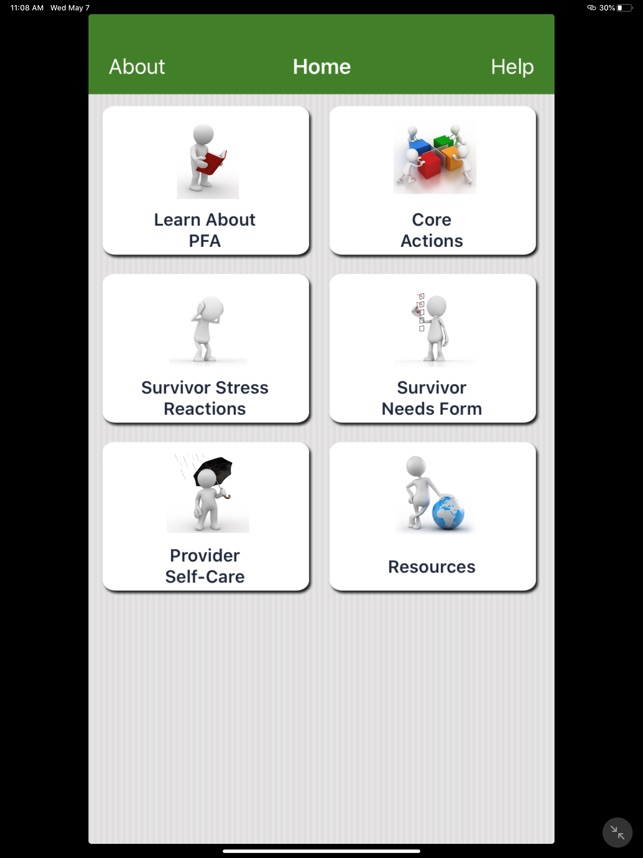
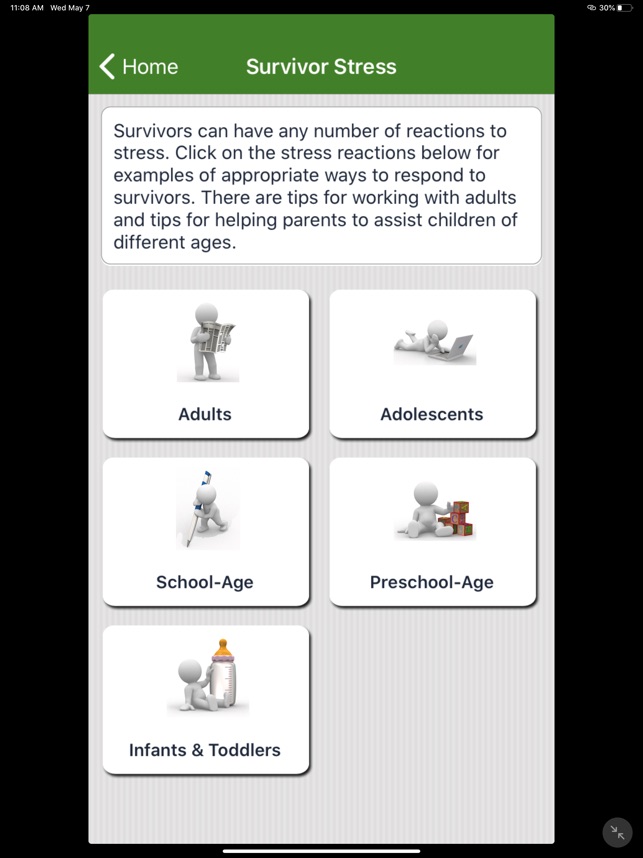
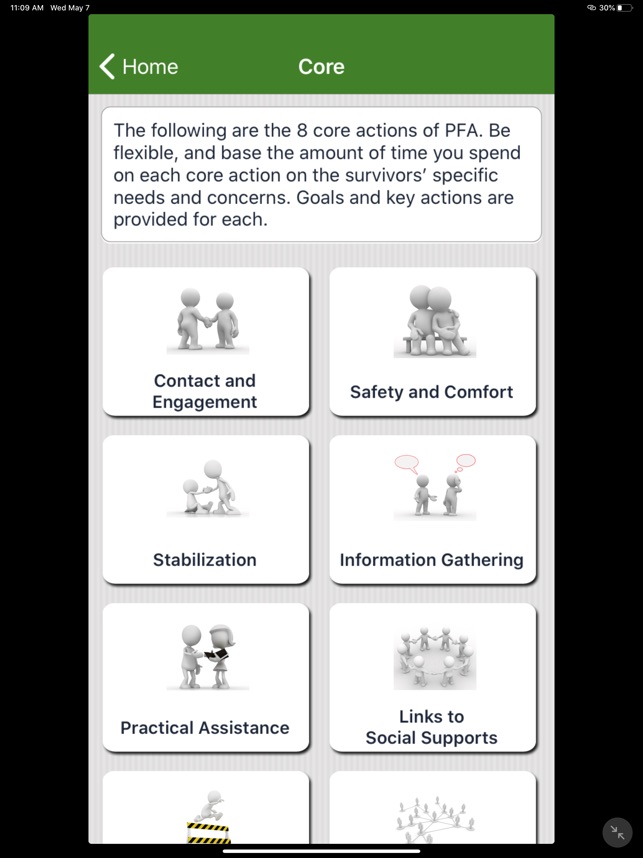
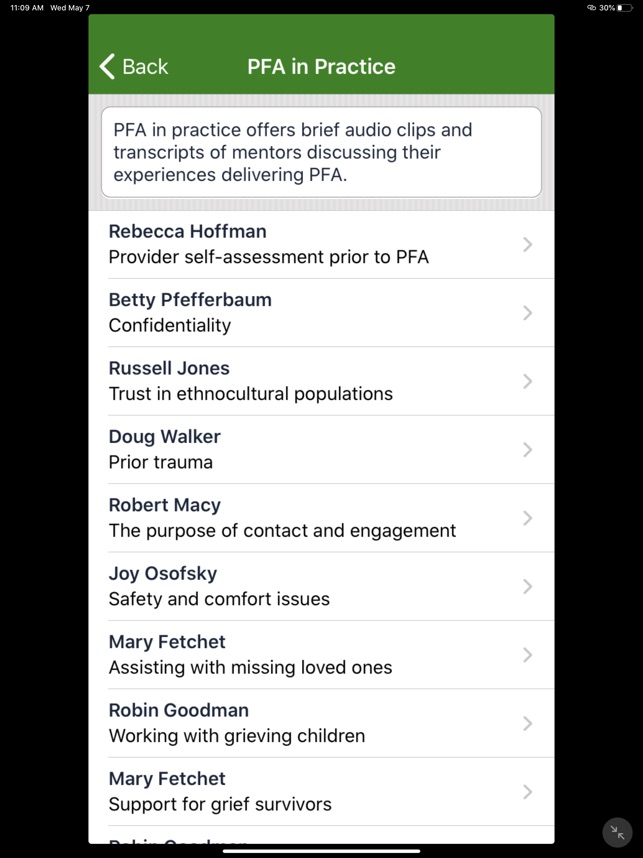
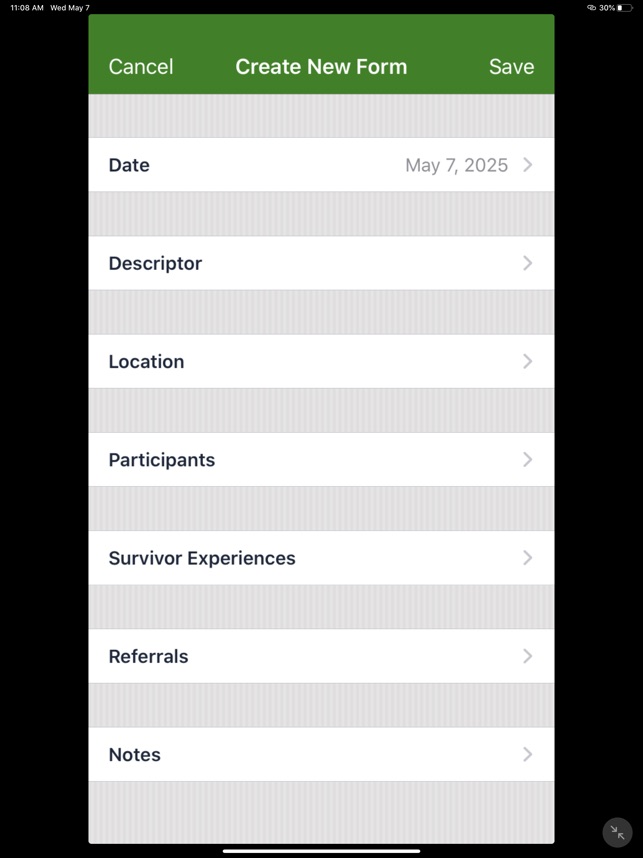
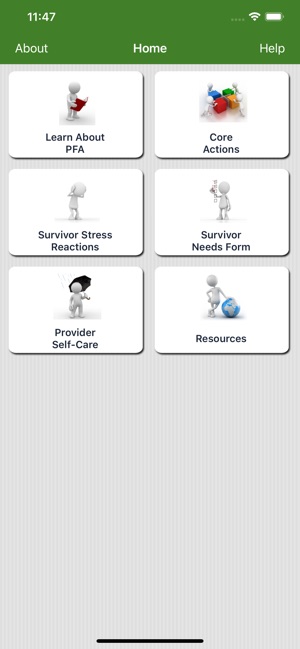
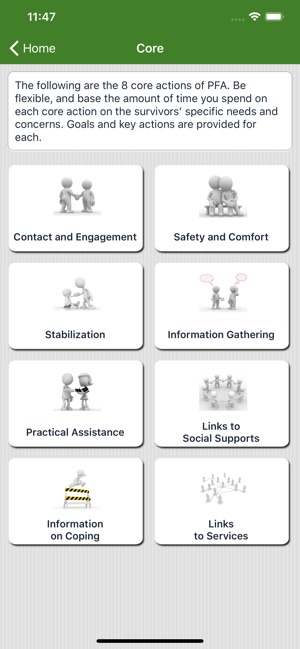
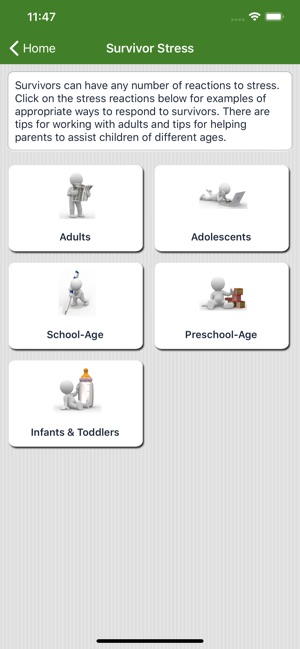
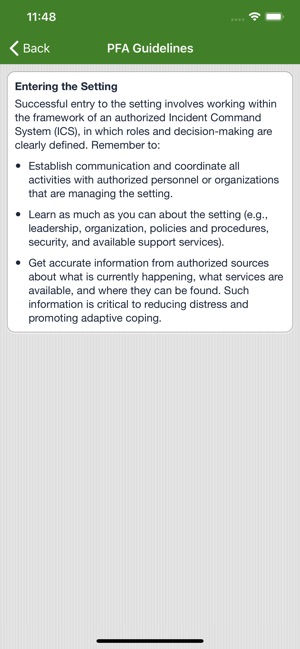
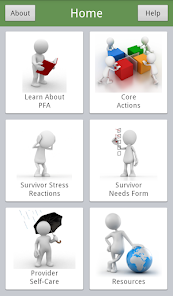
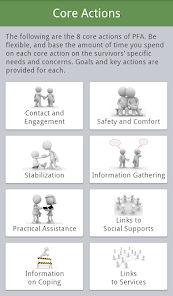
PFA Mobile screenshot 1 of 17PFA Mobile screenshot 2 of 17PFA Mobile screenshot 3 of 17PFA Mobile screenshot 4 of 17PFA Mobile screenshot 5 of 17PFA Mobile screenshot 6 of 17PFA Mobile screenshot 7 of 17PFA Mobile screenshot 8 of 17PFA Mobile screenshot 9 of 17PFA Mobile screenshot 10 of 17PFA Mobile screenshot 11 of 17PFA Mobile screenshot 12 of 17PFA Mobile screenshot 13 of 17PFA Mobile screenshot 14 of 17PFA Mobile screenshot 15 of 17PFA Mobile screenshot 16 of 17PFA Mobile screenshot 17 of 17

Detailed Description

Functionality & Mechanism

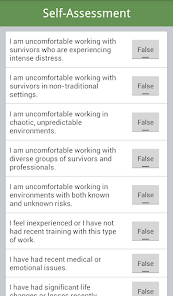
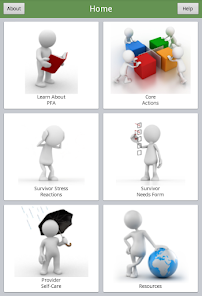
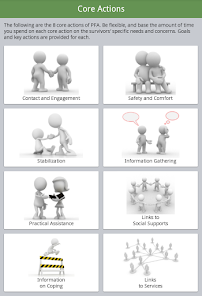
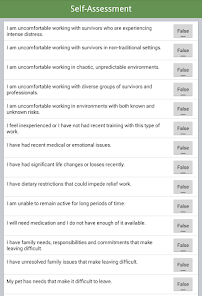
Developed by the VA's National Center for PTSD, PFA Mobile provides responders with field-based clinical support for delivering Psychological First Aid (PFA). The system delivers summaries of PFA principles, intervention guides matched to specific survivor needs, and expert mentorship tips for immediate application. It also integrates a self-assessment tool for responder readiness and a structured form to capture survivor needs, facilitating simplified data collection and referral coordination during organized response efforts.

Evidence & Research Context

  • A qualitative evaluation (N=19) examined the experiences of disaster healthcare workers using the app within a simulation training environment.
  • Participants in the evaluation reported increased confidence in disaster relief and satisfaction with the app as an educational tool for PFA application.
  • The app was identified in a 2023 scoping review as a relevant mobile tool for mental health response to natural disasters.
  • The associated review noted that such tools demonstrate promising potential for providing effective mental health support in disaster contexts.

Intended Use & Scope

This app is designed for disaster responders, including healthcare workers and mental health professionals, engaged in organized response efforts. Its primary utility is as a just-in-time reference and job aid to structure the delivery of PFA in the field. The tool is not a standalone treatment and is intended to augment, not replace, formal PFA training and established disaster response protocols.

Studies & Publications

2 publications

Peer-reviewed research associated with this app.

Non-Evaluative Reference

Mobile Apps to Support Mental Health Response in Natural Disasters: Scoping Review

Ezeonu et al. (2023) · Journal of Medical Internet Research

Available research on disaster mental health apps is limited and inconsistent; more studies are needed.
Background: Disasters are becoming more frequent due to the impact of extreme weather events attributed to climate change, causing loss of lives, property, and psychological trauma. Mental health response to disasters emphasizes prevention and mitigation, and mobile health (mHealth) apps have been used for mental health promotion and treatment. However, little is known about their use in the mental health components of disaster management. Objective: This scoping review was conducted to explore the use of mobile phone apps for mental health responses to natural disasters and to identify gaps in the literature. Methods: We identified relevant keywords and subject headings and conducted comprehensive searches in 6 electronic databases. Studies in which participants were exposed to a man-made disaster were included if the sample also included some participants exposed to a natural hazard. Only full-text studies published in English were included. The initial titles and abstracts of the unique papers were screened by 2 independent review authors. Full texts of the selected papers that met the inclusion criteria were reviewed by the 2 independent reviewers. Data were extracted from each selected full-text paper and synthesized using a narrative approach based on the outcome measures, duration, frequency of use of the mobile phone apps, and the outcomes. This scoping review was reported according to the PRISMA-ScR (Preferred Reporting Items for Systematic Reviews and Meta-Analyses extension for Scoping Reviews). Results: Of the 1398 papers retrieved, 5 were included in this review. A total of 3 studies were conducted on participants exposed to psychological stress following a disaster while 2 were for disaster relief workers. The mobile phone apps for the interventions included Training for Life Skills, Sonoma Rises, Headspace, Psychological First Aid, and Substance Abuse and Mental Health Services Administration (SAMHSA) Behavioural Health Disaster Response Apps. The different studies assessed the effectiveness or efficacy of the mobile app, feasibility, acceptability, and characteristics of app use or predictors of use. Different measures were used to assess the effectiveness of the apps' use as either the primary or secondary outcome. Conclusions: A limited number of studies are exploring the use of mobile phone apps for mental health responses to disasters. The 5 studies included in this review showed promising results. Mobile apps have the potential to provide effective mental health support before, during, and after disasters. However, further research is needed to explore the potential of mobile phone apps in mental health responses to all hazards.
... Read More
Qualitative Study

Disaster Healthcare Workers' Experience of Using the Psychological First Aid Mobile App During Disaster Simulation Training

Choi et al. (2021) · Disaster Medicine and Public Health Preparedness

Healthcare workers found the app helpful for learning psychological first aid during disaster training.
Objective: The study aimed to examine the experience of disaster healthcare workers with simulation training using the Psychological First Aid (PFA) mobile app. Methods: This study was designed using qualitative research methodology with focus group interviews. The participants were 19 disaster healthcare workers from community mental health service centers who attended disaster simulation training in flood, fire, or leakage of hazardous chemicals. Before the simulation, participants were provided the PFA mobile app and allowed to practice the PFA techniques to apply them during the simulation. Data were collected through focus group interviews and qualitatively analyzed using the content analysis method. Results: The findings were divided into 6 categories: experience in realistic disaster situations, satisfaction with education methods using a mobile app, effectiveness of the PFA app in disaster relief, confidence in disaster relief by integrating experience and knowledge of the PFA app, self-reflection as a disaster healthcare worker, and identifying limitations and making developmental suggestions. Conclusions: Based on the participants' developmental proposals in this study, the disaster simulation training, incorporating improvements in the disaster simulation training and the PFA app features, will serve as a new framework for disaster support education and systematic mental health services to survivors by disaster healthcare workers.
... Read More

PFA Mobile

Free