Recall the Game
Studied in clinical trials · Mixed evidence
App Summary
App Screenshots
Detailed Description
Functionality & Mechanism
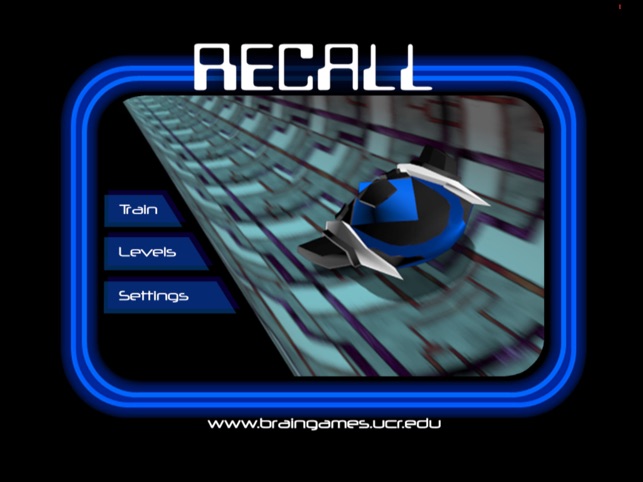
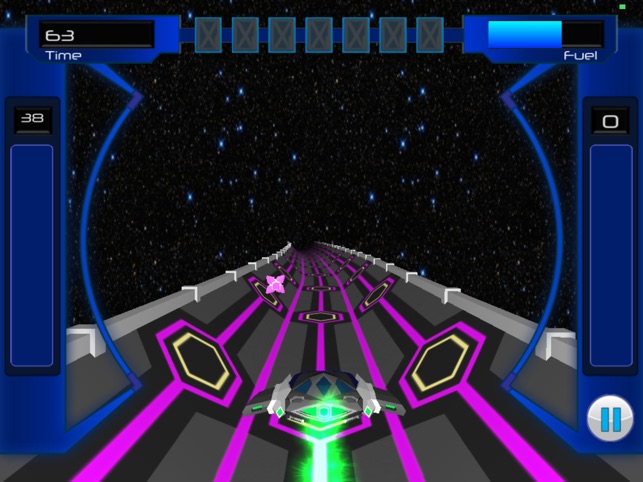
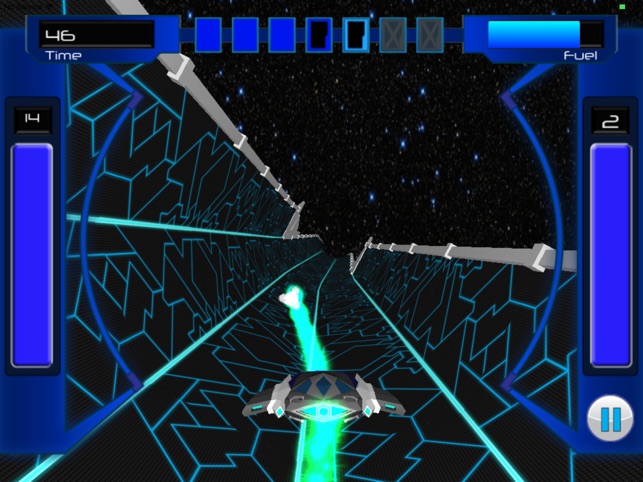
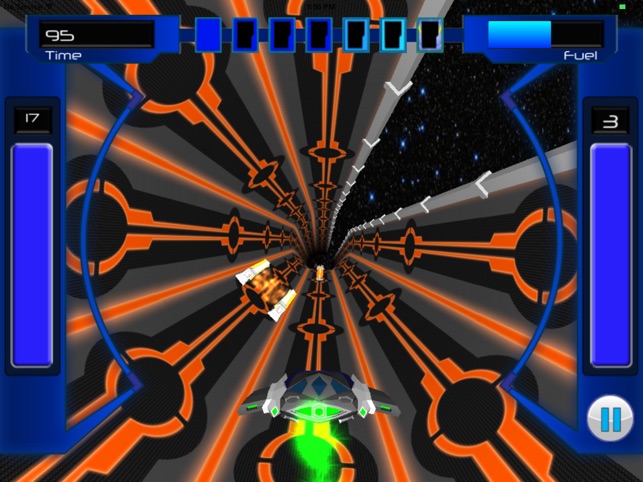
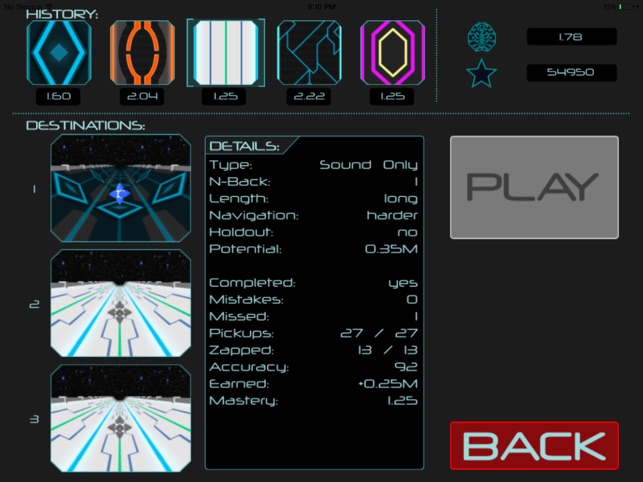
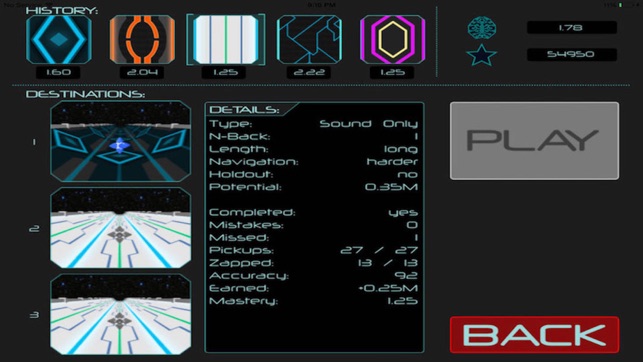
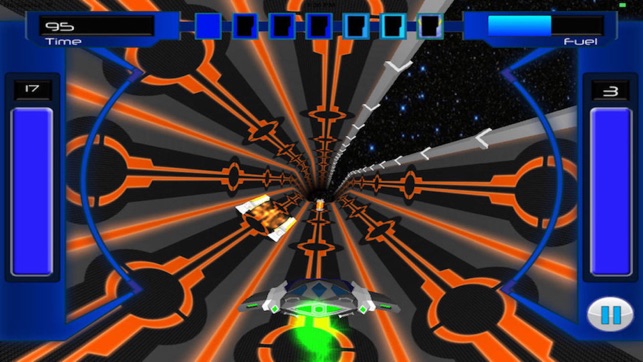
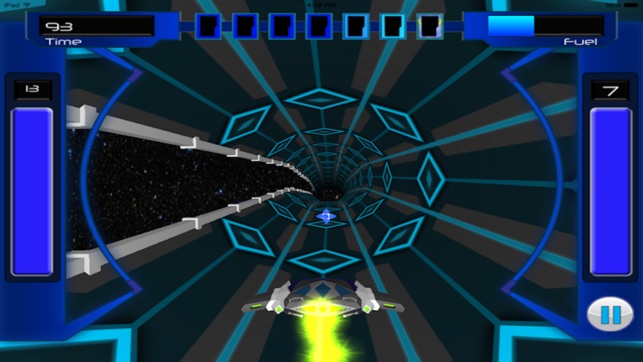
Developed by the University of California Riverside Brain Game Center, this application implements a validated cognitive N-back task within an engaging runner-style game interface. The system presents a continuous sequence of visual signals, requiring the user to identify and collect items that match one presented 'N' positions previously. Session difficulty adapts dynamically by increasing the N-back value and pace, systematically challenging the user's working memory capacity through a gamified training paradigm.
Evidence & Research Context
- The app's design is informed by research integrating principles from perceptual learning and computer science to enhance user engagement and promote plasticity in working memory systems.
- Evidence for the underlying N-back paradigm, including a synthesis of three randomized controlled trials (N=460 total), indicates that performance gains on similar, untrained tasks (near transfer) mediate transfer to domains like fluid reasoning.
- Meta-analytic evidence cited in the foundational research demonstrates that N-back training produces consistent improvements in working memory performance on lab-based assessments.
Intended Use & Scope
This application is intended for the general public as an accessible cognitive training tool. Its primary utility is to provide repeated, engaging practice of a working memory task. It is not a diagnostic instrument or a clinical treatment for memory impairment or other cognitive disorders. Individuals with concerns about memory function should consult a qualified healthcare provider.
Studies & Publications
Peer-reviewed research associated with this app.
Near transfer to an unrelated N-back task mediates the effect of N-back working memory training on matrix reasoning
Pahor et al. (2022) · Nature Human Behaviour
Training improved performance on similar tasks but did not improve reasoning ability in two of three trials.
How to build better memory training games
Deveau et al. (2015) · Frontiers in Systems Neuroscience
Referenced in academic literature; no direct evaluation of the appIn the Media
Who benefits from brain training and why?
UC Riverside and UC Irvine psychologists developed research using "Recall the Game" to solve the debate over brain training effectiveness, examining whether people who show "near transfer" skills are more likely to achieve "far transfer" benefits. "Some people do very well in training, such as playing a video game, but they don't show near transfer perhaps because they are using highly specific strategies," said first author Anja Pahor. The researchers conducted three randomized control trials involving nearly 500 participants and found that improvement on untrained tasks determines whether far transfer to abstract reasoning is successful.
Building games to train the brain
Aaron Seitz, PhD, director of the Brain Game Center for Mental Fitness and Well-Being at UC Riverside, developed scientifically rigorous brain training games to address the mixed results in cognitive training research, applying principles from perceptual learning. "I wanted to take what I knew from perceptual learning and apply it to a training program that's meant to help people in their daily lives," Seitz explains of how the Brain Game Center began. In collaboration with UC Irvine, Seitz is recruiting 30,000 volunteers for an NIMH-funded memory study to explore what elements of brain-training interventions might improve memory.
Nationwide project seeks to understand how brain exercises produce cognitive benefits
UC Riverside's Brain Game Center developed "Recall the Game" to understand how memory training produces cognitive benefits, launching a nationwide project funded by the National Institute of Mental Health. The study aims to engage 30,000 people in different variants of memory training, with researcher Aaron Seitz stating, "We want to understand which training approaches lead to what types of benefits in different individuals." The large-scale project seeks to resolve scientific controversies surrounding brain training effectiveness and explore personalized cognitive training approaches.
App Information
Developer
University of California, RiversideCategory
Evidence Profile
Studied in clinical trials · Mixed evidence
Platforms
Updated
Oct 2016
© 2025 University of California, Riverside
Tags

Recall the Game
Free