
ReliefLink
Published in academic literature
App Summary
App Screenshots
Detailed Description
Functionality & Mechanism
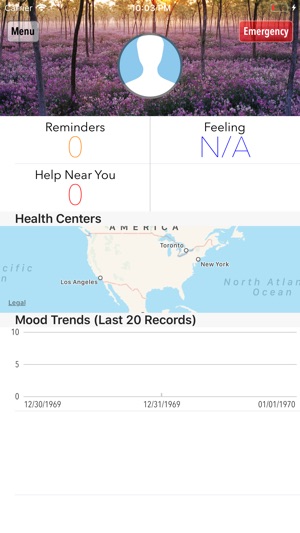
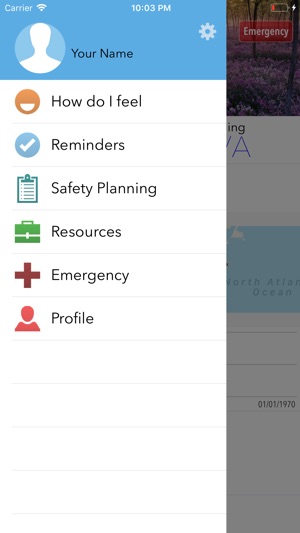
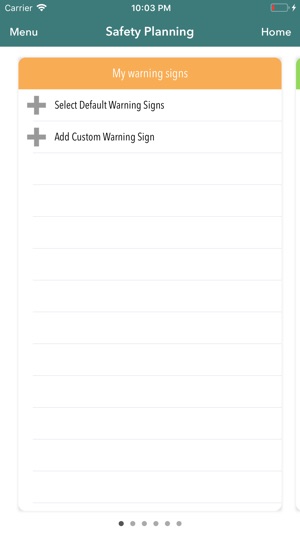
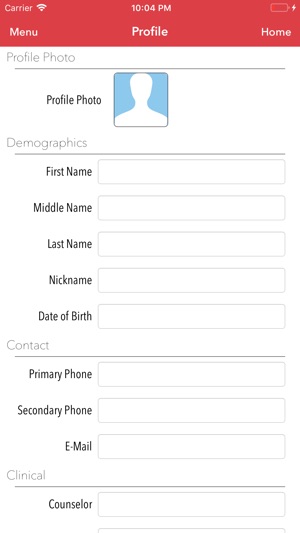
Developed for a SAMHSA challenge, ReliefLink is a mobile toolkit designed for mental health self-management and suicide prevention. The system facilitates the creation of a personalized profile that stores professional contacts, insurance details, and medication schedules. Core modules enable daily mood and thought tracking, safety plan generation, and access to integrated coping methods, including voice-guided mindfulness exercises. A map-based locator identifies nearby mental health facilities, while an emergency function provides direct links to 911, helplines, and designated counselors.
Evidence & Research Context
- The application was awarded first place in the SAMHSA Suicide Prevention: Continuity of Care and Follow-Up Mobile App Challenge.
- A published research protocol outlines a study to determine the utility of the app's self-report features for monitoring suicidal ideation, emotional states, and well-being.
- The system has been incorporated into research designs as a data collection tool, including a protocol for a pilot randomized controlled trial with low-income, suicidal African American adults.
Intended Use & Scope
This application is designed for individuals as a supplemental tool to support professional mental health treatment. Its primary utility is to facilitate self-monitoring, codify safety plans, and provide immediate access to crisis resources. The app is not a substitute for clinical intervention or medical care and explicitly directs users to emergency services during an acute medical crisis.
Studies & Publications
Peer-reviewed research associated with this app.
Compassion Meditation and ReliefLink App for Suicidal, Low-Income, African Americans
Kaslow et al. (2020) · ClinicalTrials.gov
Research study planned or in progress; results not yet availableReliefLink: A preventative mobile toolkit for follow-up care of psychiatric patients
Kaslow et al. (2017) · ClinicalTrials.gov
Research study planned or in progress; results not yet availableIn the Media
Award-winning suicide prevention app available on Emory iTunes
Emory professor Nadine Kaslow led the development of ReliefLink to help people at risk maintain mental health daily while minimizing treatment barriers, using mood monitoring and emergency alert features. Kaslow describes the app as "like having your practitioner on your shoulder making sure you're doing okay and sticking to your wellness plan." ReliefLink won first prize in SAMHSA's Suicide Prevention App Challenge and was presented to developers at the White House in 2013.
Suicide prevention app awarded $50,000 prize at White House conference
Emory University developed ReliefLink to address suicide prevention, earning recognition through a federal app competition. The app won the $50,000 first prize in an App Challenge sponsored by the Substance Abuse and Mental Health Services Administration (SAMHSA). This achievement was announced in September 2013 following a White House conference.
App Information
Developer
Emory UniversityCategory
Evidence Profile
Published in academic literature
Platforms
Updated
Aug 2018
© 2025 Emory University
Tags

ReliefLink
Free