
AppsFromResearch
Revel: Dating Meets Discovery icon

Revel: Dating Meets Discovery

Evidence Tier:DOCUMENTED

Published in academic literature

For:Researchers & AcademicsGeneral Public & Enthusiasts

App Summary

Revel is a non-profit dating and research app designed for university students to connect with each other while gaining personalized insights into their romantic preferences and behaviors. The app's design is informed by relationship science, intentionally limiting daily profiles to mitigate choice overload and using profile questions derived from research on interpersonal closeness rather than an opaque matching algorithm. The associated research concludes that by participating, users can explore their own relationship patterns while contributing to the discovery of what truly predicts romantic compatibility.

App Screenshots

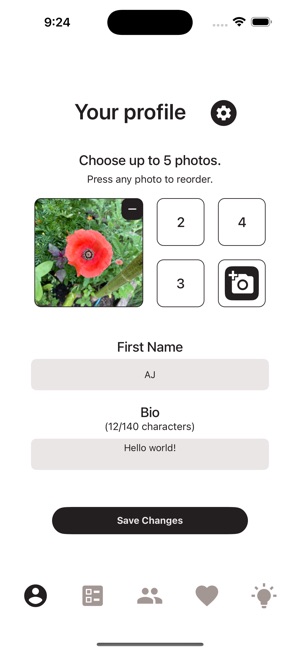
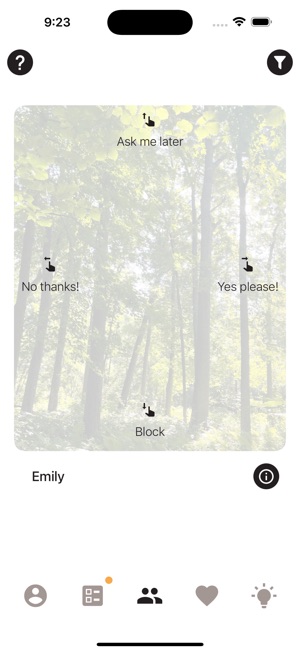
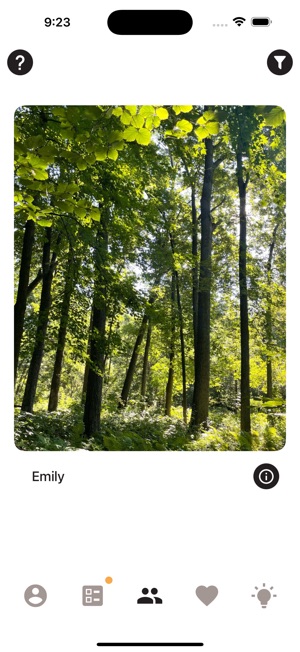
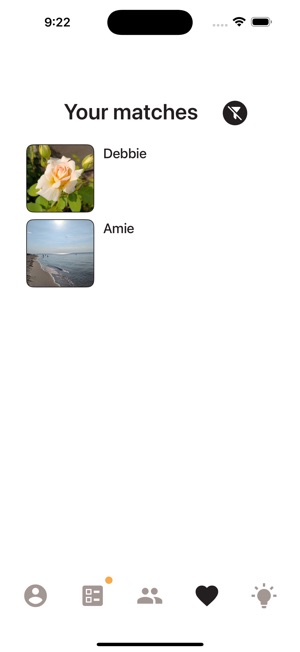
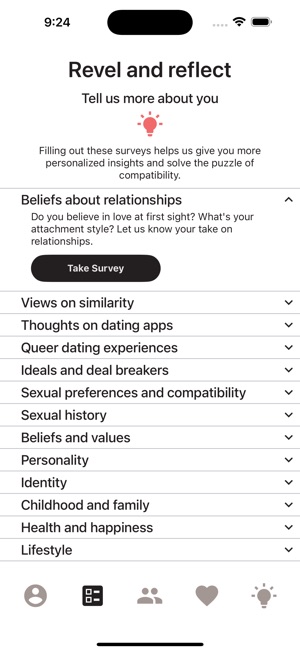
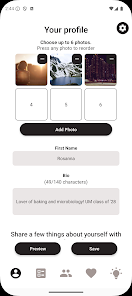
Revel: Dating Meets Discovery screenshot 1 of 14Revel: Dating Meets Discovery screenshot 2 of 14Revel: Dating Meets Discovery screenshot 3 of 14Revel: Dating Meets Discovery screenshot 4 of 14Revel: Dating Meets Discovery screenshot 5 of 14Revel: Dating Meets Discovery screenshot 6 of 14Revel: Dating Meets Discovery screenshot 7 of 14Revel: Dating Meets Discovery screenshot 8 of 14Revel: Dating Meets Discovery screenshot 9 of 14Revel: Dating Meets Discovery screenshot 10 of 14Revel: Dating Meets Discovery screenshot 11 of 14Revel: Dating Meets Discovery screenshot 12 of 14Revel: Dating Meets Discovery screenshot 13 of 14Revel: Dating Meets Discovery screenshot 14 of 14

Detailed Description

Functionality & Mechanism

Developed by University of Michigan (UM) relationship scientists, Revel is a dating platform that concurrently functions as a research tool. The interface presents a limited set of five potential matches daily, a design intended to mitigate decision fatigue. Users construct profiles using customizable attributes, some derived from established psychological protocols. The system's matching algorithm prioritizes user activity and baseline filter criteria (e.g., campus, student status), deliberately avoiding complex, similarity-based matching to facilitate research on user-controlled discovery.

Evidence & Research Context

The platform's design is grounded in principles outlined in associated research articles:

  • The system's limitation of five daily profiles is informed by research on choice overload, which indicates that excessive options can impair decision-making quality in dating contexts.
  • Its matching algorithm deliberately avoids predicting compatibility based on similarity, citing robust research findings that such metrics are weak predictors of initial attraction or long-term relationship success.
  • Profile questionnaires integrate questions from the validated "Fast Friends" psychological paradigm, a protocol demonstrated to accelerate interpersonal closeness between strangers in laboratory settings.
  • The interface separates photographic and biographical data to enable research that disentangles the distinct influence of each component on impression formation and partner selection.

Intended Use & Scope

Revel is designed for a dual audience: University of Michigan students (18+) and relationship science researchers. Its primary utility is as an ecological data collection platform for studying romantic partner selection. The system does not purport to predict compatibility and its use is institutionally restricted. It serves as a functional dating app, not a clinical or therapeutic tool.

Studies & Publications

4 publications

Peer-reviewed research associated with this app.

Non-Evaluative Reference

Filters: What Does the Science Say?

Fromm et al. (2025) · Revel (University of Michigan blog)

Referenced in academic literature; no direct evaluation of the app
Like most dating apps, Revel lets you set filters so your matches fit specific criteria—say, within a certain age range or below a given height. Filters feel empowering. They give us control over who we see and help us move more quickly through the crowd. If we already know what qualities in a partner will make us happy, filters should make it easier to find the right match. But do we actually know what we want—or need? A growing body of psychology research suggests we don't. Take the strongest preferences people claim to hold—their non-negotiables. Some traits are cast as dealbreakers, others as must-have dealmakers. Yet these preferences play only a weak role in who we find attractive, who we feel connected to, and who we end up with.1,2 People often compromise on the very attributes they once insisted were dealbreakers. More striking still: even when someone checks all our must-have boxes, that doesn't predict whether we feel drawn to them when we meet, or whether the relationship will make us happy in the long run.3,4 Why is this? One possibility is that we filter on superficial traits—things that are easy to see or list—that don't actually predict whether two people have chemistry or connection.5 And we are most prone to do this when evaluating many options at once, as on a dating app.6,7 The more we lean on checklists, the more we risk overriding our intuitive sense of whether someone feels right. That intuition may be a better guide.8 In truth, scientists still don't know what predicts lasting compatibility between two people, so there isn't strong evidence about which qualities are worth filtering on.9,10 What we do know is that filters can be useful when the sheer number of profiles feels overwhelming—too many options can wear us down and make decision-making harder.11,12 On Revel, that problem is already partly addressed by limiting how many profiles you can view in a day. And of course by only showing UM matches we are already applying a strong filter right from the start. Beyond that, we leave the filtering up to you!
... Read More
Development/Design Paper

Profiles: How Photos and Bios Work Together

Jolink et al. (2025) · Revel (University of Michigan blog)

Describes the research-driven development of this app
Viewing and swiping on profiles is a common feature of most online dating apps, including Revel. Profiles provide an opportunity to make thin slice judgments, which prior work in social psychology suggests can be both accurate and influential when forming first impressions.1,2 But what are people evaluating when they view a profile? What features of the profile are feeding into initial impressions that sway people into swiping left or right? The profiles on Revel have photos and a bio (i.e., information self-reported by users). It's no secret that physical attraction is a key element people use to evaluate potential partners.3,4,5 But people infer more than just attractiveness from profile pictures. Research examining social media profile pictures has found that people who smiled or showed more positive emotions in their photo were viewed as having more positive personality traits.6,7 Within an online dating app pool, the most attractive people get pursued by "everyone," including those less attractive than them.8,9 Thus, the photos dating app users choose to display matter, for the pursuer and the pursued. Less is known about how bios influence dating decisions, in part because there is so much variability in how people put bios together and what information they choose to display.10 Although some research has shown that photos are more important than bios in decision-making online,10,11 bios still offer a non-negligible amount of information users draw upon to perceive someone's personality, assess similarity, and infer effort or interest.12 For example, having more typos on one's bio leads to being perceived as less attractive and intelligent, and subsequently, worse dating outcomes.13 When we designed Revel, we intentionally kept the photos and bio separate. So, when you view a profile, clicking into someone's photos is different than clicking into their bio. This will allow us to untangle the importance of photos versus bios when evaluating profiles, and gain more clarity into what type of bios (e.g., what specific info, length) do the best. People use different pieces of information to make dating decisions, and we want to know how these pieces affect dating decisions on Revel.
... Read More

In the Media

A Dating App for Science, Not for Profit

University of Michigan professors Elizabeth Bruch and Amie Gordon developed Revel to address decision fatigue from traditional dating apps while conducting interdisciplinary research on romantic compatibility and chemistry. "Why can't we have a Fitbit for our dating life?" Bruch jokes, explaining their goal to cut through dating opacity by offering insights to both users and scientists. After launching beta testing in December 2024, the Michigan-only app generated over 8,000 swipes and 150+ matches within two months.

UmichRead article

The Fantasy of a Nonprofit Dating App

Researchers developed Revel: Dating Meets Discovery to address the "conflict of interest theory" in dating apps, operating as a nonprofit to eliminate financial incentives that may work against users finding lasting relationships. A 2024 study analyzing over 7,000 Tinder reviews found that many users believe dating sites manipulate their profile visibility and matches, with researchers calling this the fundamental tension between companies wanting customers and users wanting to "find someone and delete the app ASAP." The app aims to solve what one class-action lawsuit described as Match Group's "perpetual pay-to-play loop" that prioritizes profits over users' relationship goals.

TheatlanticRead article

Dating for science: Two researchers build their own dating app

Researchers developed Revel: Dating Meets Discovery to collect psychological data that traditional dating apps cannot capture, prompting users to complete surveys about their excitement levels and match decisions after signing research consent forms. "For us, the profit is the science," Gordon said, explaining their goal to use research findings to help people have better relationships and dating experiences. The app launched in beta in December with several hundred users and plans a full release in the fall.

WhyyRead article

Revel: Dating Meets Discovery

Free