
AppsFromResearch
Safety Plan icon

Safety Plan

Evidence Tier:DOCUMENTED

Published in academic literature

For:Clinicians & Healthcare ProfessionalsPatients & Caregivers

App Summary

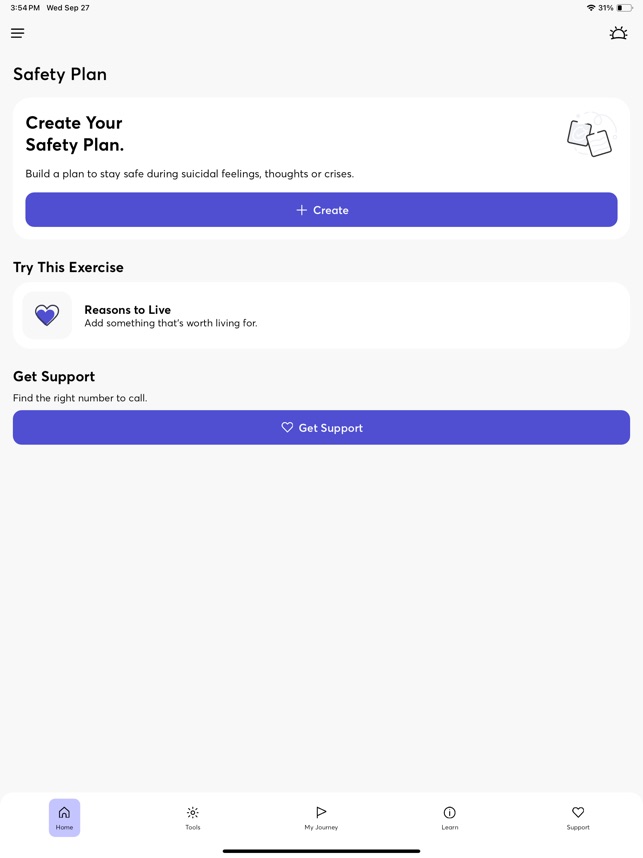
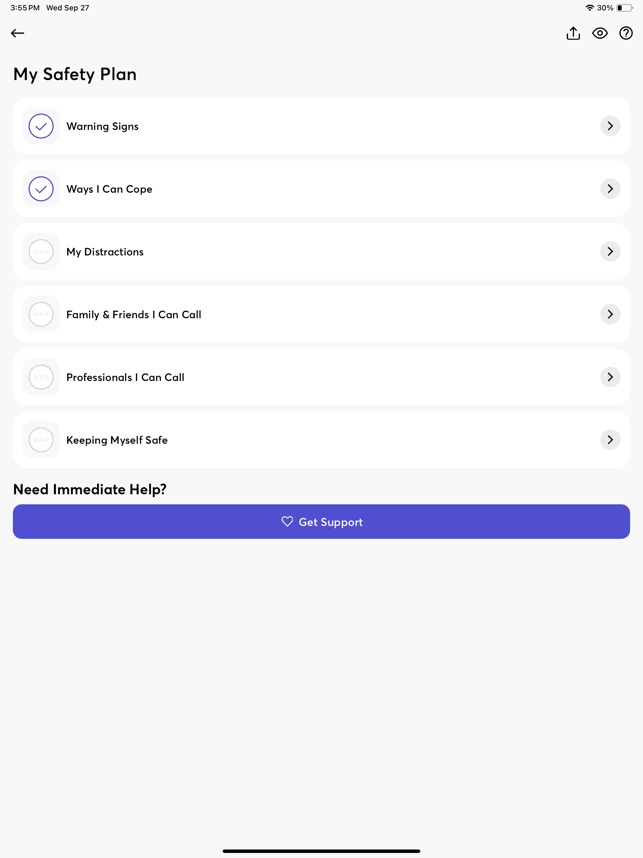
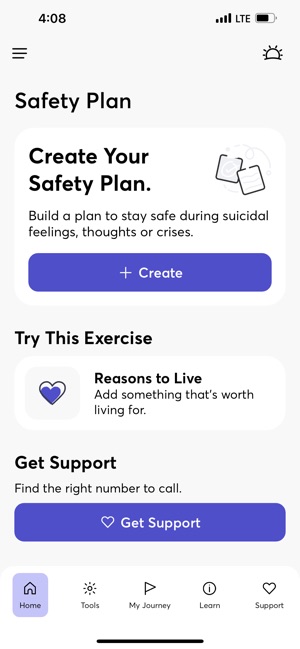
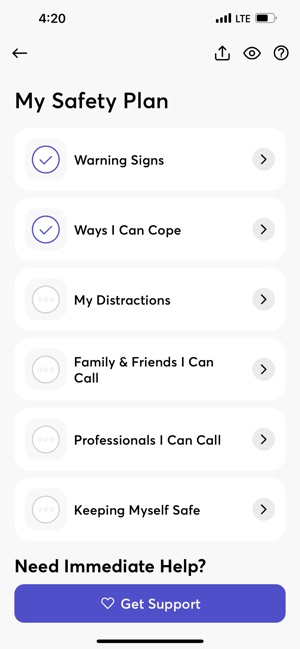
Based on a U.S. Department of Veterans Affairs protocol, the Safety Plan app guides individuals at risk of suicide through the creation of a personalized 6-step plan to manage thoughts of self-harm and navigate a crisis. The associated research explains that this brief intervention is designed to reduce the cognitive burden of problem-solving during a suicidal crisis, when a person's ability to think clearly is often impaired. The authors note that a well-constructed plan can reassure individuals that they are not helpless or alone and conclude that further investigation is merited to optimize its effectiveness.

App Screenshots

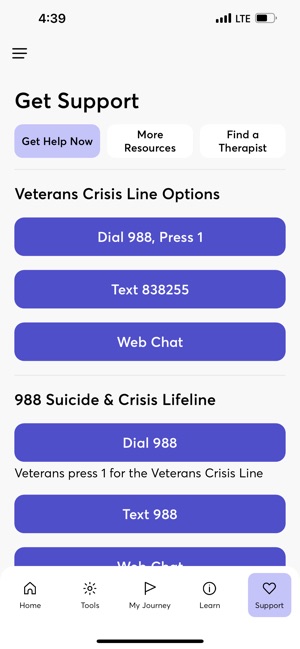
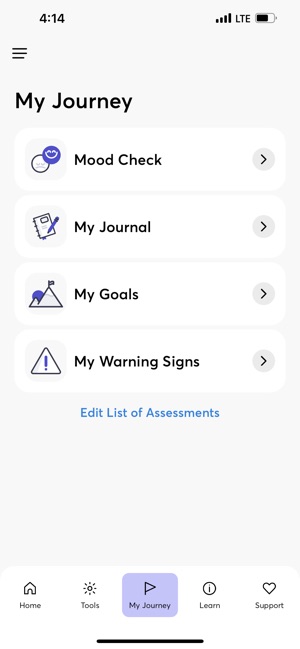
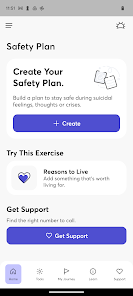
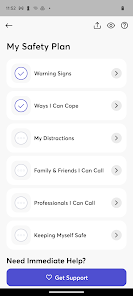
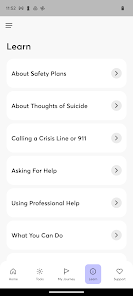
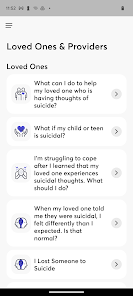
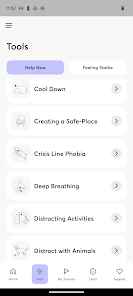
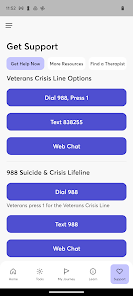
Safety Plan screenshot 1 of 21Safety Plan screenshot 2 of 21Safety Plan screenshot 3 of 21Safety Plan screenshot 4 of 21Safety Plan screenshot 5 of 21Safety Plan screenshot 6 of 21Safety Plan screenshot 7 of 21Safety Plan screenshot 8 of 21Safety Plan screenshot 9 of 21Safety Plan screenshot 10 of 21Safety Plan screenshot 11 of 21Safety Plan screenshot 12 of 21Safety Plan screenshot 13 of 21Safety Plan screenshot 14 of 21Safety Plan screenshot 15 of 21Safety Plan screenshot 16 of 21Safety Plan screenshot 17 of 21Safety Plan screenshot 18 of 21Safety Plan screenshot 19 of 21Safety Plan screenshot 20 of 21Safety Plan screenshot 21 of 21

Detailed Description

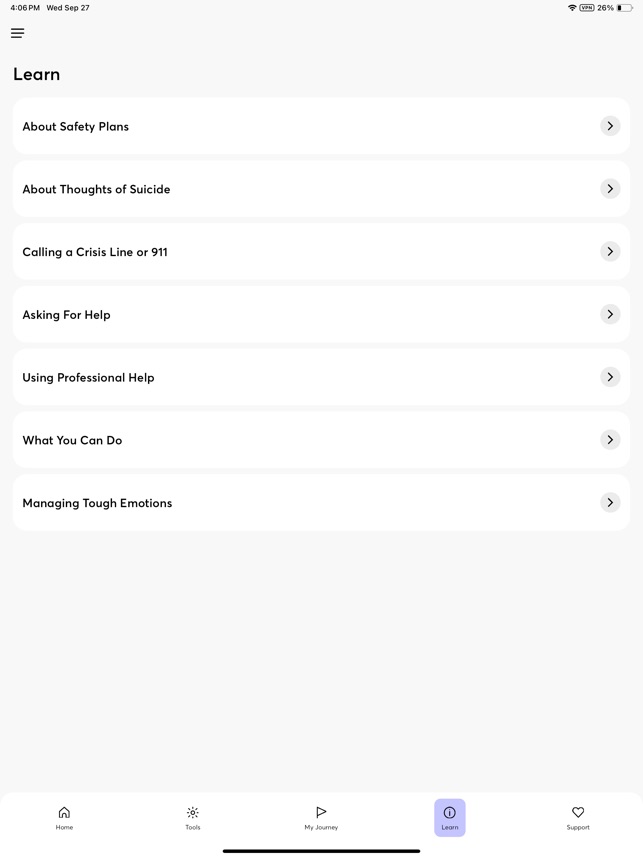
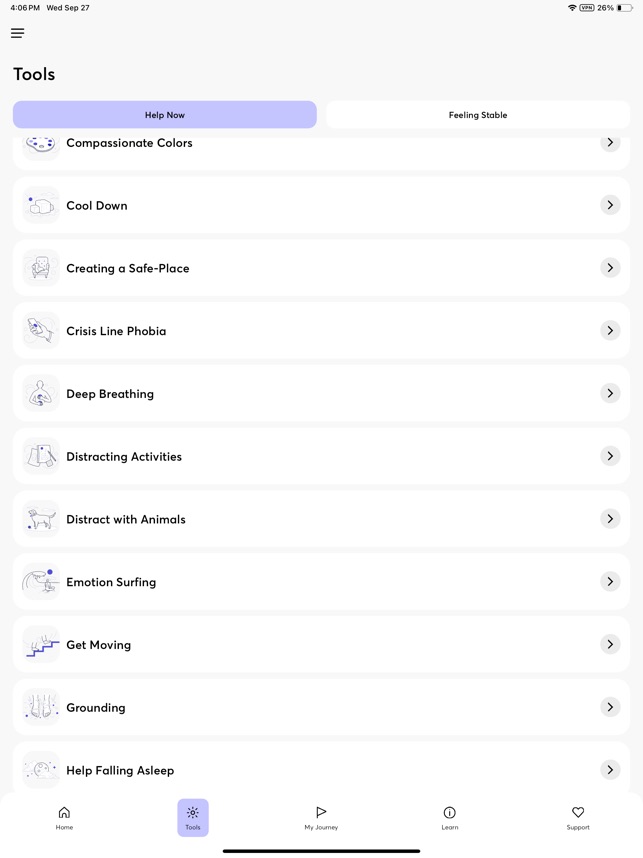
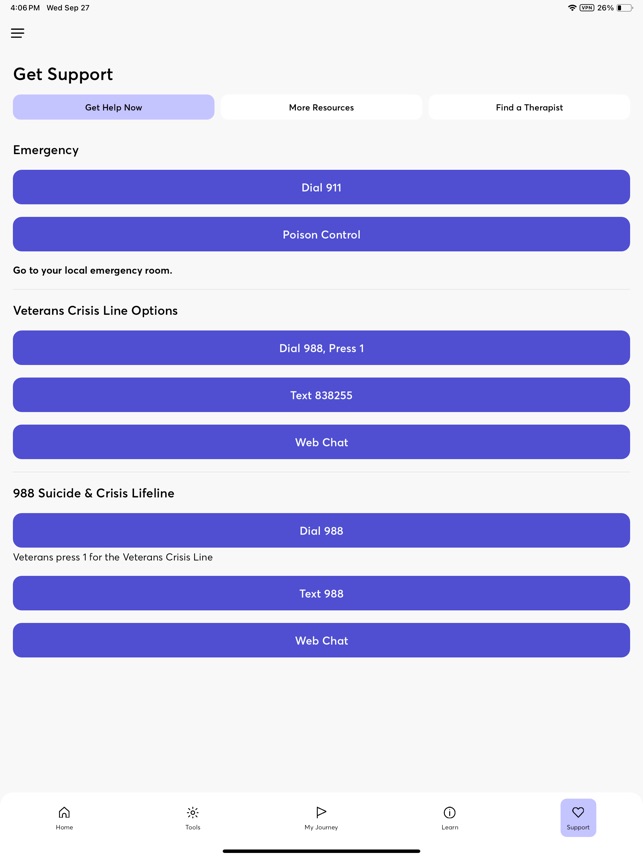
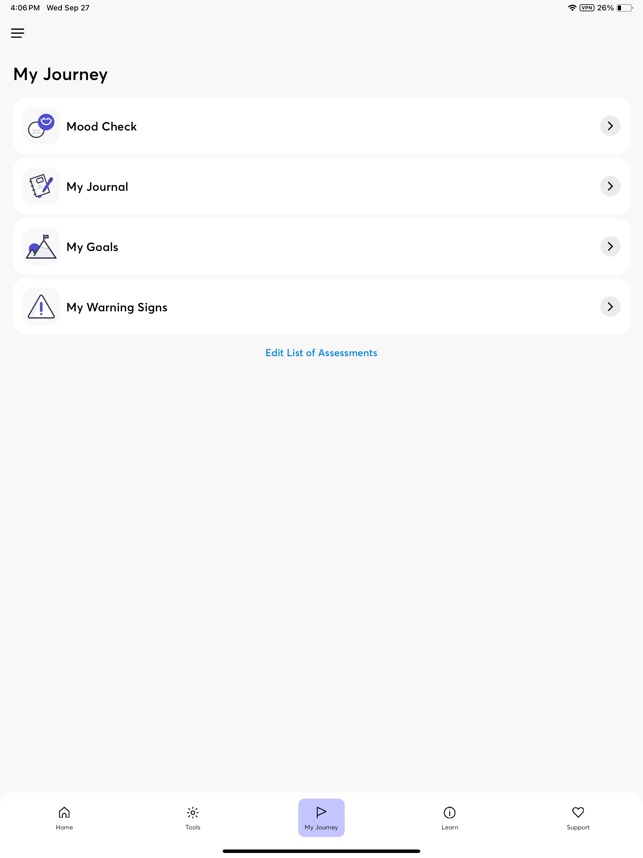
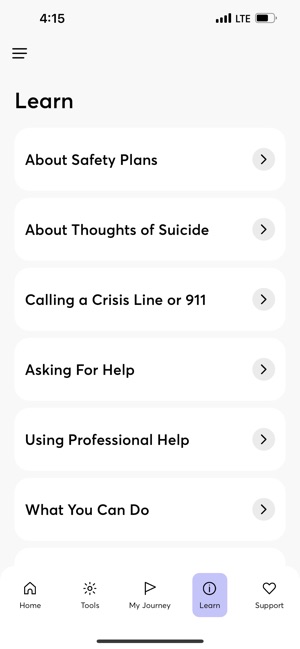
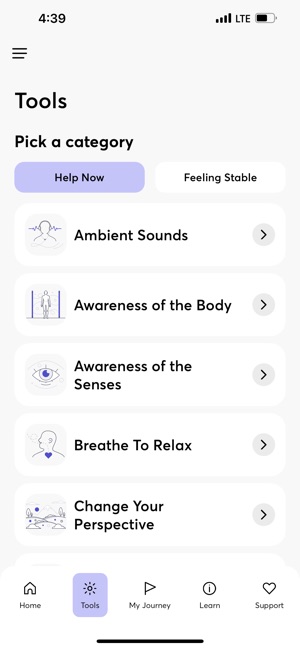
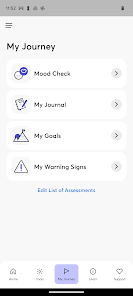
Functionality & Mechanism Developed by the U.S. Department of Veterans Affairs, this application facilitates the creation of a structured, six-step safety plan for managing suicidal crises. The interface guides the individual in documenting personal warning signs, internal coping strategies, social contacts, professional resources, and methods for reducing access to lethal means. The system integrates supplementary modules, including mood tracking and interactive calming tools. The completed plan is portable and can be shared with designated contacts for coordinated support.

Evidence & Research Context

  • The app digitizes the Safety Plan Intervention, a brief, evidence-informed clinical technique designed as a collaborative therapeutic tool to mitigate suicide risk.
  • The underlying intervention is intended to reduce the cognitive burden of problem-solving during a suicidal crisis, a state often associated with impaired executive functioning in serious mental illness.
  • Construction of a safety plan has been a mandated clinical procedure for patients at risk of suicide within all U.S. Department of Veterans Affairs facilities since 2008.
  • The associated research notes that while the intervention is widely adopted, further investigation is needed to determine which patient populations benefit most and the optimal timing or mode of delivery.

Intended Use & Scope This tool is intended for individuals at risk of suicide to use as an adjunct to professional mental health care. Its primary utility is to create a portable, structured crisis response plan. The app does not constitute a standalone treatment and is not a substitute for clinical therapy or emergency services.

Studies & Publications

2 publications

Peer-reviewed research associated with this app.

Development/Design Paper

Safety Planning for Suicide Prevention

Kayman et al. (2016) · Current Treatment Options in Psychiatry

Describes the research-driven development of this app
The Safety Plan was developed to help individuals at risk of suicide to prevent and/or manage suicidal crises. The risk of suicide is elevated for people with serious mental illness, that is, a mental illness that interferes with the ability to carry out one or more major life activities. Serious mental illness makes it difficult to think clearly, make decisions, and take positive action. In other words, it impairs executive functioning. A wide variety of diagnoses, including depression (unipolar or bipolar), borderline personality disorder, post-traumatic stress disorder, and schizophrenia, are associated with this kind of impairment. A Safety Plan in easy reach reduces the burden of problem-solving when a crisis is looming and the ability to think clearly is impaired. There is no need to figure out what to do to interrupt a darkening mood, because strategies that may help are already written out. There is no need to look up emergency contact information, because it has already been compiled. Essential as this information can be, a well-constructed Safety Plan is more than just a list of strategies and contacts. When the items are individualized and described in detail, they can be potent reminders of cherished memories, simple pleasures that give comfort, and people who care who are in reach and can be counted on to respond when needed. In other words, a well-constructed Safety Plan can reassure its owner that s/he is neither helpless nor alone. Since 2008, the construction of a Safety Plan has been mandated for every patient at risk of suicide at every facility under the auspices of the Department of Veterans Affairs (VA). Today, 8 years since the issuance of this mandate, VA clinicians have not only become accustomed to developing and reviewing Safety Plans in the medical record but also, as this review will suggest, begun to discover for themselves how helpful a Safety Plan can be. As it is not yet known which patients (e.g., with respect to age, sex, or diagnosis) are likeliest to benefit, or whether the impact varies with the timing of its construction (e.g., at time of discharge, or the day before), setting, (e.g., in the emergency department or the inpatient unit), and/or mode of delivery (e.g., in group or individual sessions), these and other questions that aim to optimize Safety Plan effectiveness merit further investigation.
... Read More
Non-Evaluative Reference

Safety plan treatment manual to reduce suicide risk: Veteran version

Stanley et al. (2008) · VA Safety Planning Manual

Referenced in academic literature; no direct evaluation of the app
This manual provides a comprehensive guide for mental health clinicians on implementing safety planning, a brief clinical intervention designed to mitigate suicide risk among veterans. Developed as a collaborative therapeutic technique consistent with the Recovery Model, the safety plan serves as a prioritized, written list of coping strategies and support sources that veterans can utilize before or during a suicidal crisis. The intervention is structured around six key steps: (1) recognizing personal warning signs; (2) employing internal coping strategies; (3) utilizing social contacts for distraction; (4) contacting supportive family or friends for help; (5) engaging professional agencies and providers; and (6) reducing access to lethal means. The manual outlines the rationale and specific instructions for each step, emphasizing the importance of clinician-patient collaboration to empower veterans in managing their own safety
... Read More

In the Media

Suicide prevention resource of the month: Safety plan app

VA worked with Veterans and health care providers to create the Safety Plan app to help Veterans struggling with suicidal thoughts easily build their own safety plan and access it at any time. The app guides users through six steps including identifying warning signs, coping strategies, and support contacts, while featuring a sun icon that provides "hopeful messages from other Veterans who've faced similar experiences." The app requires no account and shares no identifying information, offering quick access to emergency support including 911 and the Veterans Crisis Line.

VaRead article

Your Mobile Safety Plan

The Department of Veterans Affairs developed Safety Plan to help individuals experiencing thoughts about suicide or self-harm create custom step-by-step action plans during crisis situations. The app incorporates reliable and valid self-report measures including the PTSD Checklist (PCL-5) that are used across the VA, Department of Defense, and community settings. Users can create six-step safety plans, track mood symptoms, identify personal reasons to live, and access crisis support resources like the Veterans Crisis Line.

VaRead article

Safety Plan

The VA developed Safety Plan to help anyone experiencing suicidal thoughts by providing a structured approach to identify personal coping strategies and support sources. The app guides users through six steps to create their safety plan when not in distress, allowing them to think clearly and complete the process thoroughly. Veterans can access guided walkthroughs for coping skills along with national and local mental health resources.

VaRead article

Safety Plan

Free