
SANE Well
Published in academic literature
App Summary
App Screenshots
Detailed Description
Functionality & Mechanism
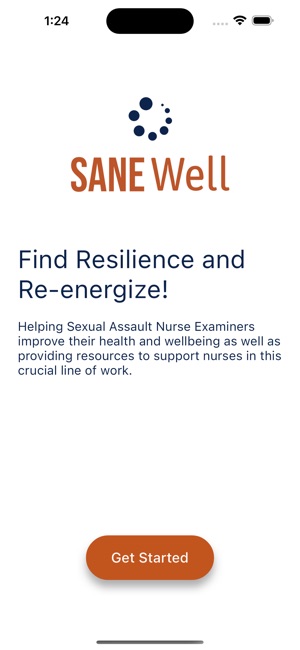
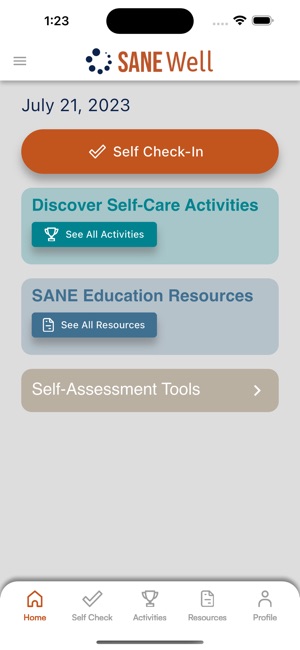
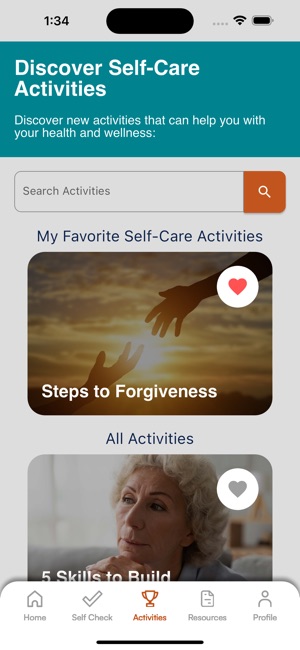
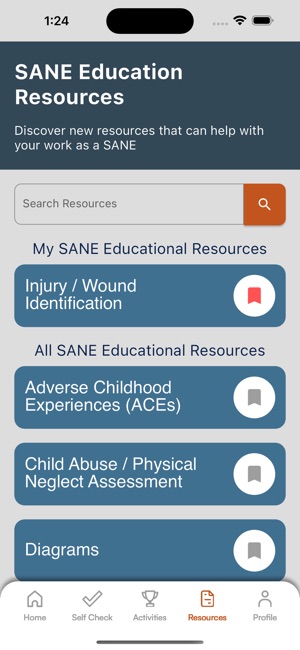
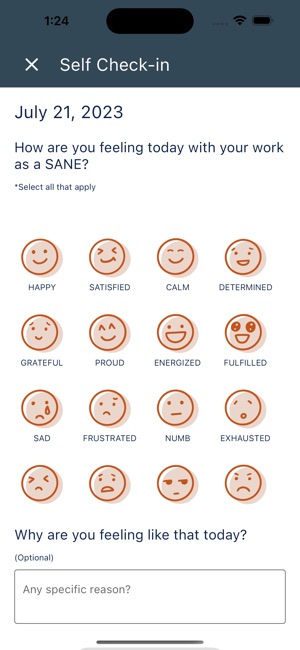
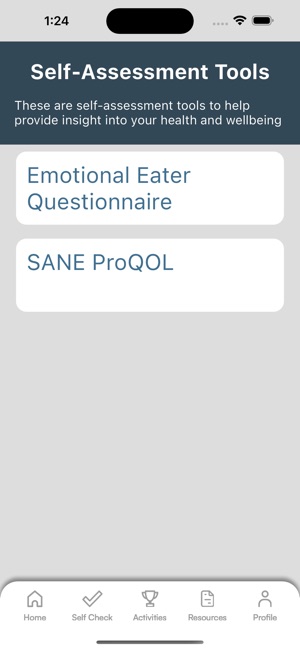
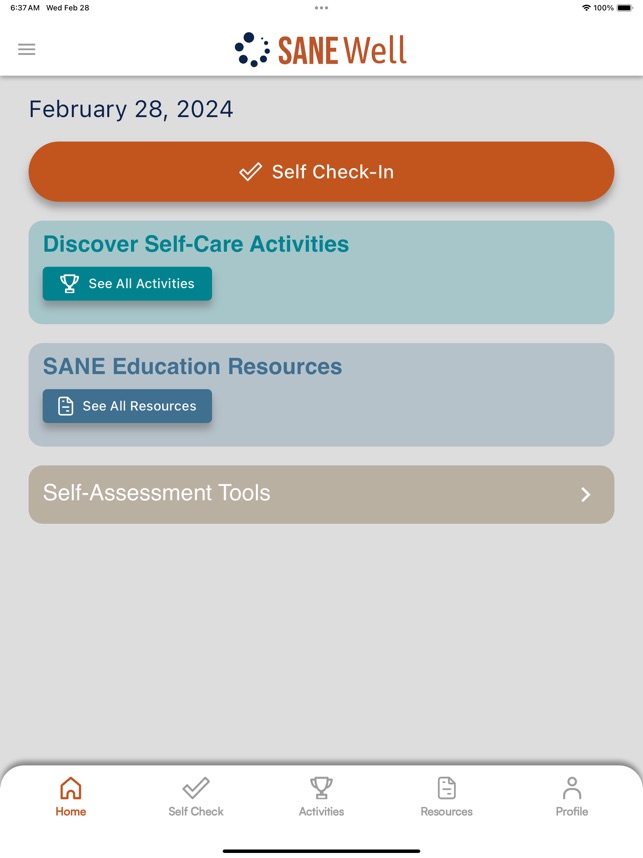
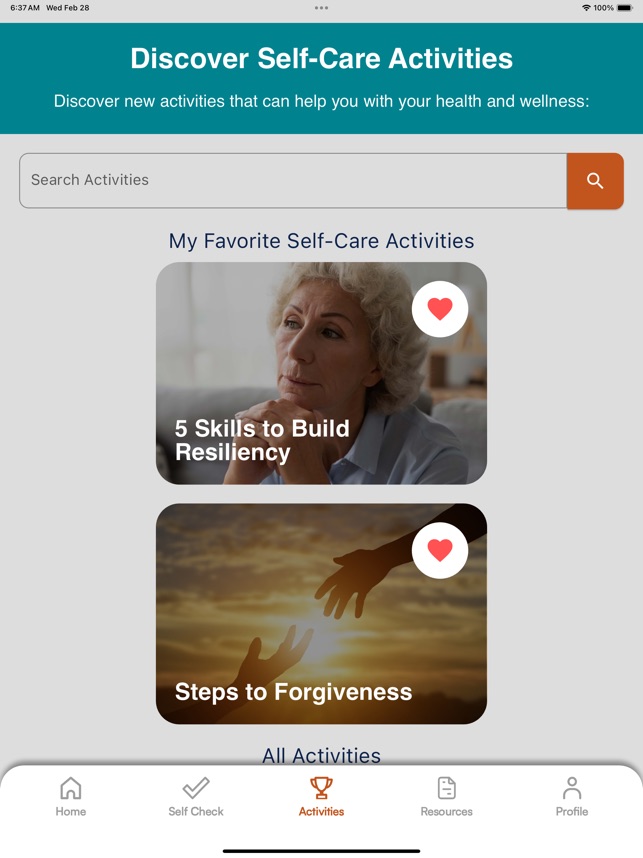
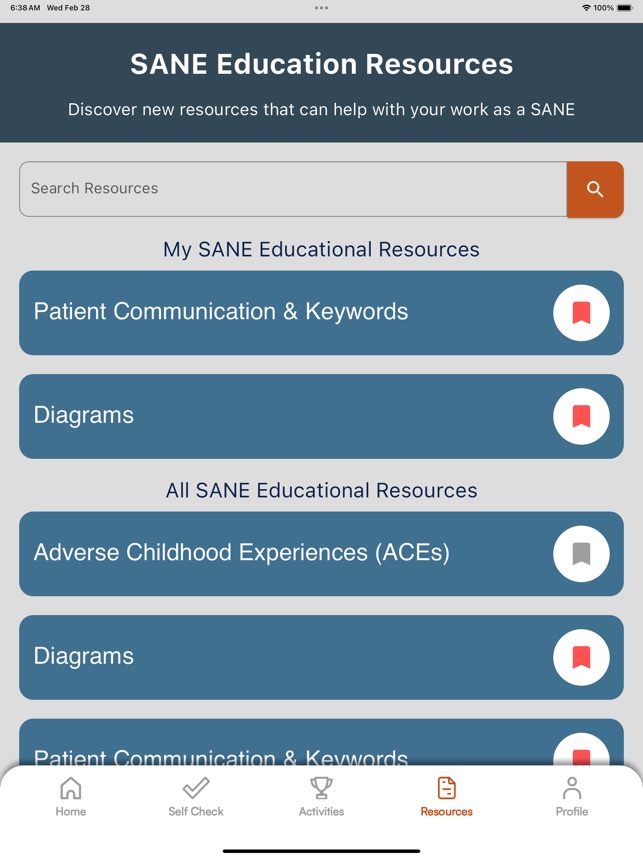
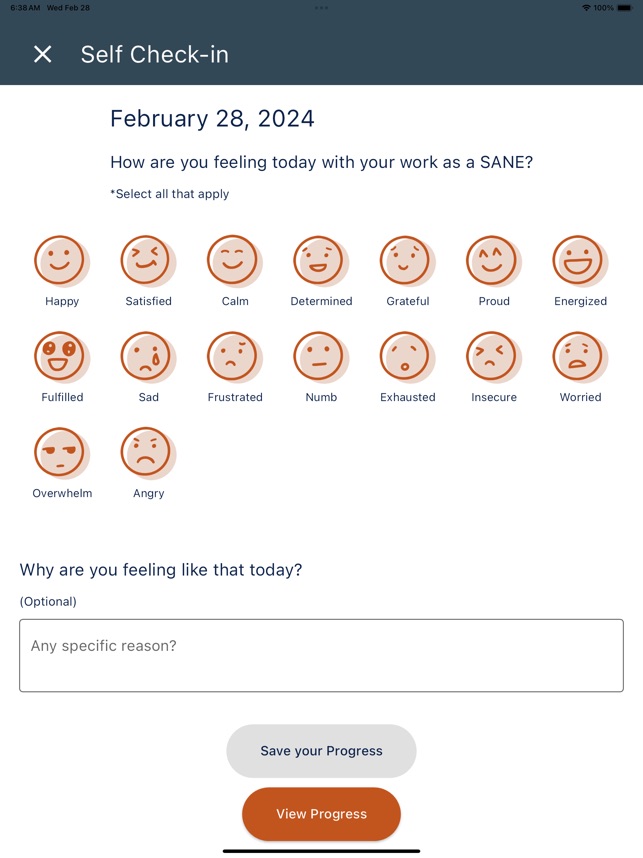
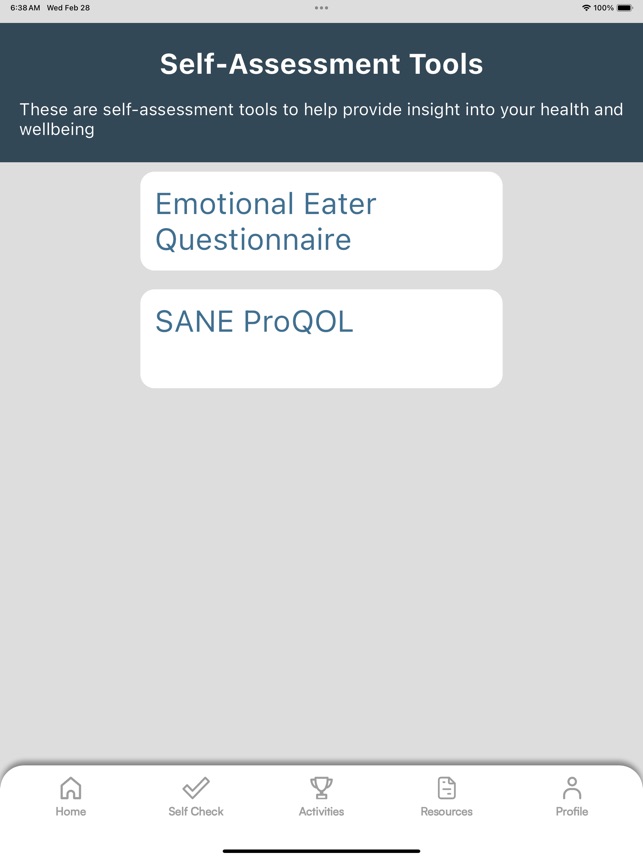
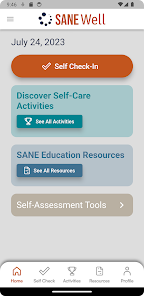
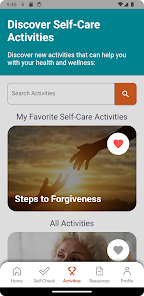
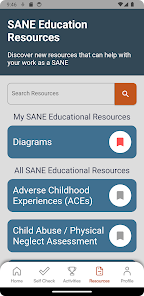
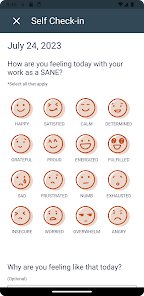
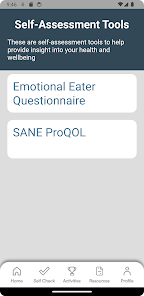
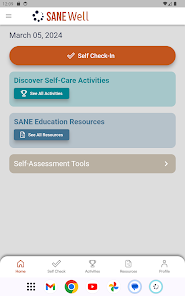
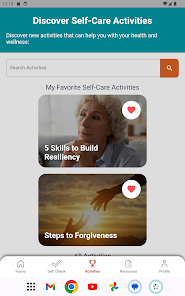
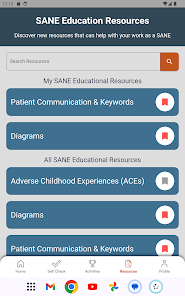
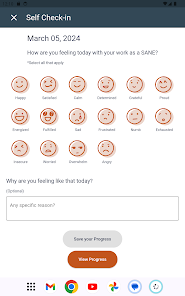
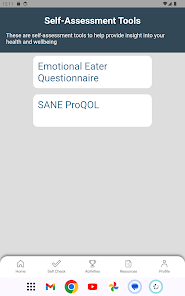
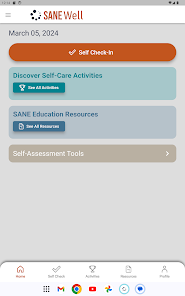
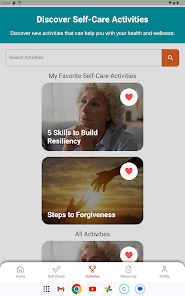
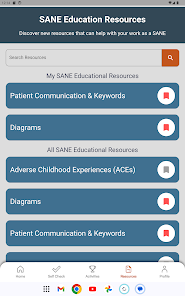
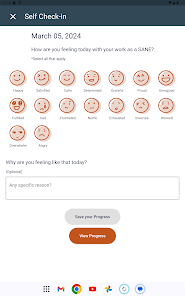
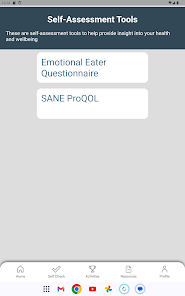
The SANE Well mobile application integrates three core modules to support the well-being of Sexual Assault Nurse Examiners (SANEs). The interface delivers curated self-care activities and professional educational resources tailored to the specific demands of the SANE role. A self-check-in function facilitates longitudinal tracking of emotional states via emoji-based input and brief textual records. The system is designed to provide accessible, on-demand strategies to mitigate occupational stressors and enhance professional resilience.
Evidence & Research Context
- The application's design and development process are detailed in a peer-reviewed publication.
- Its intervention model is grounded in the principles of Psychological First Aid (PFA), an evidence-informed framework for mitigating the effects of trauma exposure.
- Content was developed through a user-centered design process, incorporating direct input from focus groups with practicing SANEs to ensure relevance and utility.
- Preliminary usability assessments conducted with SANEs during clinical trainings indicated the platform has efficient functionality and aligns with its intended purpose.
Intended Use & Scope
This application is intended for use by Sexual Assault Nurse Examiners (SANEs) as a professional support tool. It serves as an adjunct resource for self-managed stress reduction, burnout prevention, and resilience enhancement. The tool does not provide clinical diagnosis or treatment and is not a substitute for professional mental healthcare for vicarious trauma or other conditions.
Studies & Publications
Peer-reviewed research associated with this app.
Burnout Reduction Strategies Using Mobile-Based Applications: The Creation and Development of the SANE Well App
Williams et al. (2024) · Journal of Forensic Nursing
Describes the research-driven development of this appApp Information
Developer
University of ArizonaCategory
Evidence Profile
Published in academic literature
Platforms
Updated
Mar 2024
© 2025 University of Arizona