AppsFromResearch
Social Rhythms icon

Social Rhythms

Evidence Tier:VALIDATED

Initial evidence from research studies

For:Researchers & AcademicsGeneral Public & Enthusiasts

App Summary

The Social Rhythms app analyzes heart rate and activity data from commercial wearables to provide users with personalized reports on their internal circadian clock. The app's statistical method was developed using over 130,000 days of real-world data, and a subsequent evaluation study found that disruptions like social distancing caused a user's heart rate rhythm to diverge from their activity rhythm in 70% of subjects. The authors conclude that tracking these distinct rhythms is necessary to understand internal desynchrony and may help inform future interventions to realign the body's clocks.

App Screenshots

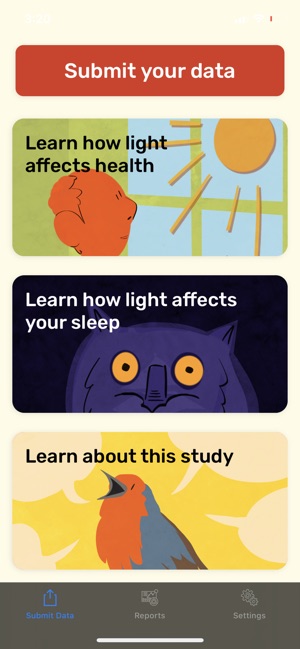
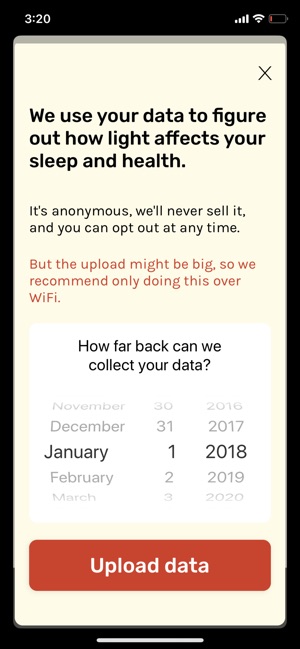
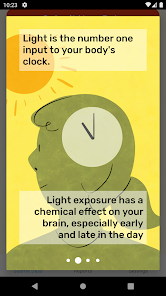
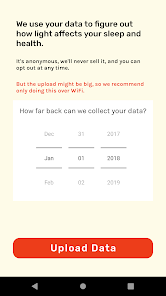
Social Rhythms screenshot 1 of 6Social Rhythms screenshot 2 of 6Social Rhythms screenshot 3 of 6Social Rhythms screenshot 4 of 6Social Rhythms screenshot 5 of 6Social Rhythms screenshot 6 of 6

Detailed Description

Functionality & Mechanism

The Social Rhythms system, developed at the University of Michigan, analyzes physiological data from consumer wearables. The application anonymously integrates heart rate and activity data via its connection to smartphone health platforms. It leverages a validated statistical method to extract and track key parameters, including the underlying circadian rhythm in heart rate (CRHR). The interface then generates personalized reports that characterize an individual's circadian timekeeping and identify potential disruptions resulting from external stimuli or schedule changes.

Evidence & Research Context

  • The system's statistical model for extracting circadian rhythms was developed and tested using over 130,000 days of real-world wearable data from medical interns.
  • An evaluation study demonstrated that the app's heart rate-based circadian markers align with laboratory gold-standard melatonin measurements (DLMO) after accounting for phase error.
  • Data collected via the app were utilized in research to investigate the effects of social distancing on circadian timekeeping during the COVID-19 lockdown.
  • This study found that lockdown conditions induced internal circadian desynchrony in 70% of subjects, characterized by a divergence between heart rate and activity-based rhythms.

Intended Use & Scope

This application is intended for the general public for personal circadian rhythm monitoring and for researchers as a data collection platform. Its primary utility is to provide personalized, data-driven insights into biological clock function and potential disruptions. The system does not provide medical diagnoses or treatment recommendations; users should consult a healthcare professional to interpret significant findings.

Studies & Publications

2 publications

Peer-reviewed research associated with this app.

Effectiveness/Outcome Study

Distinct Circadian Assessments From Wearable Data Reveal Social Distancing Promoted Internal Desynchrony Between Circadian Markers

Huang et al. (2021) · Frontiers in Digital Health

Validated two wearable circadian rhythm measures and revealed how social distancing disrupted internal circadian synchronization.

Mobile measures of human circadian rhythms (CR) are needed in the age of chronotherapy. Two wearable measures of CR have recently been validated: one that uses heart rate to extract circadian rhythms that originate in the sinoatrial node of the heart, and another that uses activity to predict the laboratory gold standard and central circadian pacemaker marker, dim light melatonin onset (DLMO). We first find that the heart rate markers of normal real-world individuals align with laboratory DLMO measurements when we account for heart rate phase error. Next, we expand upon previous work that has examined sleep patterns or chronotypes during the COVID-19 lockdown by studying the effects of social distancing on circadian rhythms. In particular, using data collected from the Social Rhythms app, a mobile application where individuals upload their wearable data and receive reports on their circadian rhythms, we compared the two circadian phase estimates before and after social distancing. Interestingly, we found that the lockdown had different effects on the two ambulatory measurements. Before the lockdown, the two measures aligned, as predicted by laboratory data. After the lockdown, when circadian timekeeping signals were blunted, these measures diverged in 70% of subjects (with circadian rhythms in heart rate, or CRHR, becoming delayed). Thus, while either approach can measure circadian rhythms, both are needed to understand internal desynchrony. We also argue that interventions may be needed in future lockdowns to better align separate circadian rhythms in the body.
... Read More
Development/Design Paper

A method for characterizing daily physiology from widely used wearables

Bowman et al. (2021) · Cell Reports Methods

Describes the research-driven development of this app
The exploding popularity of wearable devices, now a multi-billion dollar industry, provides a new opportunity for real-world data collection. Here, we propose a statistical method for analysis of ambulatory wearable-device data that can estimate circadian rhythms. Accounting for circadian rhythms in HR will allow more accurate measurement of other physiological parameters, e.g., basal HR, how activity increases HR, and changes in HR due to infection. Highlights • Statistical method tracks six physiological parameters from wearable heart-rate data • Method is tested on 130,000+ days of heart-rate data from medical interns • Results show a circadian rhythm in HR consistent with clinical data • Method provides personalized phase-response curves of HR to activity Summary Millions of wearable-device users record their heart rate (HR) and activity. We introduce a statistical method to extract and track six key physiological parameters from these data, including an underlying circadian rhythm in HR (CRHR), the direct effects of activity, and the effects of meals, posture, and stress through hormones like cortisol. We test our method on over 130,000 days of real-world data from medical interns on rotating shifts, showing that CRHR dynamics are distinct from those of sleep-wake or physical activity patterns and vary greatly among individuals. Our method also estimates a personalized phase-response curve of CRHR to activity for each individual, representing a passive and personalized determination of how human circadian timekeeping continually changes due to real-world stimuli. We implement our method in the "Social Rhythms" iPhone and Android app, which anonymously collects data from wearable-device users and provides analysis based on our method.
... Read More

Social Rhythms

Free