AppsFromResearch
StraboTools icon

StraboTools

Evidence Tier:DOCUMENTED

Published in academic literature

For:Researchers & AcademicsIndustry Professionals

App Summary

StraboTools is a mobile application for geologists that uses image analysis to quantify rock features like mineral proportions and structural fabric from photographs in the field or lab. The associated research explains that the app's tools provide rapid and objective measurements, such as using grayscale gradients to quantify subtle fabric deformations that are difficult to see by eye. The authors conclude that the app transforms formerly time-consuming and subjective visual estimates into precise, reproducible, and shareable data.

App Screenshots

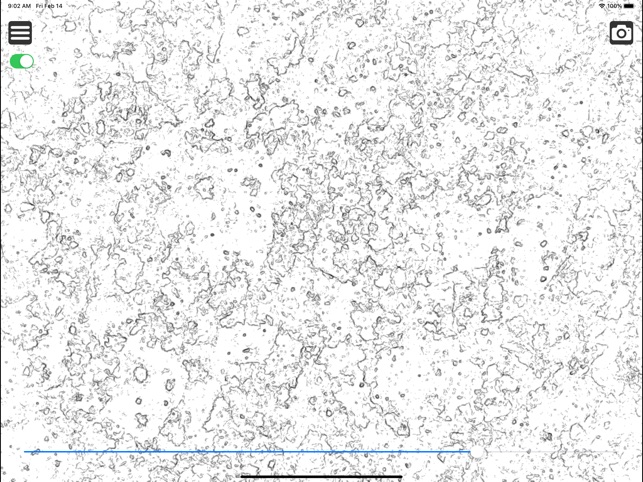
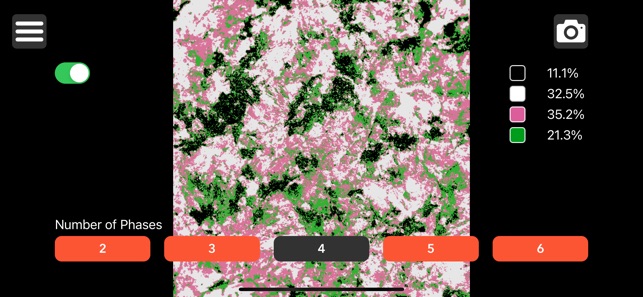
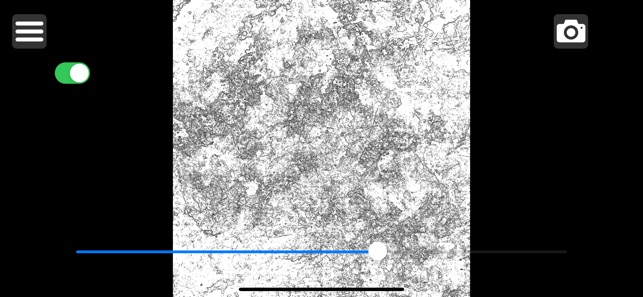
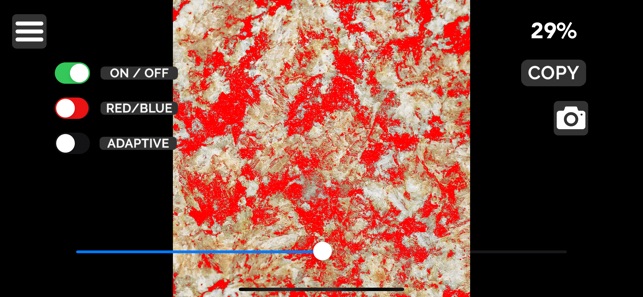
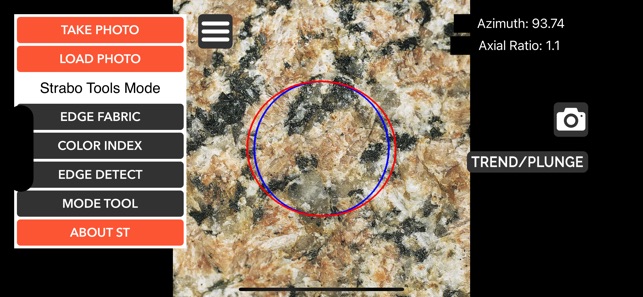
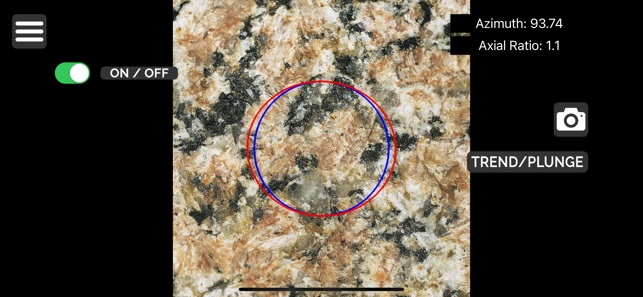
StraboTools screenshot 1 of 10StraboTools screenshot 2 of 10StraboTools screenshot 3 of 10StraboTools screenshot 4 of 10StraboTools screenshot 5 of 10StraboTools screenshot 6 of 10StraboTools screenshot 7 of 10StraboTools screenshot 8 of 10StraboTools screenshot 9 of 10StraboTools screenshot 10 of 10

Detailed Description

Functionality & Mechanism

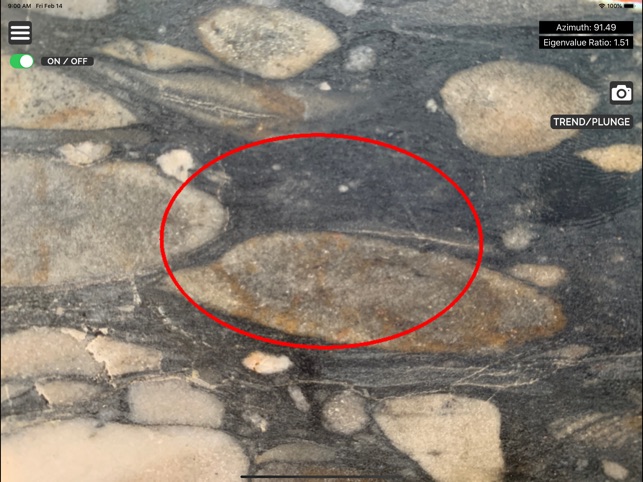
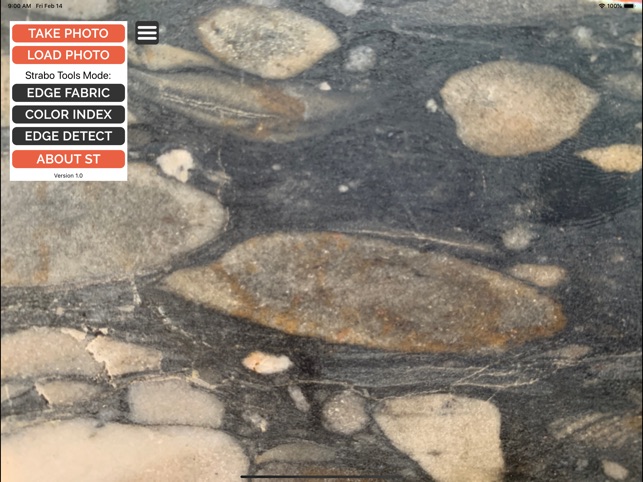
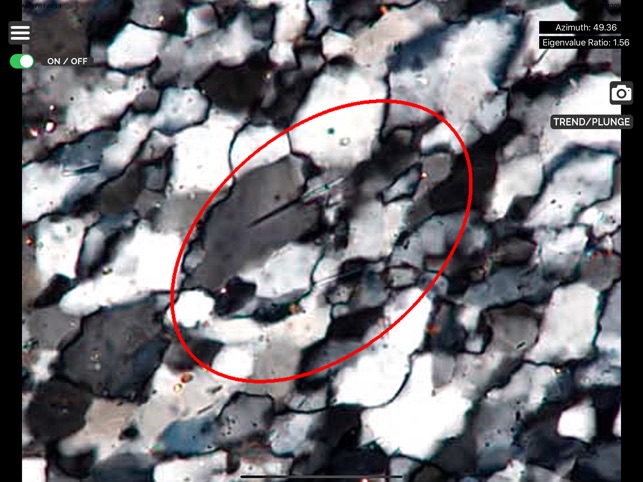
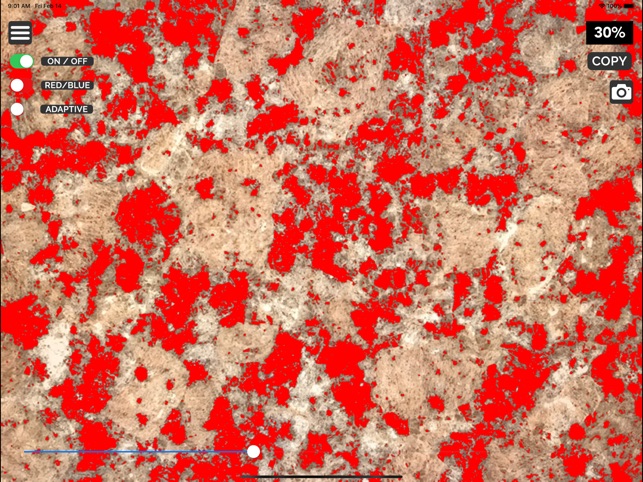
StraboTools facilitates quantitative geological analysis through image processing of field photographs. The system integrates three primary modules: Edge Fabric, Color Index, and Edge Detect. The Edge Fabric tool quantifies rock fabric by plotting an ellipse summarizing brightness gradients, a process completed in approximately five seconds. The Color Index module determines the area percentage of dark minerals by capturing user input via an adjustable grayscale threshold slider, enabling precise compositional estimates directly from outcrop or thin section images.

Evidence & Research Context

  • The associated research details the Edge Fabric tool's capacity to quantify subtle deformation fabrics, with the resulting ellipse tracking the strain ellipse in homogeneously deformed materials.
  • The Color Index tool is described as a precise and accurate method for determining the area percentage of minerals, which strongly correlates with bulk composition and facilitates field-based mapping of geological zoning.
  • The system's methodology is presented as an alternative to subjective visual estimation, designed to improve the reproducibility and shareability of geological field observations.
  • The authors note the tool's versatility, with applications extending from field outcrops and plutonic rocks to the analysis of photomicrographs and aerial imagery.

Intended Use & Scope

StraboTools is designed for geologists, researchers, and students requiring objective, quantitative data during fieldwork or petrographic analysis. Its primary utility is as a research tool for quantifying rock fabric and mineral modes from 2D images. The system does not provide direct chemical, mineralogical, or geochronological data and is not a substitute for laboratory-based geochemical analysis.

Studies & Publications

2 publications

Peer-reviewed research associated with this app.

Development/Design Paper

StraboTools: A Mobile App for Quantifying Fabric in Geology

The Geological Society et al. (2020) · GSA Today

Describes the research-driven development of this app
Quantification of field observations is an essential step in making them reproducible and shareable, but field geologists have few tools for quantifying field observations of important features such as foliation intensity, crystal alignment, vesicle elongation, joint intensity, and mineral proportions. Here we describe a mobile app, StraboTools, which offers two ways to rapidly and objectively quantify these variables. The edge fabric tool examines grayscale gradients in a photograph and summarizes them with the edge fabric ellipse. For deformation of a homogeneous material with passive markers, this ellipse tracks the strain ellipse. Edge fabric ellipses can be determined on the outcrop and make quick work (5 seconds) of formerly time-consuming and subjective strain-analysis tasks (e.g., Fry and Rf /? analysis). They are remarkably sensitive to subtle deformations that are difficult to see by eye. The color index tool determines the proportion of any component in the photograph whose grayscale level can be isolated (e.g., dark minerals in a granitic rock, feldspar phenocrysts in a lava, or blue epoxy in a thin section). Estimating proportions by eye has poor precision and accuracy; the color index tool is both accurate and precise if a suitable rock face is available. These tools can be used with photomicrographs and aerial photographs as well as in the field.
... Read More
Development/Design Paper

STRABOTOOLS: MEASURING THINGS IN THE FIELD THAT YOU COULDN'T MEASURE BEFORE

Glazner et al. (2020) · GSA 2020 Connects Online

Describes the research-driven development of this app
Field geologists have long awaited the development of a geo-tricorder that would give a rock's crystallization age, chemical composition, mineral composition, etc. in the field. Although this device is just a gleam in some developer's eye at the moment, we have developed an app, StraboTools (ST), that is a short step in this direction. ST currently contains two main tools. (1) The color index tool allows the user to make rapid, precise, and accurate measurements of the percentage of dark minerals (color index) or other components of a rock that can be isolated based on their grayscale value. The color index correlates strongly with bulk composition, so easy field determination allows mapping of, e.g., pluton zoning without laboratory analysis. (2) The edge fabric tool quantifies fabric in an image by examining the orientations of grayscale gradient vectors and determining an ellipse representing their orientations and magnitudes. For homogeneous deformation, this ellipse tracks the strain ellipse. The edge fabric tool can pick up remarkably subtle fabrics and can be used to rapidly quantify fabric orientation and intensity on the outcrop. Two more tools are currently in development. (3) The mode tool uses unsupervised classification to determine the modal percentages of minerals in photos where different minerals are distinguishable based on color. In testing on granitoid rocks, it reproduces observed modes with surprising accuracy. This tool may also offer a method for mapping pluton zonation in the field. (4) The grain size tool uses autocorrelation to produce a representative grain size (or grain cluster size). Asking the grain size of a plutonic rock is an ill-posed question because the different crystal species generally have lognormal distributions with different means and dispersions; the grain size tool offers an objective measure of this important parameter.
... Read More

StraboTools

Free