
UCLA Mindful
Shows promise in preliminary research
App Summary
App Screenshots

Detailed Description
Functionality & Mechanism
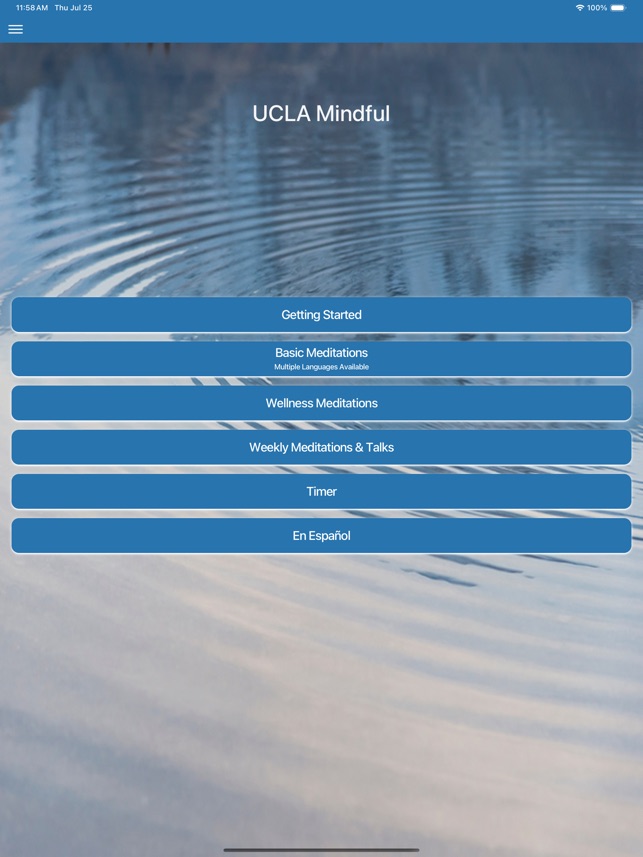
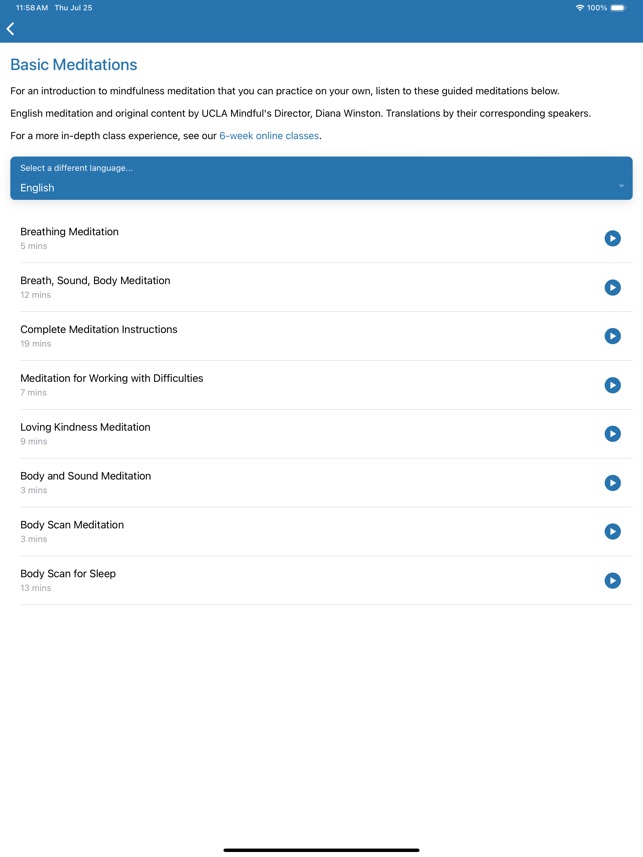
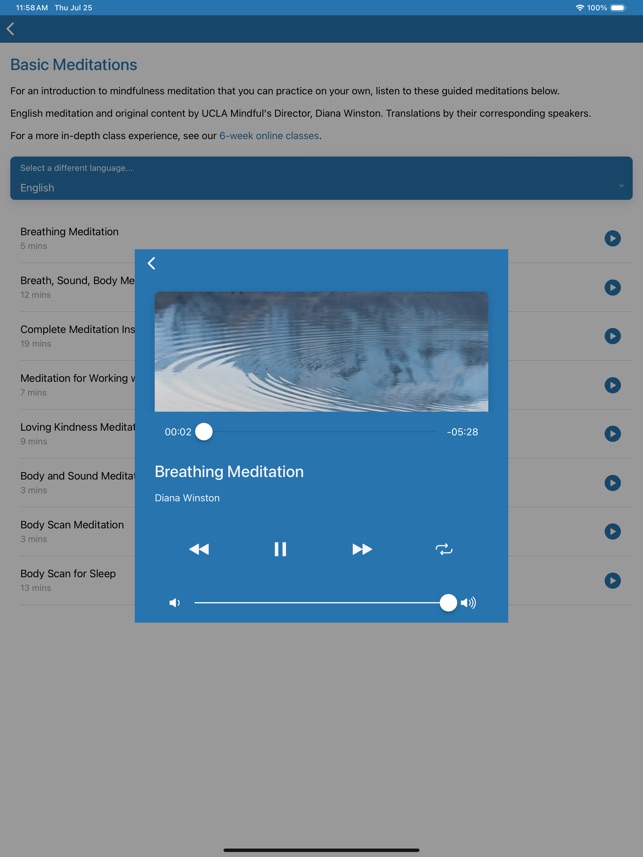
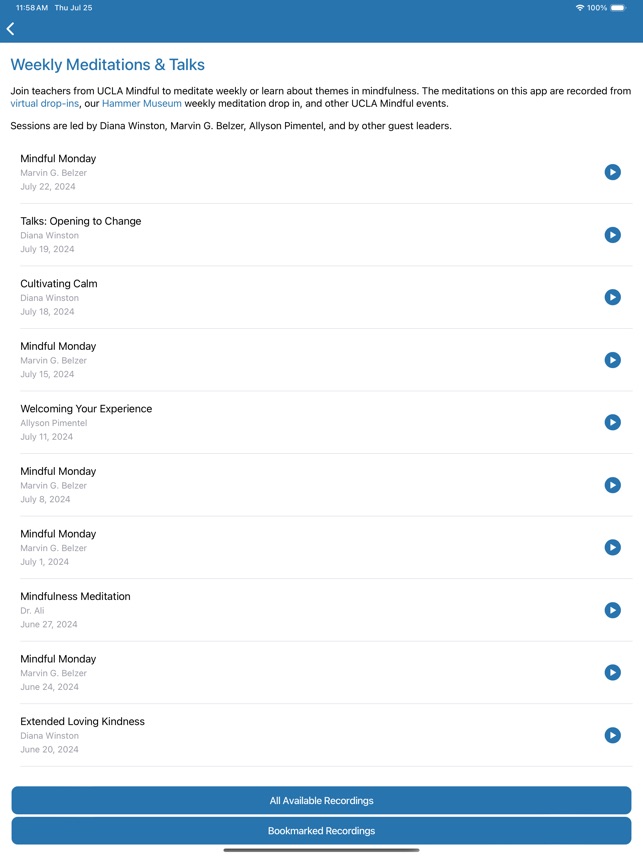
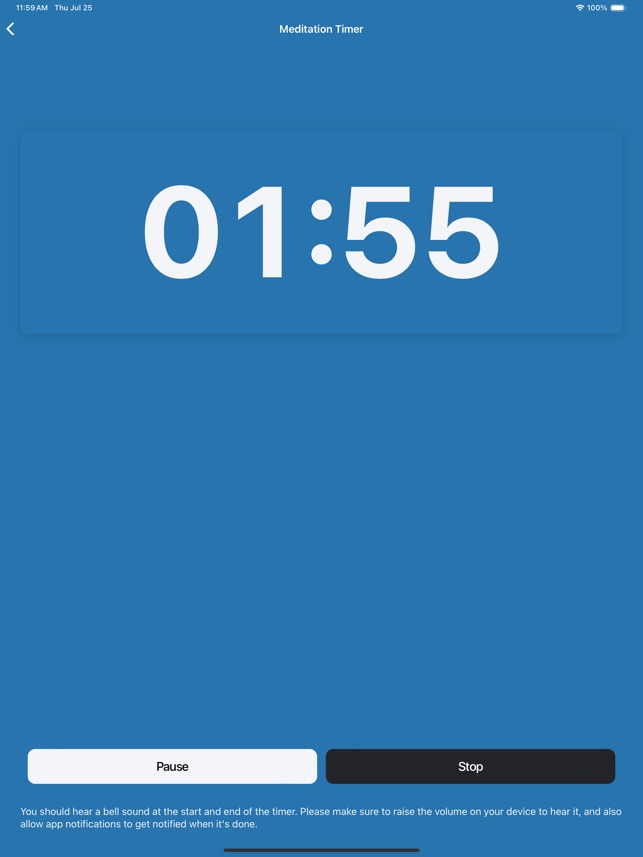
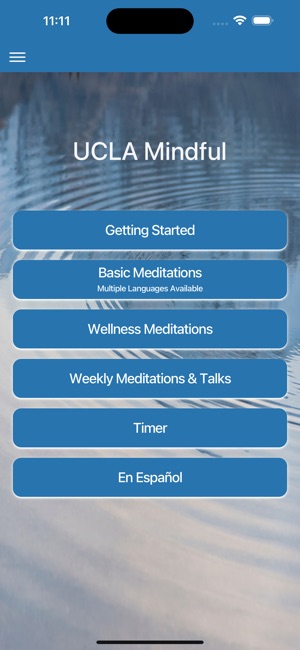
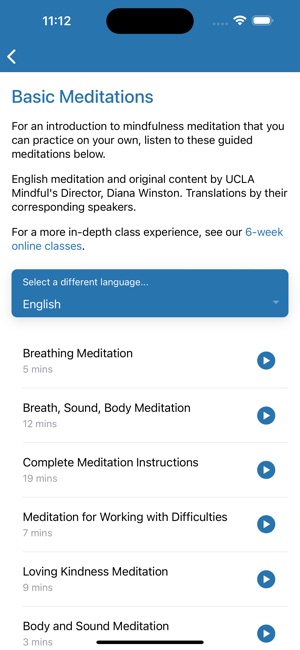
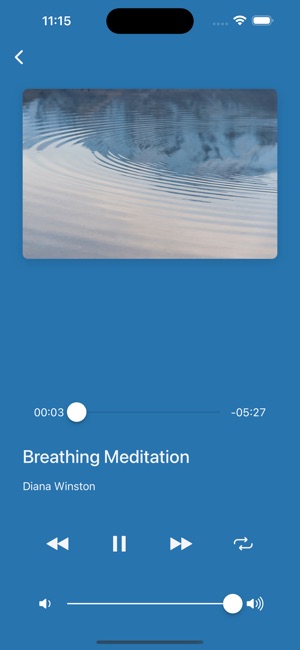
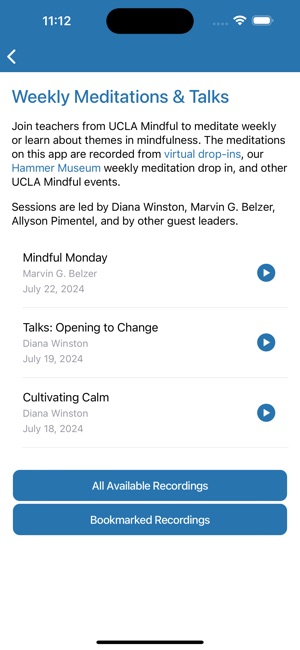
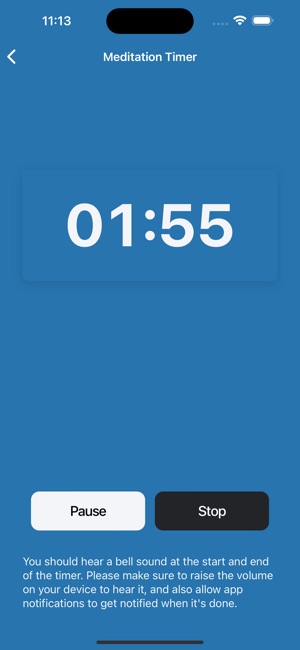
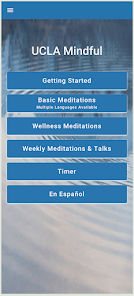
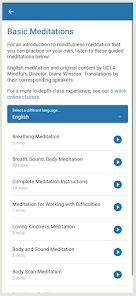
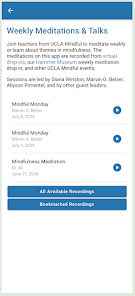
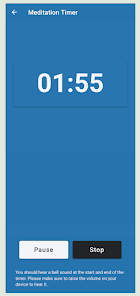
Developed by UCLA Mindful at UCLA Health, the application delivers guided mindfulness and meditation exercises. The interface provides access to a library of content modules, including basic meditations, wellness-focused sessions for health conditions, and pedagogical videos on mindfulness science. Users select from guided audio sessions, including weekly 30-minute themed recordings, or can utilize a self-directed timer for unguided practice. The platform supports numerous languages to facilitate broad accessibility for a global audience.
Evidence & Research Context
- A preliminary feasibility study (N=20) evaluated a brief mindfulness intervention, which integrated daily use of a guided meditation app, for hospitalized pretransplant heart failure patients.
- The intervention was associated with statistically significant reductions in perceived stress and anxiety from baseline to 4 weeks (P=.001).
- A significant increase in resilience was also observed over the same 4-week period (P=.001).
- This single-center, pre-post study demonstrates feasibility, but a controlled trial is required to establish definitive efficacy for this clinical population.
Intended Use & Scope
The app is designed for the general public as an educational tool to support the development of a personal mindfulness practice. Its primary utility is to deliver introductory and ongoing guided meditation content. The platform is not a substitute for clinical treatment; individuals with significant mental health conditions should consult a healthcare professional.
Studies & Publications
Peer-reviewed research associated with this app.
App-Based Mindfulness Intervention to Improve Psychological Outcomes in Pretransplant Patients With Heart Failure
Vandenbogaart et al. (2023) · Critical Care Nurse
Feasibility confirmed — stress and anxiety significantly reduced and resilience increased within 2 weeks.
In the Media
UCLA Mindful App
UCLA Health offers the free UCLA Mindful app for iOS and Android devices to enable users to practice mindfulness meditation anywhere with guided instruction from UCLA Mindful. Scientific research shows mindfulness can help manage stress-related physical conditions, reduce anxiety and depression, cultivate positive emotions, and improve overall physical health and well-being. The app trains users in moment-to-moment awareness of thoughts, feelings, body sensations, and environment through accessible meditation practices.
UCLA Mindful App - UCLA Mindful
UCLA Health developed the UCLA Mindful app to enable users to practice mindfulness meditation anywhere, anytime with guided instruction, as scientific research shows mindfulness can help manage stress-related physical conditions and reduce anxiety and depression. Mindfulness, defined as training the mind to be present through moment-to-moment awareness of thoughts, feelings, body sensations, and environment, promotes openness, curiosity, and willingness. The easy-to-use app helps cultivate positive emotions and improve overall physical health and well-being.
App Information
Category
Evidence Profile
Shows promise in preliminary research
Platforms
Updated
Jul 2026
© 2025 University of California, Los Angeles