
AppsFromResearch
Veterans Task Manager icon

Veterans Task Manager

Evidence Tier:VALIDATED

Proven effective in research studies

For:General Public & EnthusiastsPatients & Caregivers

App Summary

Veterans Task Manager is a goal-setting tool designed to help veterans with traumatic brain injury (TBI) apply skills from metacognitive training to improve executive function in daily life. A preliminary study (N=14) of veterans with TBI and PTSD found that using the app alongside Goal Management Training was associated with significant improvements in executive cognition (p < .02) and community life role participation (p < .01). The authors conclude that the app supports the translation of clinical training to real-world practice and that a randomized controlled trial is warranted to confirm these findings.

App Screenshots

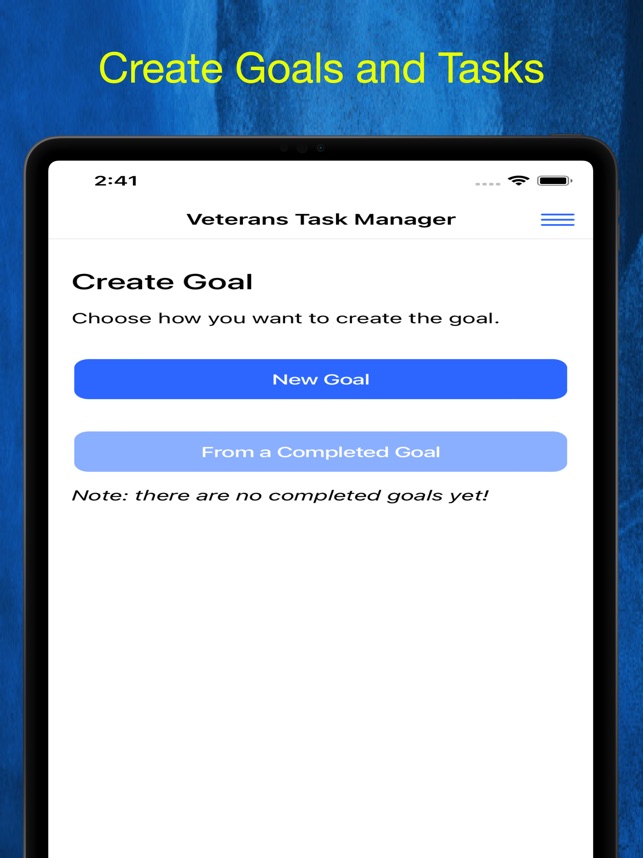
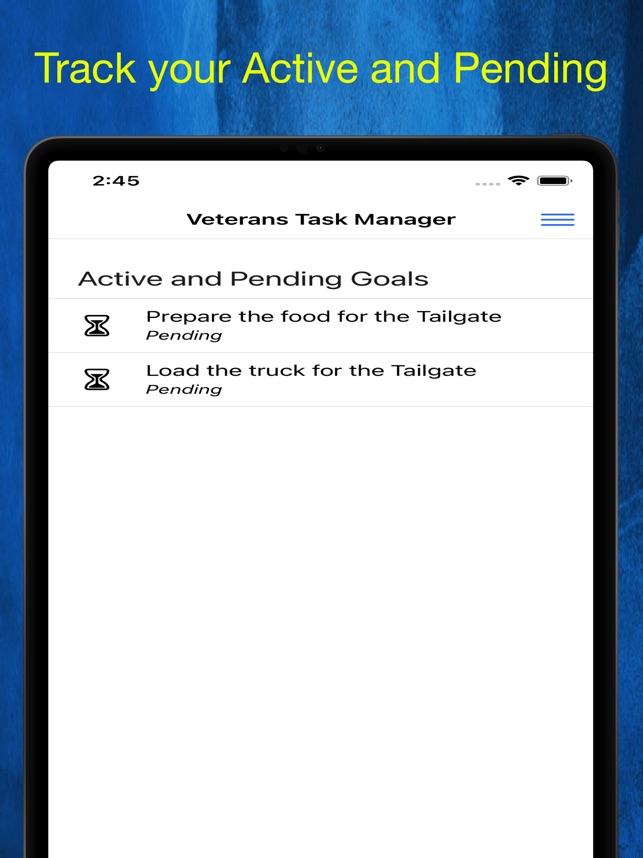
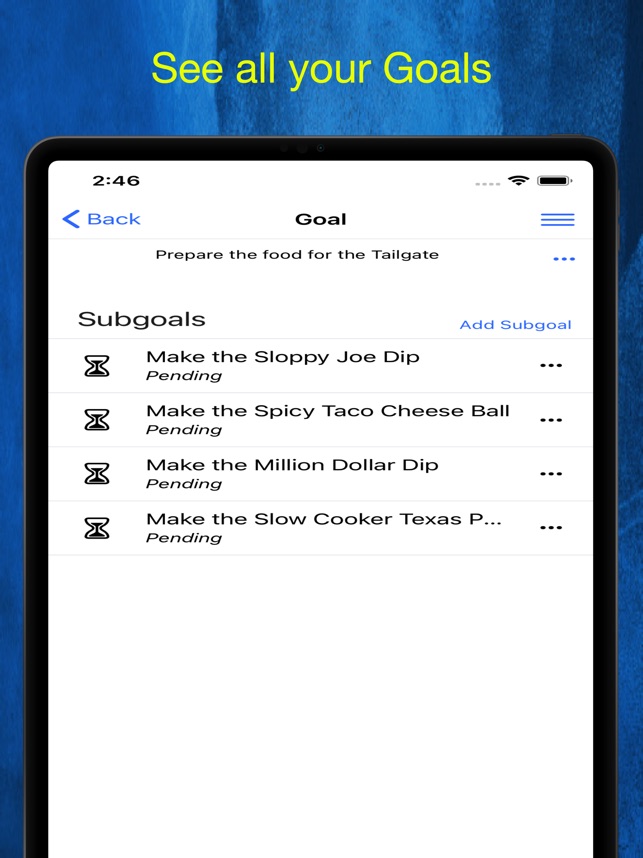
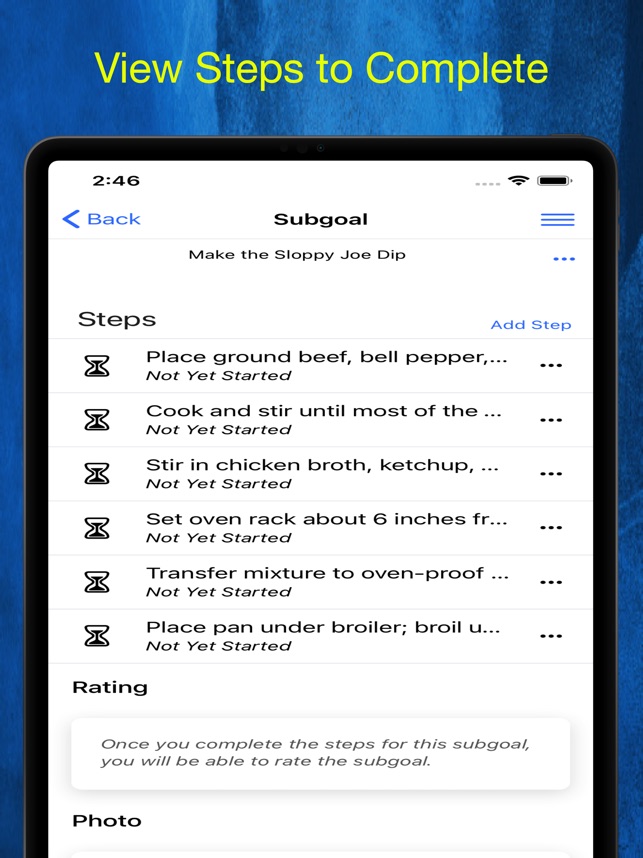
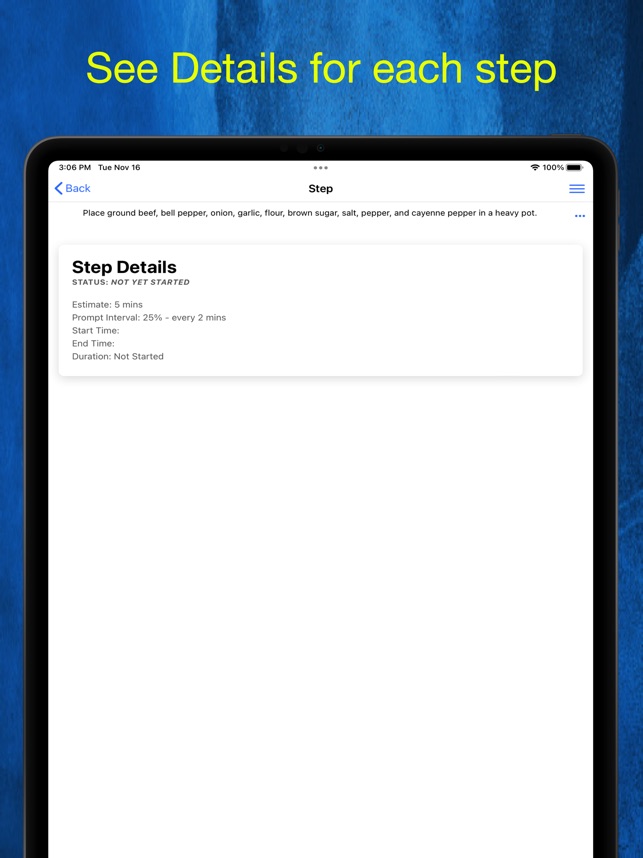
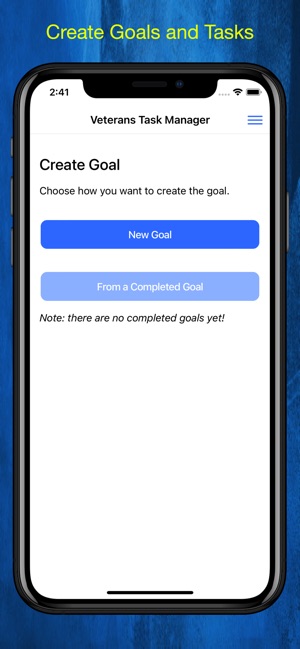
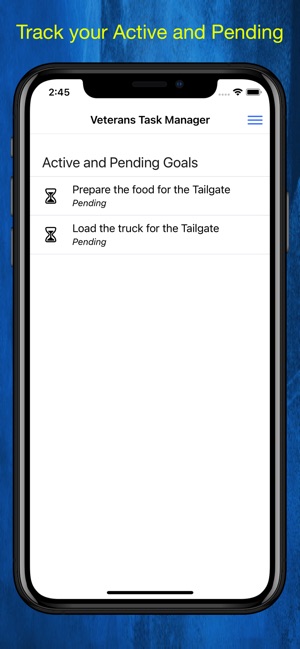
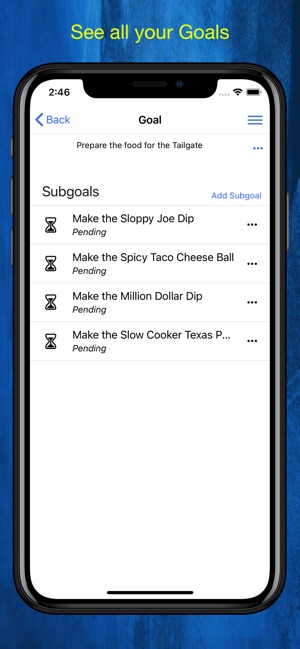
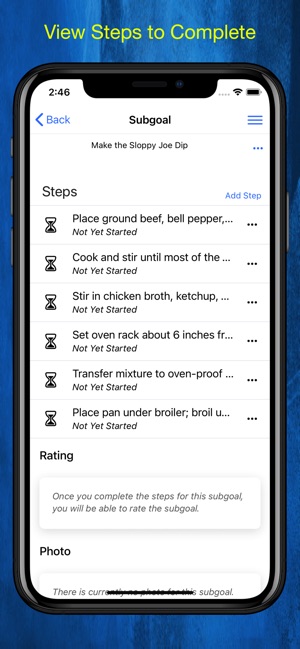
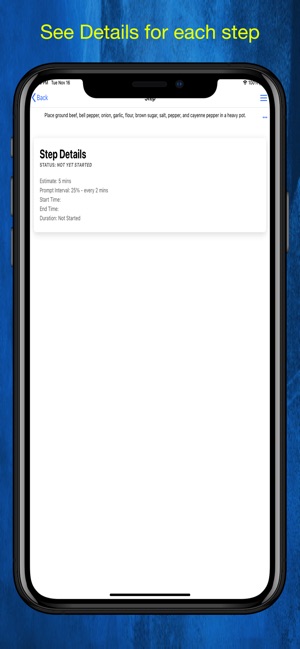
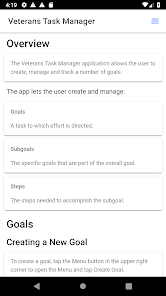
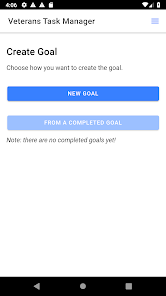
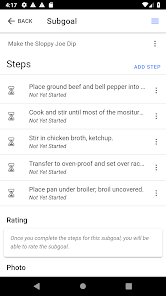
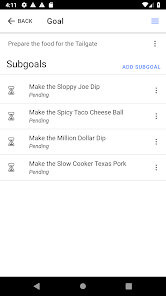
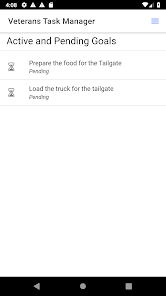
Veterans Task Manager screenshot 1 of 16Veterans Task Manager screenshot 2 of 16Veterans Task Manager screenshot 3 of 16Veterans Task Manager screenshot 4 of 16Veterans Task Manager screenshot 5 of 16Veterans Task Manager screenshot 6 of 16Veterans Task Manager screenshot 7 of 16Veterans Task Manager screenshot 8 of 16Veterans Task Manager screenshot 9 of 16Veterans Task Manager screenshot 10 of 16Veterans Task Manager screenshot 11 of 16Veterans Task Manager screenshot 12 of 16Veterans Task Manager screenshot 13 of 16Veterans Task Manager screenshot 14 of 16Veterans Task Manager screenshot 15 of 16Veterans Task Manager screenshot 16 of 16

Detailed Description

Functionality & Mechanism

The Veterans Task Manager, developed with guidance from the U.S. Department of Veterans Affairs BRRC, is a metacognitive support tool designed to reinforce executive function skills. The system facilitates the creation and management of simple or complex personal goals through a structured interface. Core functions include modules for task decomposition, time-to-completion tracking, and progress monitoring. The application leverages automated notifications as reminders, promoting translation of therapeutic strategies into independent practice in home and community settings.

Evidence & Research Context

  • In a preliminary study of Veterans with mTBI/PTSD (N=14), the use of the app as a support tool for Goal Management Training (GMT) was associated with significant improvements in executive function (p<.02) and community participation (p<.01).
  • A quasi-experimental study (N=15) utilized the app as one component of a multi-faceted attention training regimen combined with GMT, which resulted in significantly greater executive function gains than GMT alone (p=.01).
  • The application is consistently deployed in research as an adjunct tool or "practice-buddy" to ensure therapeutic skills learned in-session are generalized to real-world executive tasks.

Intended Use & Scope

This application is designed for individuals with executive function deficits, particularly veterans with traumatic brain injuries, for use as an adjunct to formal cognitive rehabilitation. It serves to structure daily tasks and reinforce therapeutic strategies. The tool is not a standalone treatment and does not replace comprehensive clinical evaluation or therapy prescribed by a qualified provider.

Studies & Publications

2 publications

Peer-reviewed research associated with this app.

Effectiveness/Outcome Study

Executive function improvement in response to meta-cognitive training in chronic mTBI / PTSD

Waid-Ebbs et al. (2023) · Frontiers in Rehabilitation Science

Improved executive function and community participation in Veterans with mild TBI and PTSD.

ObjectiveWe tested Goal Management Training (GMT), which has been recommended as an executive training protocol that may improve the deficits in the complex tasks inherent in life role participation experienced by those with chronic mild traumatic brain injury and post-traumatic stress disease (mTBI/PTSD). We assessed, not only cognitive function, but also life role participation (quality of life).MethodsWe enrolled and treated 14 individuals and administered 10 GMT sessions in-person and provided the use of the Veterans Task Manager (VTM), a Smartphone App, which was designed to serve as a "practice-buddy" device to ensure translation of in-person learning to independent home and community practice of complex tasks. Pre-/post-treatment primary measure was the NIH Examiner, Unstructured Task. Secondary measures were as follows: Tower of London time to complete (cTOL), Community Reintegration of Service Members (CRIS) three subdomains [Extent of Participation; Limitations; Satisfaction of Life Role Participation (Satisfaction)]. We analyzed pre-post-treatment, t-test models to explore change, and generated descriptive statistics to inspect given individual patterns of change across measures.ResultsThere was statistically significant improvement for the NIH EXAMINER Unstructured Task (p < .02; effect size = .67) and cTOL (p < .01; effect size = .52. There was a statistically significant improvement for two CRIS subdomains: Extent of Participation (p < .01; effect size = .75; Limitations (p < .05; effect size = .59). Individuals varied in their treatment response, across measures.Conclusions and Clinical SignificanceIn Veterans with mTBI/PTSD in response to GMT and the VTM learning support buddy, there was significant improvement in executive cognition processes, sufficiently robust to produce significant improvement in community life role participation. The individual variations support need for precision neurorehabilitation. The positive results occurred in response to treatment advantages afforded by the content of the combined GMT and the employment of the VTM learning support buddy, with advantages including the following: manualized content of the GMT; incremental complex task difficulty; GMT structure and flexibility to incorporate individualized functional goals; and the VTM capability of ensuring translation of in-person instruction to home and community practice, solidifying newly learned executive cognitive processes. Study results support future study, including a potential randomized controlled trial, the manualized GMT and availability of the VTM to ensure future clinical deployment of treatment, as warranted.
... Read More
Effectiveness/Outcome Study

Enhancing Goal Management Training with Attention Drill Training

Waid-Ebbs et al. (2022) · Archives of Physical Medicine and Rehabilitation

Significantly improved executive function with large effect size when attention drill training was added to Goal Management Training.

Research Objectives To investigate whether Goal Management Training (GMT) combined with attention drill training improves executive function over GMT alone. Design Quasi-experimental two group comparison, before and after. Setting Veterans' Administration Outpatient Rehabilitation. Participants Veterans with blast-related mild Traumatic Brain Injury (mTBI) previously enrolled to GMT only treatment (n=7) were compared to Veterans with blast-related mTBI treated with GMT plus attention drill training (n=8). Interventions GMT is a metacognitive group intervention, presented in 10-weekly, 2-hour PowerPoint interactive sessions. GMT combined with attention drill training included GMT with 10 additional, 2-hour sessions employing three different types of additional attention training: (1) Attention Process Training version-III; (2) use of a Smartphone application called the Veterans' Task Manager to set functional attention goals in a naturalistic setting; and (3) Brain HQ attention tasks 2-3 hours per week. Main Outcome Measures Executive Composite Score of the National Institutes of Health Executive Abilities: Measures and Instruments for Neurobehavioral Evaluation and Research (NIH EXAMINER). Results GMT alone did not result in a significant pre-/post treatment improvement (p=0.44: effect size 0.12) according to the NIH EXAMINER Executive Composite Score. However, GMT plus attention drill training resulted in a significant improvement with a large Cohen's d effect size (p=.006; effect size?=?2.23) and had a significantly greater improvement than GMT alone (p=.01). Conclusions The addition of attention drill training to GMT significantly improved overall executive function over GMT alone. In a meta-analysis of GMT, effect size was related to the number of sessions (Strenova, 2019), supporting our large effect size findings with the addition of attention training sessions to GMT. A randomized control study is needed to determine whether GMT plus attention drill training improves functioning over GMT alone.
... Read More

Veterans Task Manager

Free